

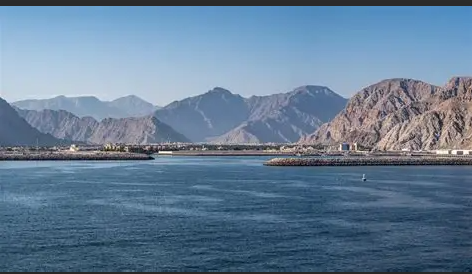
The situation around the Strait of Hormuz is gradually going beyond a regional conflict and beginning to exert direct pressure on the global economy. Risks that were recently considered hypothetical are now being discussed at the level of governments and energy companies. In Europe, warnings about a possible energy shortage and a new surge in prices are being voiced more frequently if the conflict is not resolved in the near future.
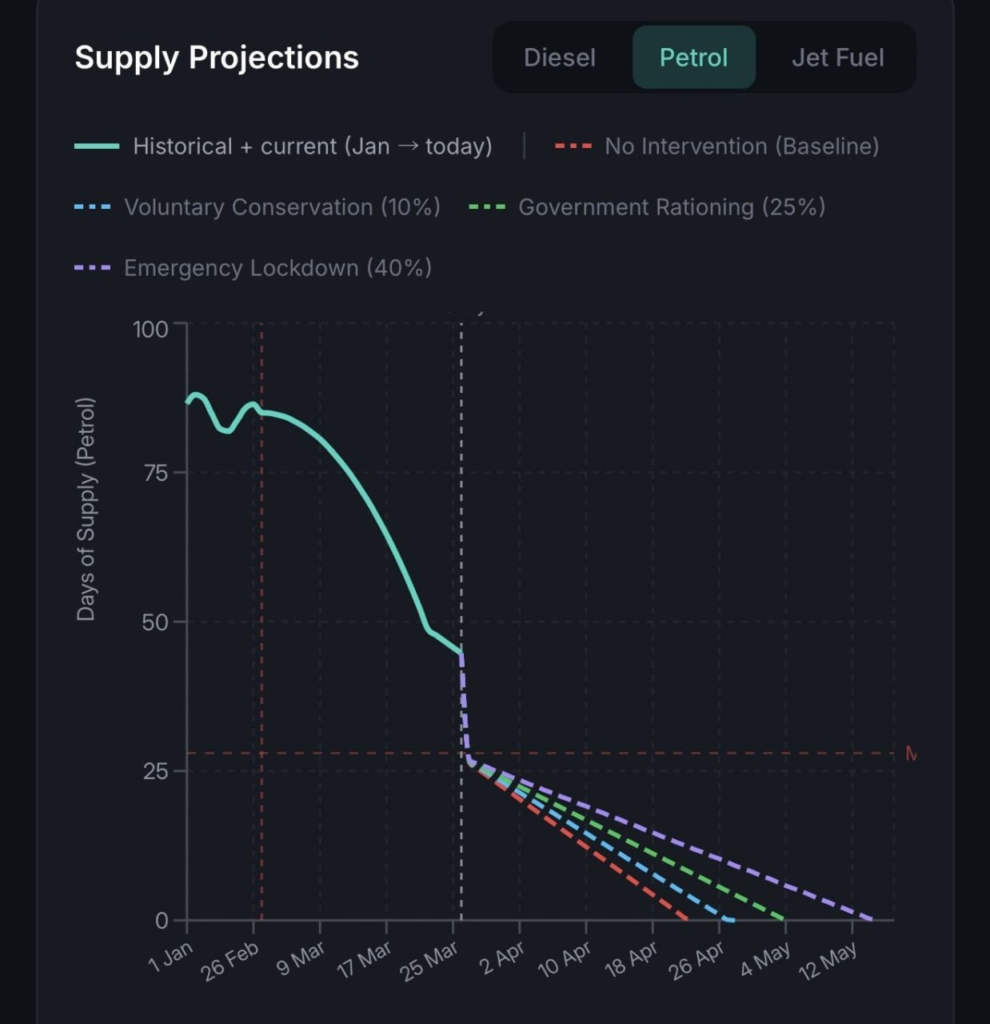
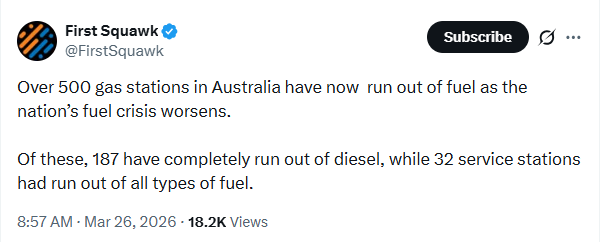
The Strait of Hormuz remains a key artery of global oil logistics, through which a significant portion of raw material supplies passes. Any disruptions in this region are instantly reflected in prices and supply chains. The consequences are already beginning to appear beyond the Middle East. New Zealand, according to estimates, may face fuel shortages within the next three weeks if current consumption and supply rates persist. In Australia, the situation is even more visible: hundreds of gas stations are already experiencing gasoline shortages, indicating the beginning of local disruptions in fuel distribution.

Against this backdrop, Brent crude has returned to around $100 per barrel, reflecting rising tensions and a lack of progress in negotiations. Markets are reacting predictably: volatility is increasing, investors are reducing risk, and stock indices are declining. The return of the “red zone” on exchanges indicates that market participants are beginning to price in a prolonged conflict scenario.
An additional factor of uncertainty is the U.S. foreign policy agenda. The expected visit of Donald Trump to China in mid-May indirectly suggests that quick solutions on the Iranian track may not materialize. This increases the likelihood that tensions will persist at least throughout April, meaning continued pressure on energy markets.
If the current dynamics persist, the global economy may face a classic energy shock. Rising oil prices automatically increase transportation, production, and logistics costs, fueling inflation and reducing consumer activity. Under such conditions, even resilient economies begin to slow down, while more vulnerable countries risk facing liquidity crises and resource shortages.
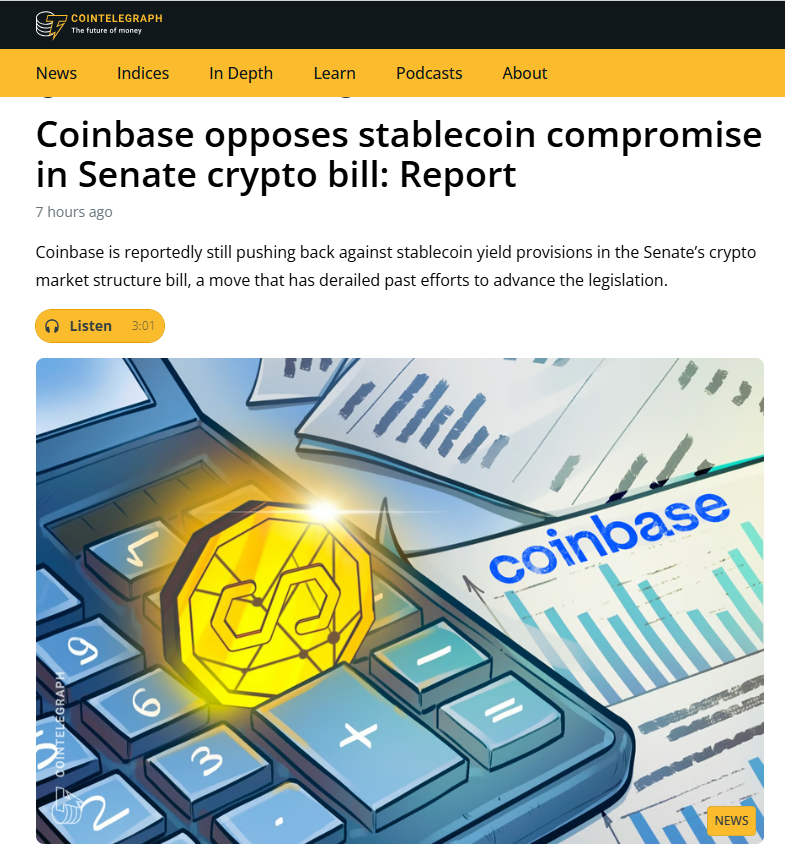
Alongside geopolitics, tensions are also rising in the technology sector. The крупнейшая crypto exchange Coinbase continues its dispute with U.S. senators over new stablecoin regulations. The key sticking point remains the issue of yield on such assets. This issue has repeatedly delayed the progress of the bill, creating uncertainty for the entire crypto market.
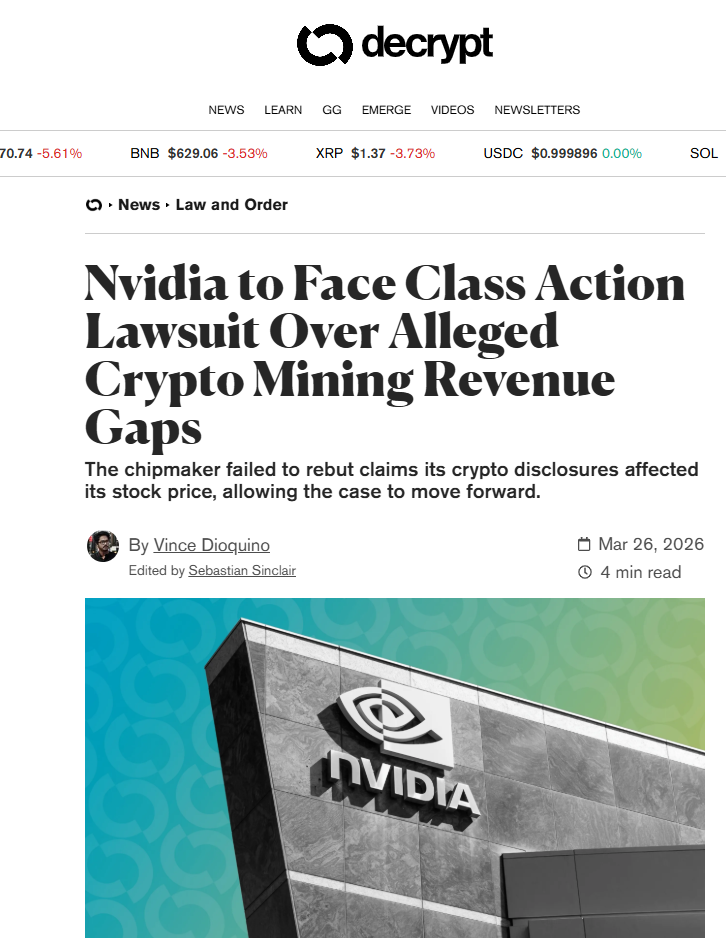
Another blow to the technology sector is связан with legal proceedings involving Nvidia. A U.S. federal court has allowed a class action lawsuit by investors who accuse the company and its CEO Jensen Huang of concealing the scale of revenue linked to crypto mining. The case concerns the period of 2017-2018, when demand for graphics processors from miners significantly influenced the company’s financial performance.
The court stated that Nvidia was unable to prove that its statements about crypto mining revenue had no impact on its stock price. This strengthens the plaintiffs’ position and opens the way for further proceedings. It should be recalled that earlier the U.S. Securities and Exchange Commission had already fined the company $5.5 million for insufficient disclosure of the impact of the crypto market on its business.
As a result, a multi-layered picture is emerging: on the one hand, a geopolitical crisis capable of triggering an energy shock and accelerating inflation; on the other, regulatory pressure and legal risks in the technology and cryptocurrency sectors. These processes are beginning to reinforce each other, creating an environment of heightened instability.
If the situation around the Strait of Hormuz does not stabilize, by May the global economy may indeed face serious challenges. This involves not only rising fuel prices but also disruptions in logistics, declining business activity, and increased pressure on financial markets. The longer the uncertainty persists, the higher the likelihood that a local conflict will evolve into a global economic factor.
All content provided on this website (https://wildinwest.com/) -including attachments, links, or referenced materials — is for informative and entertainment purposes only and should not be considered as financial advice. Third-party materials remain the property of their respective owners.