


Sometimes the market produces a rare combination of factors that looks almost ideal in textbooks, but in reality appears only for a short time and requires a cool head. This is exactly such a moment. On one side — a чист technical signal of strength: the U.S. market has recorded a Follow-Through Day, meaning a day that confirms the transition from an attempted rally to a полноценный uptrend. On the other — a geopolitical backdrop that has suddenly stopped deteriorating and even hinted at stabilization. As a result, we get that very “perfect storm of optimism,” where money stops being afraid and starts working.
A Follow-Through Day is not just a nice term for analysts. Historically, it is one of the few signals that indicates the return of institutional capital. Index gains on higher volume mean this is no longer retail optimism or a short-term bounce, but participation from large players who have been sitting in cash waiting for the right moment. The S&P 500 and Nasdaq showed exactly this behavior — synchronized growth with volume, which significantly increases the probability that the market has truly changed phase.
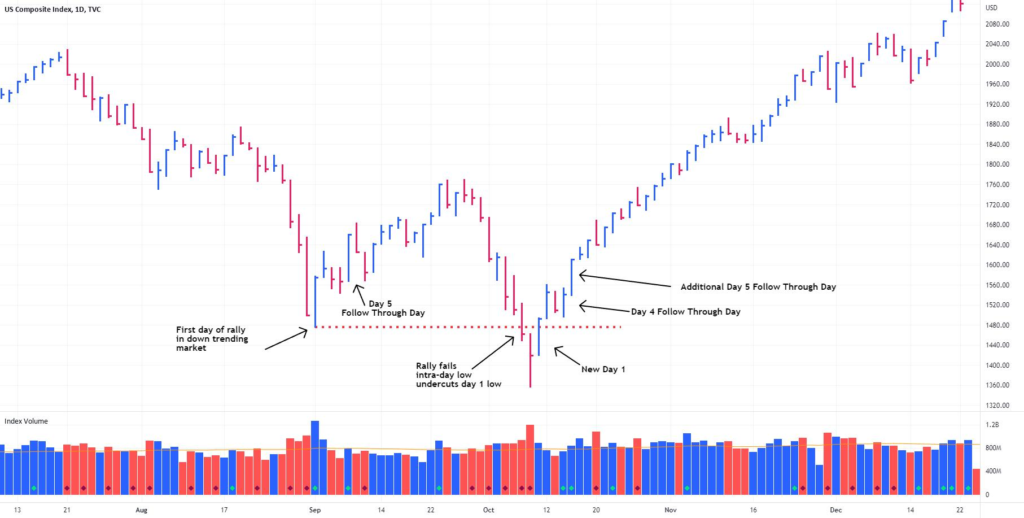
But technicals rarely work in a vacuum. This time they were reinforced by geopolitics. News of a ceasefire and de-escalation in the Middle East acted as a trigger. The market removed part of the risk premium that had been priced in over recent weeks. This is a case where nothing “good” has actually happened yet, but bad things have stopped happening — and that alone was enough for capital to start flowing back into risk.
Money didn’t just return — it returned to where it feels most confident. Companies tied to artificial intelligence infrastructure once again became leaders. Nvidia and Alphabet were not just participants in the rally, but its drivers. This is an important signal. The market is once again voting for the idea that the AI segment is the new “safe haven,” where growth is supported not only by expectations but by real cash flows. In previous cycles, this role belonged to commodities or defensive sectors; now it belongs to computing power and data.
At the same time, current optimism cannot be called unconditional. The entire structure rests on a rather fragile foundation. The Strait of Hormuz remains the key bottleneck through which a significant portion of global oil flows. As long as it stays open, the market remains calm. But any new escalation could instantly bring the risk premium back into prices. This would push oil higher and create pressure on inflation.
Then a chain reaction begins. Rising oil prices pose a risk to the Federal Reserve’s plans to cut rates. If inflation pressure increases, the regulator may need to maintain a tighter policy for longer. That, in turn, becomes a headwind for equities — especially for the same growth companies currently leading the market higher. The paradox is clear: the market is rising on expectations of relief, but that relief may be too fragile to sustain the rally for long.
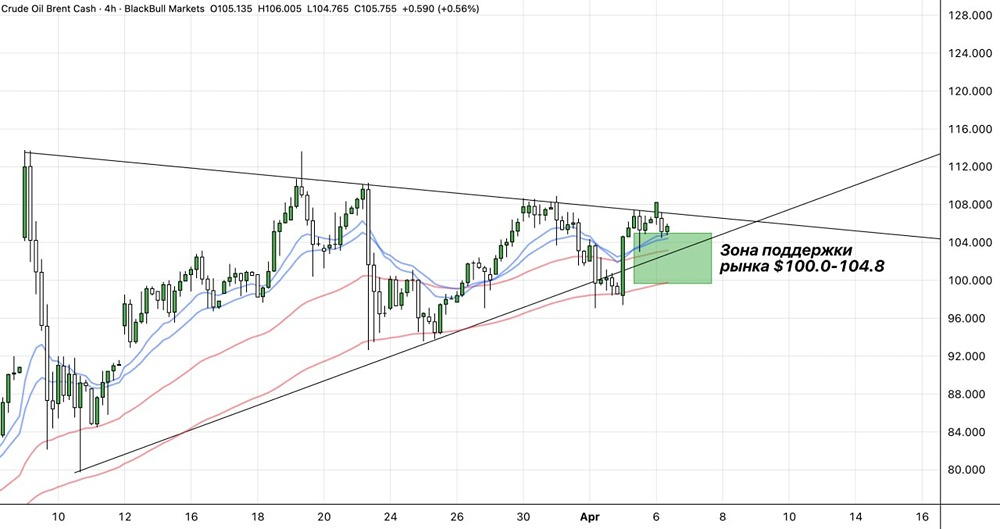
That is why the current phase requires a more cautious approach than it may seem at first glance. Technically, the market has given a “buy” signal, but the context adds the second part of the phrase — “but without losing discipline.” This is a classic situation where aggression without control turns from a strategy into gambling.
In such conditions, strategy shifts from “buy everything” to more selective positioning. What matters is not just the presence of a trend, but the quality of individual stocks. Leaders breaking out of consolidation on high volume have an advantage because institutional demand is already behind them. This is not guessing — it is following the money.
Risk management becomes critical. Strict stop-losses are not a sign of weakness but a way to stay in the game. The market may continue to rise, but it can also reverse sharply on any headline. Unlike a slow bear market, such reversals happen quickly and without warning.
More broadly, we are entering a phase where passive strategies work less effectively. Simply buying the index is no longer optimal because internal divergence is increasing. Some companies show strength and make new highs, while others remain under pressure. This is a classic transition to a stock-picking market, where results depend not on the index direction but on the quality of decisions.
The conclusion is quite telling. The market has indeed given a green light — both technically and behaviorally. But it is clearly keeping its foot on the brake because geopolitics has not disappeared; it has only temporarily stepped back. This is not the end of uncertainty, but a pause within it.
In such moments, the winners are not those who act the fastest, but those who can combine participation in the upside with disciplined risk control. Because the main question now is not whether there is an uptrend — it has already been confirmed. The real question is how long it can survive in a world where a single headline can change sentiment faster than any chart.
All content provided on this website (https://wildinwest.com/) -including attachments, links, or referenced materials — is for informative and entertainment purposes only and should not be considered as financial advice. Third-party materials remain the property of their respective owners.