

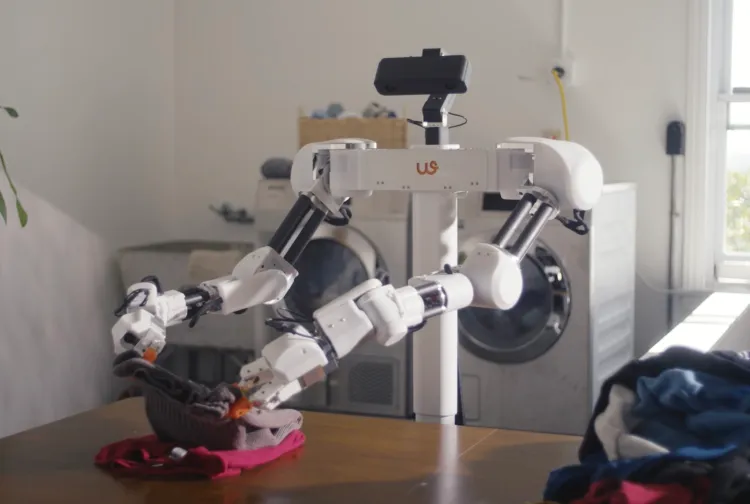
Weave Robotics has decided that humanity suffers not from inflation, wars, or a crisis of trust, but from the greatest household tragedy of the 21st century – the need to fold T-shirts. And so it introduced the home robot Isaac 0, which takes on the “hardest” job in the house: neatly folding laundry.
The price is modernly flexible. You can buy the device for $7,999, or you can subscribe for $450 a month, as if it were not a robot but a premium streaming service for the lazy. However, for the robot to even arrive at your home, you will also have to leave a $250 deposit. Apparently, just in case Isaac suddenly decides to escape back to the lab from the sheer number of socks.
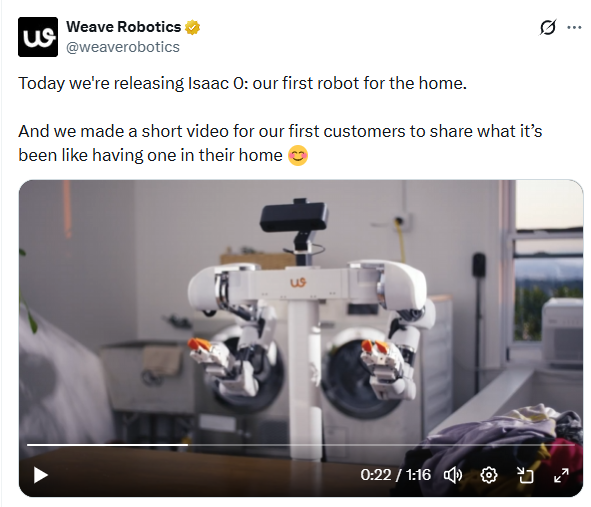
The robot itself runs from a regular power outlet and is essentially a stationary machine. It does not walk around the apartment, does not clean, does not cook, and does not save the world. It simply stands there and folds clothes. And it does so with startup-level grace: one load of laundry takes anywhere from 30 to 90 minutes. In other words, while Isaac carefully contemplates your T-shirt, you could easily fold everything by hand, drink a coffee, and reflect on the meaning of life.
Its functionality is also, to put it mildly, full of nuances. Large blankets, sheets, and comforters are beyond its capabilities. Inside-out clothing is also too much for it. Apparently, a T-shirt worn the wrong way is already a philosophical challenge. Most importantly, Isaac 0 is not fully autonomous. If the robot encounters a “difficult fold,” it may request remote assistance from an operator. That means somewhere in an office, a person is sitting there, helping a robot fold your underwear over the internet. The kind of technological progress science fiction writers once dreamed of.
The company promises that over time the robot will become better, faster, and smarter. This is the standard mantra of all gadgets that currently work so-so: “be patient, it will get cool later.” But even now, Weave is confidently entering the market of home robots designed to free people from household routine.
And Isaac 0 is not alone. More and more companies are trying to build robots that will handle domestic chores. At CES this year, the laundry theme was presented as the main battlefield of the future. LG showcased its CLOiD concept, while SwitchBot introduced the Onero H1. It feels as if engineers truly believe that once a robot learns to fold socks, humanity will finally welcome it into the family.
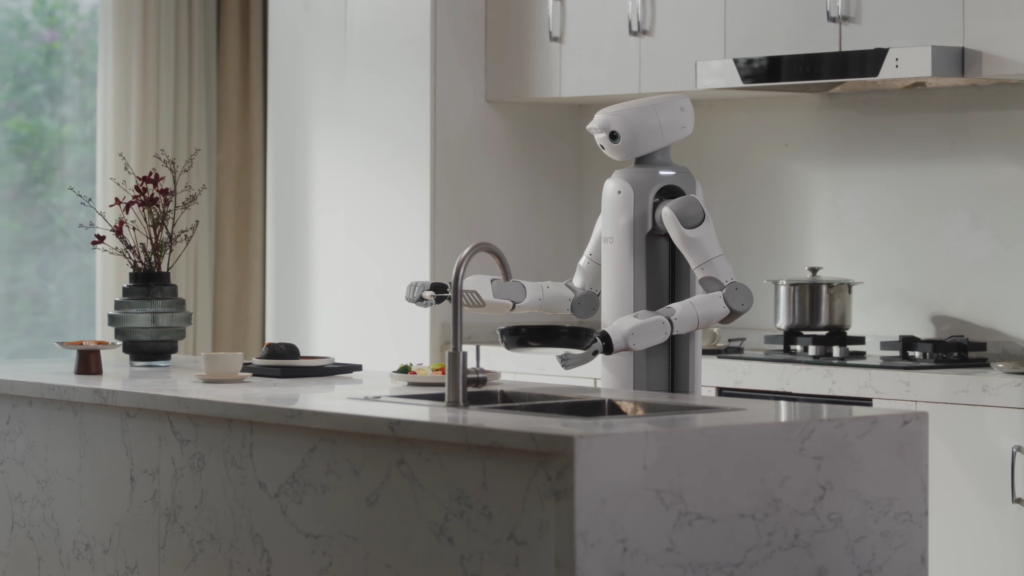
But the main question remains the same: are real homes ready for such robots? Or is this still a toy for Bay Area residents with an extra eight thousand dollars, a chronic hatred of ironing, and a desire to feel like the hero of a futuristic TV series?
It is hard to overestimate how “necessary” this invention really is. A robot for $450 a month that slowly folds laundry and occasionally calls a human for help looks like the perfect symbol of our era: technology grows, budgets grow, subscriptions grow – and yet you will still have to fold the sheet yourself.
You can watch a video clip of the robot in action in our Telegram channel.
All content provided on this website (https://wildinwest.com/) -including attachments, links, or referenced materials — is for informative and entertainment purposes only and should not be considered as financial advice. Third-party materials remain the property of their respective owners.