


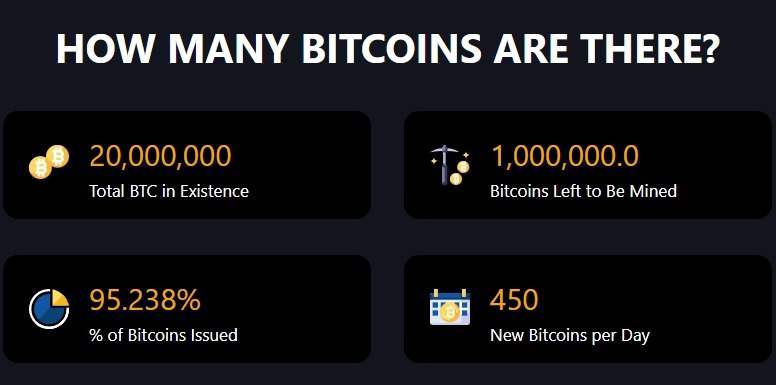
On March 9, 2026, the network of the first cryptocurrency reached a symbolic milestone: the number of bitcoins yet to be mined dropped to 1 million BTC. To date, miners have already mined 20 million coins, which represents about 95.2% of the maximum supply of 21 million. This fact not only highlights the maturity of the network but also brings all participants closer to the final era of issuance, which is projected to end only by 2140.
Fixed issuance schedule and the role of halvings
Bitcoin continues to operate within a predefined issuance schedule. On average, 144 blocks are added each day, while 2016 blocks are produced approximately every two weeks. The key mechanism determining the pace of new coin issuance is the halving, which cuts the block reward in half every 210,000 blocks, roughly once every four years. The most recent halving occurred in 2024, when the reward decreased to 3.125 BTC per block, and the network entered its fifth issuance era. The next reduction is expected in April–May 2028, after which the reward will drop to 1.5625 BTC.
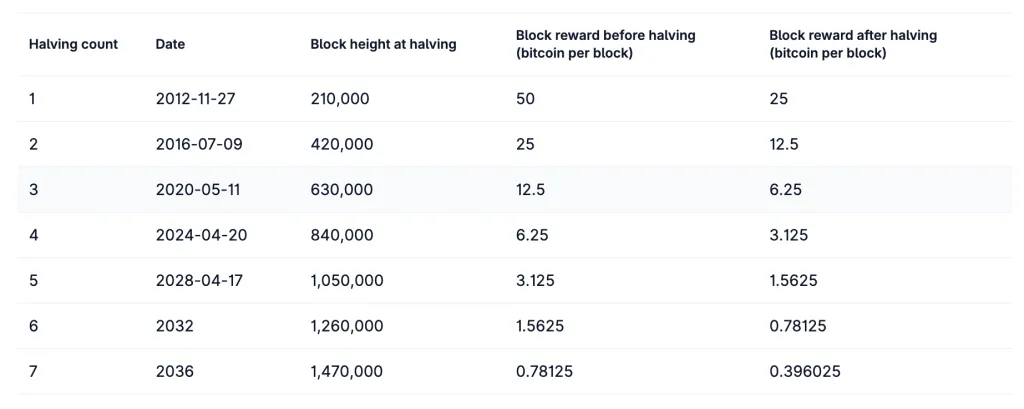
Upcoming halving schedule. Source: CoinGecko
Thus, despite the remaining one million BTC, the mining of the last coins will be stretched over more than a century. The gradual reduction of the reward reflects the protocol’s built-in economic model, where over time the primary source of miner income is expected to become transaction fees rather than newly issued coins.
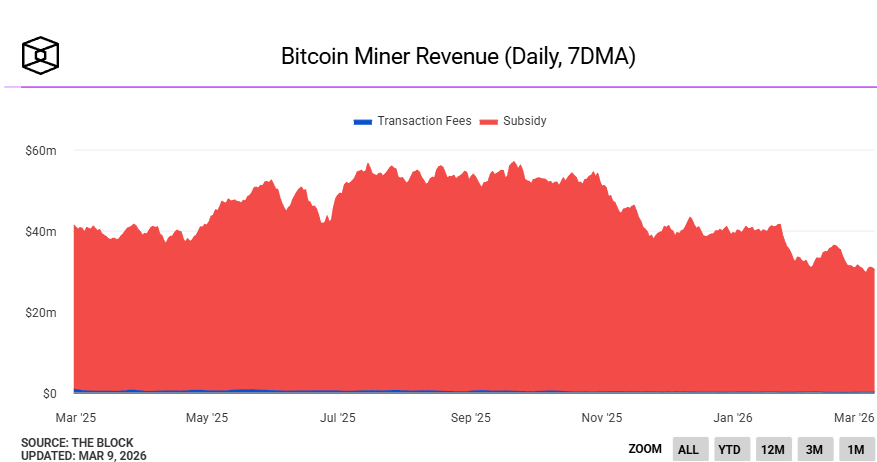
Chart embedded from The Block Data
Economic Pressure on Miners
Each new halving reduces miners’ revenue and increases pressure on their economic model. In practice, many equipment operators are already feeling this effect. For example, according to calculations by CryptoSlate, the break-even point for the miner Riot Platforms considering only electricity costs is around $74,000 per BTC. If expenses for equipment, infrastructure, cooling, maintenance, and financing are included, the real cost of mining can exceed $100,000 per coin. As a result, a significant portion of miners operate with minimal margins or even at a loss, effectively being “underwater.”
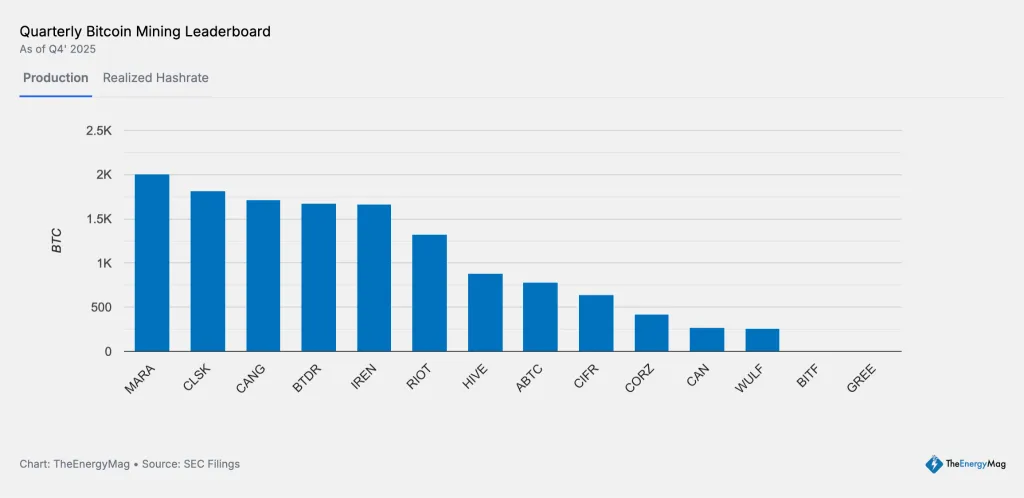
Source: TheMinerMag
Infrastructure Risks and Network Resilience
Although physical infrastructure such as submarine communication lines attracts attention, researchers at the University of Cambridge concluded that damage to them has almost no impact on the Bitcoin network. Across 11 years of analysis of 68 cable failures, the average drop in the number of nodes was only 1.5%, while the correlation with price was zero. To disable 10% of nodes, between 72% and 92% of all intercontinental lines would need to be disrupted.

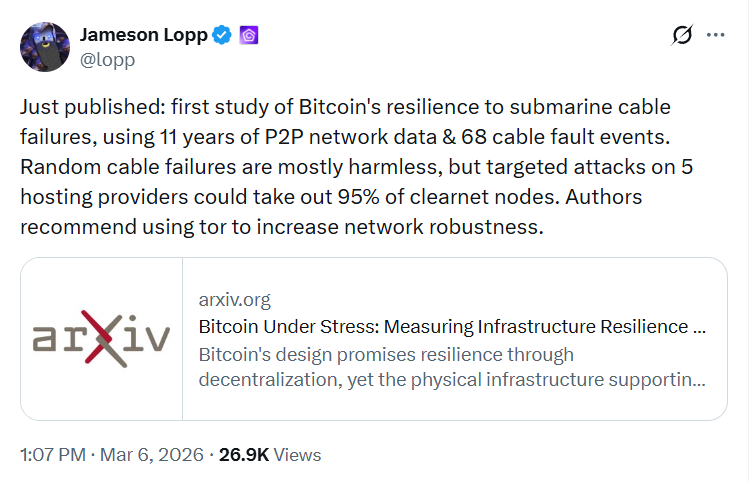
In recent years, however, the network’s vulnerability has shifted toward centralized hosting providers. A targeted attack on major operators such as Hetzner, OVHcloud, Comcast, Amazon Web Services, and Google Cloud could temporarily disable up to 95% of visible nodes by shutting down just 5% of capacity. At the same time, even a complete shutdown of the clearnet would not stop the network thanks to the resilient structural layer of Tor, whose share has grown from zero in 2024 to 63% today (14,602 nodes).
Impact of Repressive Measures and Global Decentralization
Paradoxically, the mining ban in China in 2021, which was initially seen as a blow to the network, actually contributed to its decentralization. Hashrate was redistributed across the globe, while increasing censorship pushed operators toward Tor, raising the network’s critical resilience index from 0.72 to 0.88. This example demonstrates that attempts to restrict cryptocurrencies often stimulate adaptation and strengthening of decentralized structures.
Conclusion: New Eras and Long-Term Perspective
The remaining one million bitcoins is not just a number. It symbolizes the approach of the final phase of issuance, when the network’s economy will depend entirely on transaction fees and market demand. Mining is becoming increasingly professional and capital-intensive, while network resilience is becoming a matter of strategic interest.
Bitcoin continues to prove that its decentralized architecture can adapt to virtually any external challenge—from physical infrastructure failures and regulatory pressure to economic stress on miners. Against the backdrop of the gradual reduction in block rewards, each new step in the network demonstrates how carefully designed the protocol is and how long-term the stability of the cryptocurrency has been engineered.
In the coming decades, market participants will focus on transaction fees, technological resilience, and global decentralization. For now, however, the final million BTC still remain to be mined, and miners, analysts, and investors continue to watch every block closely, aware that the network is moving toward the end of its issuance path—a process that will last nearly another century.
All content provided on this website (https://wildinwest.com/) -including attachments, links, or referenced materials — is for informative and entertainment purposes only and should not be considered as financial advice. Third-party materials remain the property of their respective owners.