

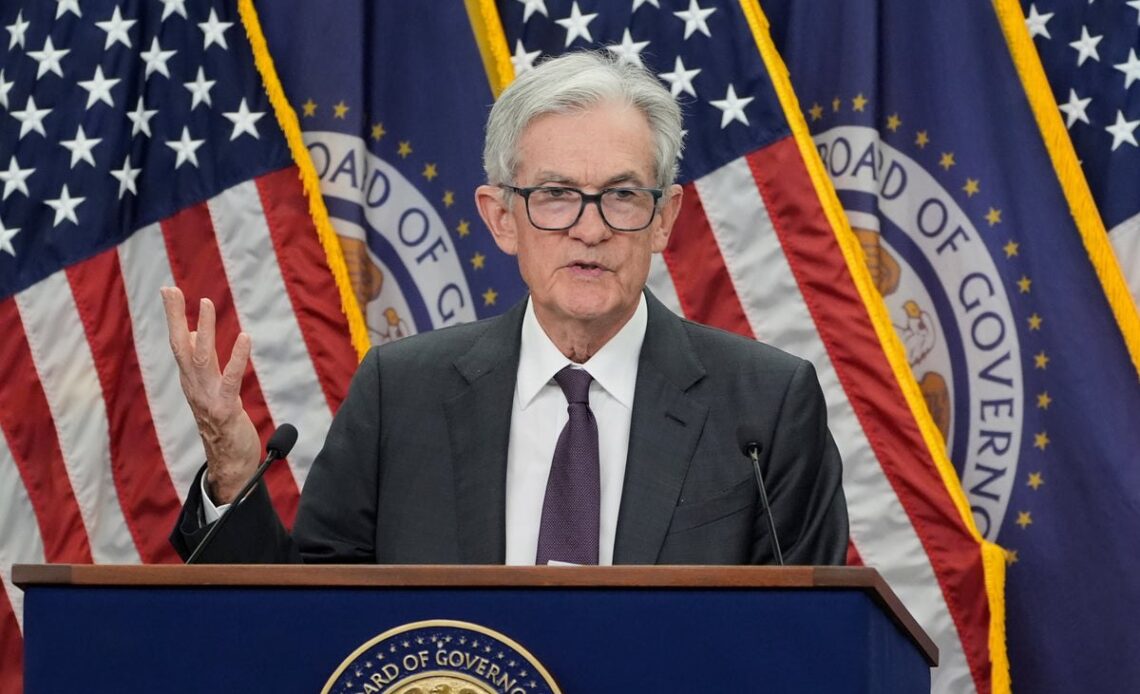
The U.S. Federal Reserve meeting on March 18, 2026, at 8:00 PM Kyiv time was formally predictable, but in reality, it turned out to be one of the most important events for markets in recent months. The interest rate will almost certainly remain unchanged, but the real intrigue is not in the number itself, but in the words of Fed Chair Jerome Powell. His rhetoric will determine where the markets move in the coming weeks — upward on hope or downward on disappointment.
Reuters analysts agree: the baseline scenario is a pause. After a series of aggressive actions, the Fed is taking a break to assess the cumulative effect. However, the situation is far from comfortable. Rising energy prices and unstable geopolitical conditions are fueling inflation expectations once again. This means the room for rapid policy easing remains limited. Simply put, inflation has not yet had its final word, and the Fed is well aware of it.
According to Bloomberg, the regulator faces a classic dilemma: on one hand, signs of a cooling labor market, and on the other, new inflation risks, mainly related to oil and geopolitical factors. In this context, the Fed chooses a “wait & see” strategy — an observation mode. This means that every next decision will heavily depend on incoming macroeconomic data: inflation, employment, and consumer activity. Any surprise in the statistics can now sharply alter the course.
The Wall Street Journal emphasizes: investors no longer have illusions about the current meeting — its outcome is already priced in. The real battle will revolve around signals about the future. Markets will literally “parse Powell’s words,” trying to understand when the rate-cutting cycle will begin, and whether it will begin at all in the near term. One hint of dovish rhetoric can trigger gains in stocks and cryptocurrencies, while a firm tone can quickly restore market jitters.
Major investment banks, such as Goldman Sachs and Barclays, have already begun adjusting their forecasts. If until recently the market expected earlier easing, expectations are now shifting to the second half of the year — September or even later. This indicates diminishing confidence in a rapid policy turnaround.
And here lies the main tension of the moment. Markets are tired of waiting for cheap money, but the economy is not yet giving the Fed sufficient grounds for a turnaround. Cutting rates too early could reignite inflation, while cutting too late could deepen economic slowdown. Balancing these risks is almost a precision task.
Therefore, today’s meeting is not about the rate itself. It’s about expectations, signals, and tone. If Powell makes it clear that rate cuts are indeed possible in the foreseeable future, markets will receive a strong boost. If the emphasis is on inflation risks and the need to “stay the course,” investors may face a new wave of caution.
In other words, the decision is already known. The question is how it will be “packaged.” And in the markets, as practice shows, sometimes the packaging costs more than the product itself.
All content provided on this website (https://wildinwest.com/) -including attachments, links, or referenced materials — is for informative and entertainment purposes only and should not be considered as financial advice. Third-party materials remain the property of their respective owners.