

South Korea is preparing for one of the most significant shifts in crypto regulation in the past decade. The country’s financial authorities intend to lift the ban on corporate investments in cryptocurrencies that has been in place since 2017 – effectively for almost nine years. This move opens the market to a large inflow of institutional capital and could radically change the structure of the entire Korean crypto industry.
According to South Korean financial media, the Financial Services Commission (FSC) has already prepared a draft of “guidelines on digital asset trading for public companies” and submitted it for review to a joint government-business working group. The final version of the rules is expected to be published in January-February, while full approval of corporate investments is set to come into force no later than the end of the current year, in parallel with the advancement of the basic digital assets law.
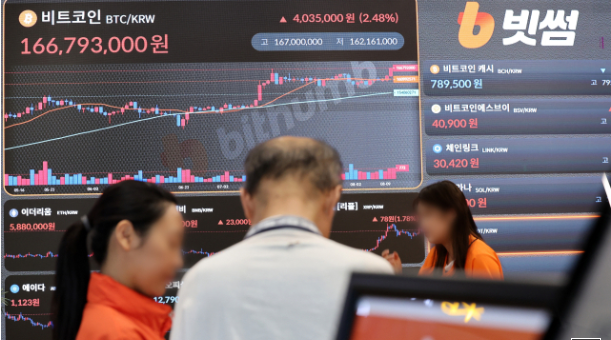
The key change is that public companies and professional investors will be allowed to invest up to 5% of their own capital in cryptocurrencies. This includes Bitcoin, Ethereum and other tokens that are in the top 20 by market capitalization based on semiannual reports from the country’s five largest licensed crypto exchanges. According to the regulator’s estimates, this will open the market to around 3,500 legal entities whose funds were previously completely cut off from the crypto sector.
At the same time, the authorities have immediately outlined a cautious approach. The annual investment limit will be strictly capped at 5% of capital in order to reduce risks to corporate balance sheets and financial stability. In addition, the regulator plans to introduce additional requirements for trading mechanics: standards for fractional transactions, restrictions on aggressive orders outside the acceptable price range, and other measures aimed at reducing volatility and preventing sharp price distortions.
A separate and still unresolved issue is stablecoins. The possibility of investing in dollar-pegged tokens such as USDT and other stablecoins is still under discussion. The authorities fear that a massive inflow of liquidity into such instruments could increase systemic risks and create additional channels for capital outflows beyond the national financial system. A final decision on this issue has not yet been made.
It is important to note that this step is not spontaneous. Back in February last year, the Financial Services Commission announced a two-stage plan to allow legal entities into the crypto market, stating that investments and operations for financial and treasury purposes would be permitted in the second half of 2025. Current actions mark the transition from declarations to practical implementation.
The regulator openly states that it expects the lifting of the ban to bring not just higher trading volumes, but a qualitative transformation of the market. Authorities believe that corporate capital will help shift the focus from short-term speculation toward long-term investments, increase liquidity, resilience and transparency of the market, and bring it closer to the standards of developed financial jurisdictions.
At the same time, the industry’s reaction is mixed. Most market participants welcome the very fact of allowing legal entities, calling it a long-overdue and necessary step. However, the 5% capital limit has drawn criticism. Industry representatives point out that in the United States and Japan there are effectively no strict limits on corporate investments in digital assets, while in the EU and Singapore much more flexible regimes are in place. According to some experts, the existence of an investment cap could weaken the potential inflow of capital and slow the emergence of specialized crypto investment companies within the country.
Nevertheless, even with these restrictions, this represents a turning point. South Korea has long remained one of the world’s largest retail crypto markets, while almost completely excluding the corporate segment. Now the situation is changing. The removal of the nine-year ban means that cryptocurrencies are officially recognized as an acceptable element of corporate financial strategies rather than a temporary speculative phenomenon.
In effect, Korea is taking a step toward the institutionalization of the crypto market in line with developed economies. And although the regulator is moving cautiously, the direction is clear: digital assets are gradually moving out of the gray zone and becoming a full-fledged part of the country’s financial system.
All content provided on this website (https://wildinwest.com/) -including attachments, links, or referenced materials — is for informative and entertainment purposes only and should not be considered as financial advice. Third-party materials remain the property of their respective owners.