


Talk about the “AI bubble deflating” did not appear out of nowhere, but it is important to set the tone correctly from the start: the market is not collapsing, it is going through a phase of overheating and sharp revaluation. And such moments always look dramatic, especially when numbers start moving faster than investors’ expectations can adjust.
What is currently happening with memory and SSD prices is a classic cycle effect in the semiconductor industry, amplified by the hype around artificial intelligence. At some point, demand for infrastructure for data centers, model training, and cloud services grew so quickly that manufacturers began scaling capacity ahead of time. The market believed this growth would be linear and endless. But in reality, demand always moves in waves. And when one major contract drops out — especially if it truly accounted for a significant share of global volume — the system loses balance.
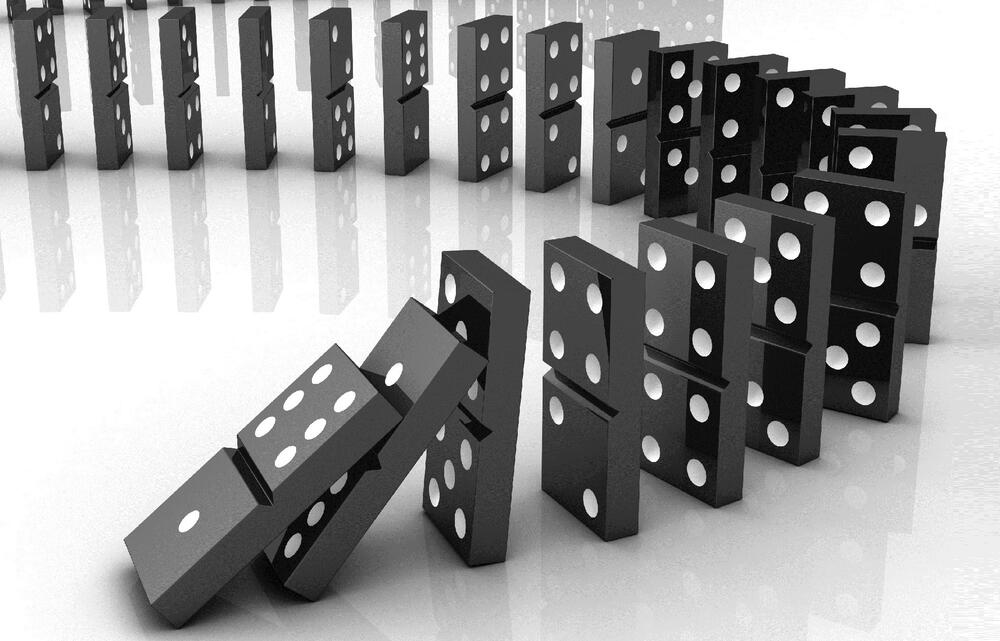
Then the so-called “domino effect” kicks in. Manufacturers are left with inventories that need to be cleared. Prices begin to fall, first selectively, then broadly. China, as a more sensitive market, reacts faster and more aggressively — hence the drop of tens of percent. Europe follows, but at a more moderate pace. The U.S. is still holding up, but the trend is clear: excess supply is starting to pressure the market.
It is important to understand that memory is one of the most cyclical segments in the tech industry. It has historically gone through periods of shortage and surplus. Now this cycle coincides with the AI boom, which is why it appears larger than it actually is. In practice, this is not a collapse, but a correction after overheating.
A separate issue is GPUs and data centers. Here the situation is more nuanced. Companies indeed actively purchased equipment based on expectations of explosive growth in AI workloads. But infrastructure is not consumed instantly. It is built with запас capacity. At some point, that reserve becomes excessive, and new purchases slow down. This creates the impression that demand is falling, although in reality it is simply temporarily saturated.
And this is where things become most interesting for investors. Because the stock market, especially in the tech sector, is driven not by current sales, but by expectations of future growth. If expectations were overstated, even a small slowdown looks like a disappointment. That is why Nvidia’s stock may react more strongly than the actual changes in its business.
Now to the main question — whether it is worth entering Nvidia “on the dip.” The short answer: it depends on your time horizon and patience. In the short term, the market is nervous. Any news about falling hardware prices, excess capacity, or slowing demand can put pressure on valuations. In such moments, “buying the dip” often turns into catching a falling knife. And the market, as practice shows, can fall longer than investors are willing to wait.
But if you look more broadly, the picture changes. Nvidia remains a key player in AI infrastructure. It is not just a GPU manufacturer, but a company that effectively sets the standard for AI computing. Even if the current cycle is overheated and requires correction, the overall trend is not going anywhere. Demand for computing power, data processing, and model development will continue to grow. The only question is the pace.
Therefore, the current situation is not so much the “end of the bubble” as it is a transition from the stage of euphoria to the stage of selection. The market is beginning to separate real long-term stories from short-term hype. And in such periods, strong companies can indeed offer more attractive entry points — but not immediately and not without volatility.
The most common mistake in such moments is acting too quickly. When prices fall, there is a feeling that you must “buy while it’s cheap.” But the market rarely gives a perfect entry point on the first attempt. More often, it tests patience: it rebounds, falls again, creates false signals. That is why a more conservative approach now looks reasonable — to observe how the situation stabilizes, how company reports react, and how real demand behaves at the business level.
To simplify, here is what is happening. The hype around AI has not disappeared, but the market is no longer buying into the “growth at any cost and without pauses” scenario. It is starting to factor in cyclicality, overinvestment, and real demand constraints. And that always leads to revaluation.
And the main conclusion here is quite calm. This is not a story about “everything is over.” It is a story about the market returning to a more mature state, where not only beautiful projections matter, but also the economics behind them. And for investors, this means one thing: there will be more opportunities, but they will require patience and a cool head.
All content provided on this website (https://wildinwest.com/) -including attachments, links, or referenced materials — is for informative and entertainment purposes only and should not be considered as financial advice. Third-party materials remain the property of their respective owners.