

The stablecoin issuer Tether continues to actively expand its investment activities beyond the cryptocurrency industry. The latest step in this strategy is a $50 million investment in the startup Eight Sleep, which specializes in developing technologies for sleep monitoring and improvement. The investment was made as part of a new funding round that valued Eight Sleep at approximately $1.5 billion.
The round was officially announced on March 3 and continued a series of major capital raises. Last summer Eight Sleep had already raised around $100 million from investors. The company develops so-called sleep-tech solutions – devices and services designed to analyze sleep and optimize nighttime recovery of the body.

Its product line is primarily based on smart mattresses, biometric monitoring systems and supporting products including supplements aimed at improving sleep quality.
Tether’s investment is part of a broader strategy to diversify its business. The company, known as the issuer of the world’s largest stablecoin Tether (USDT), has been actively expanding its investment portfolio in recent years. Revenue generated from managing the reserves of the stablecoin allows the company to accumulate significant financial resources that are allocated to various industries. These already include projects in gold, media, biotechnology, artificial intelligence and energy. In the past there were also discussions about the company’s possible participation in the purchase of professional football clubs.
Now health technologies and personal medicine have been added to that list. In an official statement Tether emphasized that the future of consumer healthcare will be defined by systems capable of transforming a continuous stream of biometric data into practical recommendations for improving health and lifestyle.
According to the company, such solutions are forming a new infrastructure of digital medicine where personal health data is collected in real time and analyzed using artificial intelligence.
A key element of the future partnership between Tether and Eight Sleep will be the integration of the artificial intelligence architecture called QVAC. The platform was introduced by Tether in December 2025 and is designed to combine data from multiple biometric information sources.

QVAC collects metrics from wearable devices – smart rings, fitness trackers, sleep sensors and other gadgets – and creates a unified analytical system. The main feature of the platform is its local data processing principle. Unlike traditional cloud-based solutions, information is analyzed directly on the user’s device without being transmitted to remote servers.
This approach significantly increases the level of medical data privacy. As requirements for personal data protection become stricter, especially in Europe and the United States, such an architecture could become an important competitive advantage.
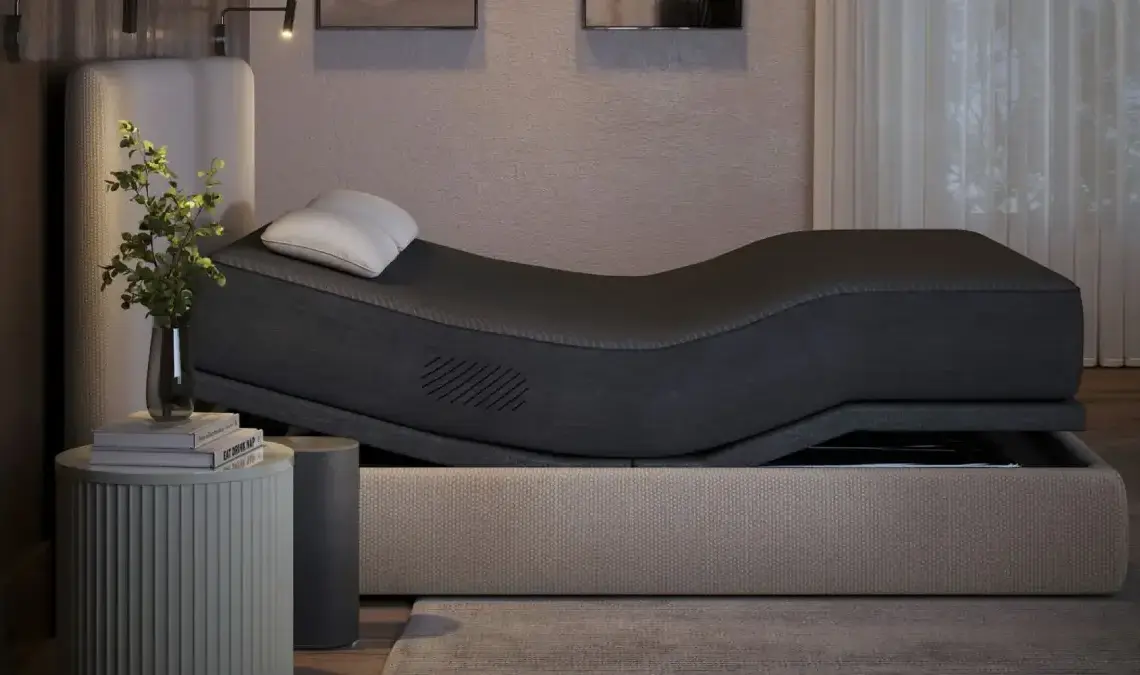
For Eight Sleep the partnership with Tether is seen as an opportunity to significantly accelerate the development of its products. The company’s main device remains the Pod sleep system – a smart mattress equipped with a complex set of sensors and automatic systems for regulating sleep conditions.
Pod can analyze several physiological indicators during sleep including heart rate, breathing, body temperature, snoring intensity and sleep phases. Based on these data the system automatically adjusts mattress temperature, changes the surface angle and manages the sound environment in the bedroom.
Built-in algorithms already use elements of machine learning to adapt settings to the user’s individual characteristics. However the new funding implies a transition to more advanced data analysis systems.
According to Eight Sleep founder and CEO Matteo Franceschetti the company is developing a full-fledged AI agent capable of predicting sleep disorders and offering personalized recommendations to users. To train the algorithms the company uses a dataset exceeding one billion hours of sleep observations collected from Eight Sleep device users.
One of the key development areas is the detection of sleep apnea syndrome – a condition in which a person’s breathing periodically stops during sleep. This is a widespread but often undiagnosed disorder that can lead to serious consequences for the cardiovascular system.
The company is already working on obtaining approval from the U.S. Food and Drug Administration to use its technology for detecting sleep apnea. If the regulator approves this functionality Eight Sleep devices could move from the category of consumer electronics into the category of medical devices.

Such a transition would have major business implications. Medical devices are subject to stricter certification standards but gain access to an entirely different market including clinical medicine, the insurance sector and professional medical equipment.
According to Franceschetti the company aims to create the most seamless AI-based health monitoring system. In the ideal model users will be able to receive medical diagnostics and recommendations directly at home without wires, laboratory visits or complex medical procedures.
For Tether participation in such a project fits its long-term strategy of transforming from a cryptocurrency issuer into a major technology investor. In recent years the company has accumulated significant liquidity thanks to managing the reserves backing the USDT stablecoin.
Part of these funds is invested in traditional financial instruments including U.S. government bonds, but an increasingly visible share is being directed toward strategic technology projects.
From a market perspective the investment in Eight Sleep can be seen as a bet on the intersection of several rapidly growing industries – artificial intelligence, wearable devices and personalized medicine.
Interestingly the development of such technologies is taking place amid growing interest in sleep quality as a key factor of health. Research shows that chronic sleep deprivation is associated with increased risks of cardiovascular diseases, diabetes, depression and cognitive impairment. This is turning the sleep-tech market from a niche gadget segment into a full-fledged branch of digital medicine.
However the strategy also carries potential risks. The QVAC platform on which Tether is betting will compete with existing medical data ecosystems such as Apple Health and Google Fit. These platforms have enormous user bases and deep integration with mobile devices.
In addition the medical data market is highly regulated. Any system processing biometric information must comply with strict requirements for security, transparency and privacy protection.
Tether’s focus on local data processing could prove strategically justified. As restrictions on transmitting medical information through cloud services increase, such solutions may become the foundation for new standards in digital medicine.
If Eight Sleep succeeds in obtaining FDA approval and bringing its technology to the level of medical diagnostics the partnership with Tether could become one of the most unusual examples of cooperation between the cryptocurrency industry and biomedical technologies.
In that case a company known primarily for the USDT stablecoin may gradually transform into an investor playing a significant role in building the infrastructure of future personalized medicine.
All content provided on this website (https://wildinwest.com/) -including attachments, links, or referenced materials — is for informative and entertainment purposes only and should not be considered as financial advice. Third-party materials remain the property of their respective owners.