

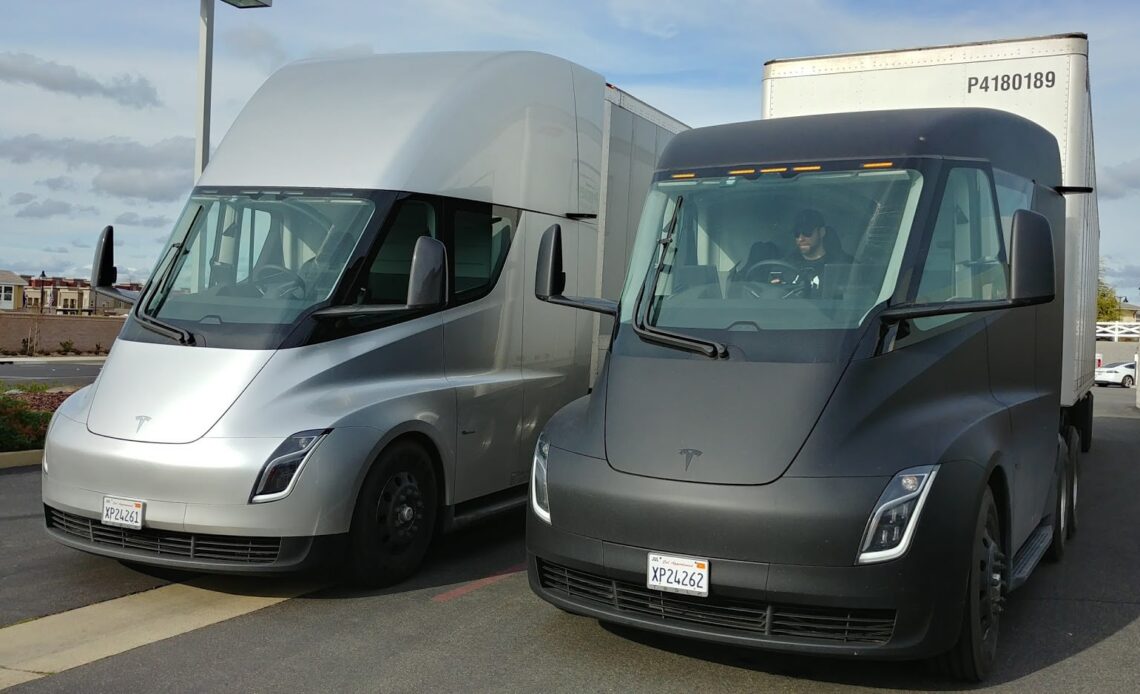
Tesla, after years of waiting, has finally approached the full launch of serial production of its electric tractor Semi — a project long considered too ambitious even by the company’s standards. And, judging by early feedback from drivers and logistics companies, the novelty is already starting to change the perception of freight transport.
The story of Tesla Semi is a classic example of a “long start.” The tractor was first presented back in 2017, and at that time plans looked extremely optimistic: mass production by 2020. Reality proved more complicated. Problems with batteries, scaling production, and global supply chains delayed the launch by almost three years. The first real vehicles began to be delivered to customers only at the end of 2022, and even then in limited batches for test operation.
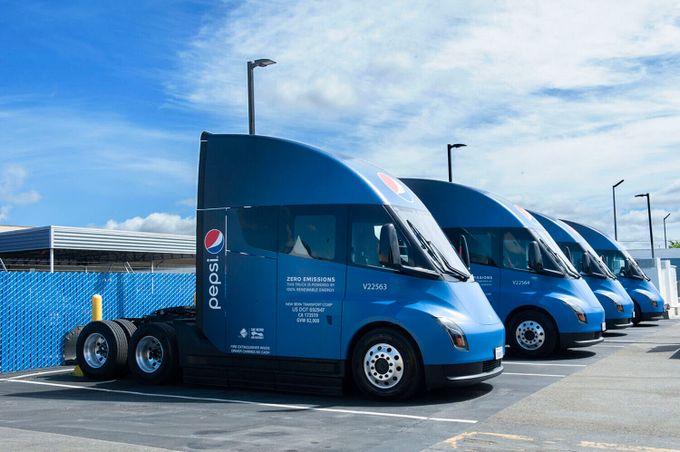
Since then, Semi has gradually undergone “baptism by fire” in the largest logistics companies. Among the first users are PepsiCo, DHL, Walmart, and US Foods. For Tesla, this is a critical stage: not just to showcase the technology, but to prove its effectiveness under real conditions — with loads, schedules, and business requirements. It is at this stage that it becomes clear that the Semi is not just an “electric truck,” but an attempt to rethink the very architecture of the tractor.
One of the most discussed features is the central driver seat. Unlike classic trucks, where the driver sits on the left, here the driver is positioned strictly in the center of the cabin.
At first glance — unusual. In practice — a serious advantage. The right “blind” spot disappears, and road visibility becomes symmetrical. Combined with the camera system and side screens, the driver gets almost full control over the surroundings.
A notable case occurred with one driver during tests. Facing a difficult situation on a narrow turn, he was able to maneuver without leaving the cabin, thanks to the 360-degree view and digital assistants. In a traditional tractor, this would have required several stops and visual checks of the trailer position.
But changes affect not only ergonomics. Tesla bets on full digitalization and simplified control. The Semi lacks the clutch pedal familiar to many drivers, and the control system is closer to passenger electric cars than classic trucks. For some drivers, this is initially unusual, but according to feedback, adaptation is fast — especially due to smoother ride and absence of vibrations.
The key question for the market is not convenience, but economics. And here Tesla bets on a combination of range and charging speed. The declared range is up to 800 kilometers on a single charge, which already brings the electric tractor close to the capabilities of diesel counterparts. At the same time, the company is developing its own megacharger infrastructure, which allows recharging much faster than ordinary electric vehicles.
The tractor is estimated at around $300,000. This is significantly higher than traditional diesel trucks, but the bet is on reducing operating costs: less spending on fuel, maintenance, and repair. Electric motors are simpler in design, and the absence of a gearbox and complex mechanical components reduces the likelihood of breakdowns. For logistics companies, this is a matter of long-term economics. If Tesla can prove that total ownership costs are lower than diesel counterparts, this could be a turning point for the entire industry.
Interestingly, the interest in the Semi is driven not only by companies but also by drivers themselves. In an industry where staff shortages remain a chronic problem, comfort and convenience increasingly matter. A quieter cabin, no vibrations, digital interfaces, and improved visibility — all make work less exhausting.
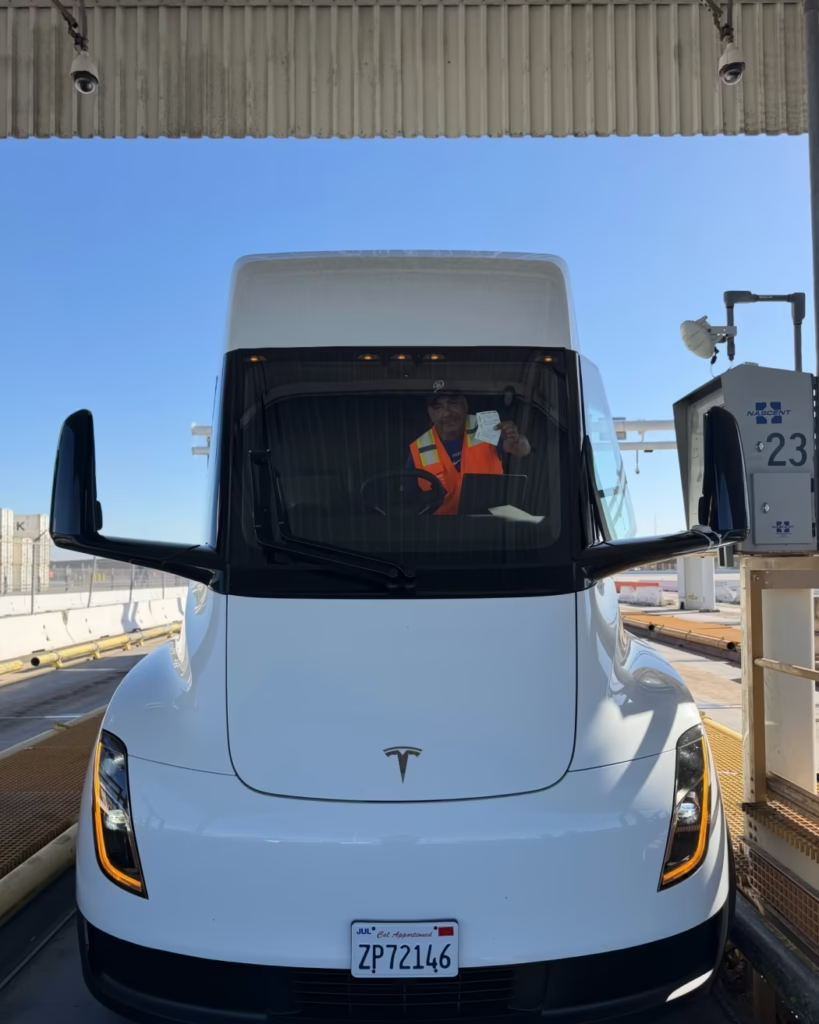
However, it is too early to speak of a complete breakthrough. Main questions remain: scaling production, developing charging infrastructure, and real efficiency on long routes. Freight transport is an industry with tight economics, where every minute of downtime and every kilometer matters.
Nevertheless, Tesla has already achieved the main goal — turning the Semi from a concept into a working product, tested by the market. Early results show that interest in electric tractors is no longer just a trend, but a potential direction for transforming the entire logistics industry. If the company can scale production to mass levels and confirm economic efficiency, the Semi could become the moment when electric transport finally moves beyond passenger cars and enters one of the most conservative segments of the economy.
A video clip of the presentation can be viewed on our Telegram channel
All content provided on this website (https://wildinwest.com/) -including attachments, links, or referenced materials — is for informative and entertainment purposes only and should not be considered as financial advice. Third-party materials remain the property of their respective owners.