


The U.S. Department of Justice announced the high-profile arrest of 34-year-old Bruce Choi, who is suspected of fraudulently obtaining over $2 million through federal business support programs established during the COVID-19 pandemic. According to authorities, part of these funds was allegedly used by Choi to purchase cryptocurrency, adding a new twist to an already complex case.
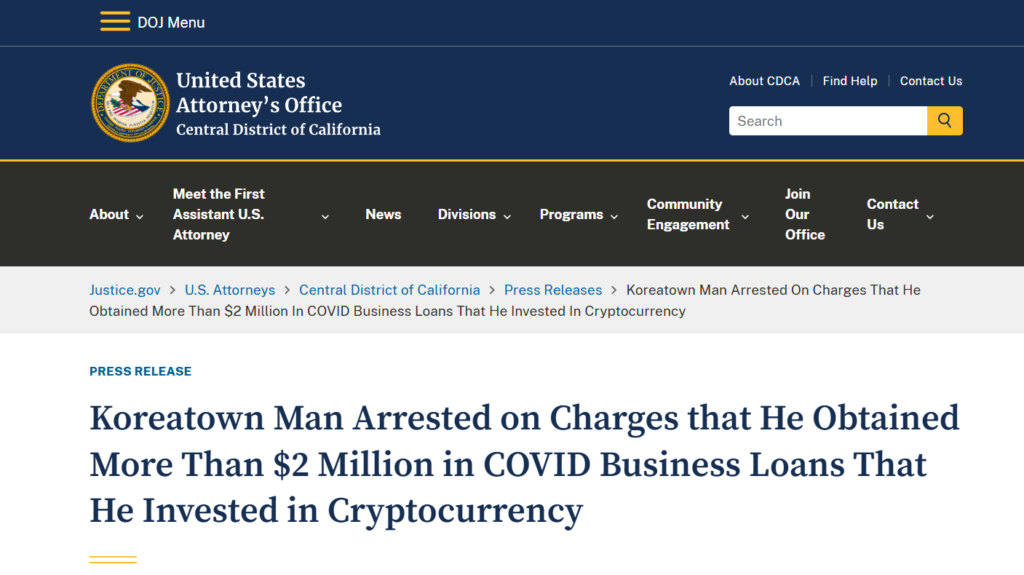
Choi is a taxi and ride-sharing driver from Koreatown, Los Angeles. He was arrested at San Francisco International Airport immediately after arriving from Japan. He is charged with four counts of wire fraud affecting a financial institution and one count of money laundering. Prosecutors emphasize that these were systematic actions aimed at circumventing federal oversight and obtaining substantial sums under false pretenses.
Fake companies and forged documents
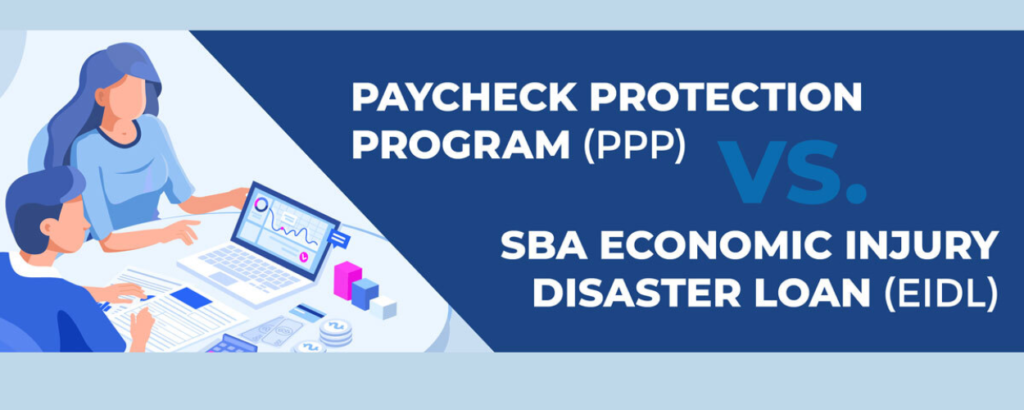
According to the investigation, from May 2020 to December 2024, Choi regularly submitted fraudulent loan applications under the Paycheck Protection Program (PPP) and the Economic Injury Disaster Loan (EIDL), which were designed to support small businesses and compensate for economic losses during the pandemic and other emergencies.
Authorities allege that Choi claimed to be the CEO and owner of a company called Premier Republic. In submitted documents, he stated that the company had a monthly payroll of $798,000, had been operating since mid-February 2020, and was paying wages and taxes. However, investigators say that this company did not exist: it conducted no actual business and had no employees.
To support his claims, Choi submitted a forged 2019 tax return stating that his “company” had revenue of approximately $11.8 million and nearly $9.6 million in net profit. He also allegedly provided a fake bank statement showing “deposits” and “transfers” of $798,000 for the period of February 1–31, 2020—a month that does not exist—highlighting the absurdity of the fraud.
Additionally, Choi reportedly applied for another loan under a company called Bruce, supposedly operating in real estate. The documents claimed that the business had ten employees and earned $475 million in 2019. Prosecutors emphasize that this business also did not exist.
Fraud amount and cryptocurrency transfers
Through this scheme, Choi obtained nearly $1.99 million from lending institutions. In addition, the U.S. Department of the Treasury issued him a $10,000 advance under the EIDL program. Authorities claim that part of these funds was later transferred to a Kraken cryptocurrency account, allowing Choi to obscure transaction traces and partially “cash out” in crypto.
During the investigation, federal prosecutors seized nearly 40 BTC and other cryptocurrencies, representing a significant dollar value and demonstrating the scale of illicit digital asset activity.
Legal status and potential penalties
The Department of Justice emphasized that the charges are formal allegations. Choi is presumed innocent until proven guilty in court. If convicted, he faces up to 30 years in prison for each count of fraud and up to 10 years for each count of money laundering. Considering the number of counts, the total potential sentence could be extremely severe.
Implications and significance
The Bruce Choi case is a striking example of how criminals can exploit complex federal programs and digital technologies for illicit enrichment. It also highlights the vulnerabilities in government small business support systems, where document verification may be cursory, and fraud schemes can be meticulously planned.
Moreover, the case draws attention to the intersection of cryptocurrencies and the legal system. Transferring part of the funds to a crypto exchange illustrates how digital assets are increasingly used as tools to conceal income sources and complicate investigations.
Finally, this case serves as a warning to investors and crypto users: technologies that provide new opportunities can also be misused in illegal schemes, while authorities continue to refine methods for tracking and regulating such activities.
All content provided on this website (https://wildinwest.com/) -including attachments, links, or referenced materials — is for informative and entertainment purposes only and should not be considered as financial advice. Third-party materials remain the property of their respective owners.