

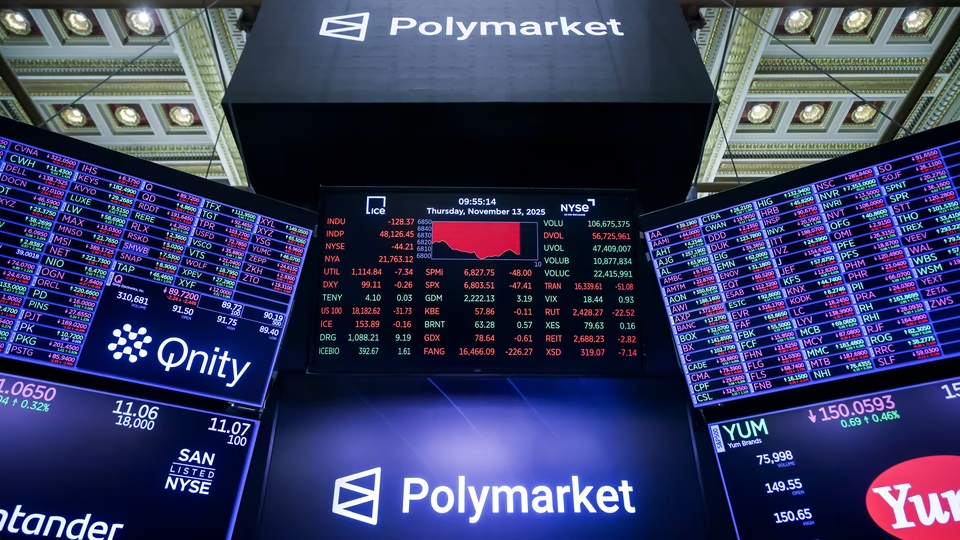
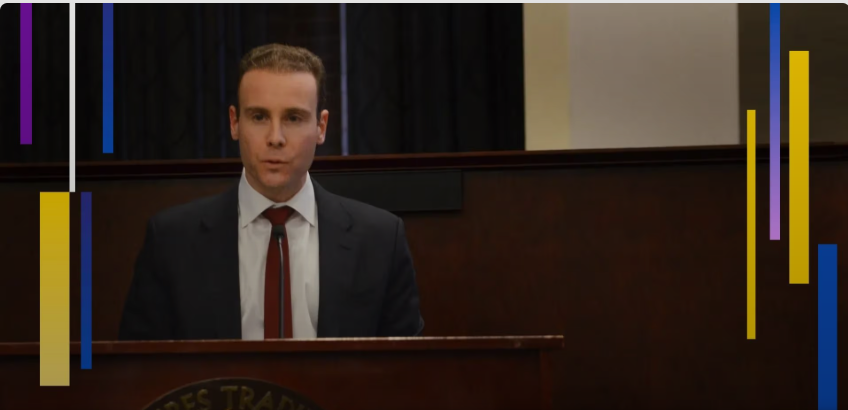
The statement by the Chairman of the Commodity Futures Trading Commission, Michael Selig, in support of Polymarket is not just a comment defending a single platform. It is a signal that prediction markets are beginning to be perceived by regulators not as a “betting toy,” but as a полноценный tool for processing information.
Selig effectively outlined a new framework: prediction markets are not about gambling, but about collective analysis of reality through money. In his logic, such platforms become a way to filter noise and combat misinformation. The idea here is quite simple, but powerful: when people risk their own funds, they are more likely to seek truthful information rather than follow emotions or headlines.
A particularly illustrative point was the reference to the 2024 U.S. elections. According to Selig, prediction markets in a number of cases turned out to be more accurate than traditional public opinion polls. And this is an important point. Classic surveys depend on many factors – from sampling to question wording. People may not tell the truth, may change their opinion, or simply answer “as expected.”
In prediction markets, everything works differently. There is no “correct answer” – there is only a price that reflects the collective assessment of the probability of an event. And if participants believe that the outcome is more likely than the market implies, they buy – and move the price. As a result, what forms is not an opinion, but an aggregated bet on the future.
Selig also emphasized the difference between such platforms and traditional casinos. In a casino, the player always bets against the house, where the mathematical edge is on the operator’s side. In prediction markets, the structure is different: participants trade with each other, and the price is formed through supply and demand, most often via an order book.
This, in his view, creates “real financial value.” The market does not just accept bets – it processes information, turning it into a price of probability. And the price, in turn, becomes an indicator of expectations.
But behind this elegant theory lies a deeper shift. In fact, this is about competition between different ways of understanding reality. On one side – media, social networks, and surveys. On the other – markets where information passes through the filter of capital. And increasingly, it turns out that the latter approach provides more accurate results, especially in conditions of high uncertainty.
This explains why platforms like Polymarket are attracting so much regulatory attention. On one hand, they can indeed become a powerful analytical tool. On the other – questions remain: where is the line between prediction and betting? how should users be protected? and how can such markets be integrated into the existing financial system?
It is also important that support from the head of the Commodity Futures Trading Commission may change the overall tone of regulation. Until now, many jurisdictions have treated prediction markets with caution, viewing them as a form of online gambling. Now an alternative perspective is emerging: they may represent a separate class of financial instruments.
More broadly, prediction markets are a kind of “exchange of probabilities.” They allow the evaluation not only of asset prices, but also of the likelihood of events: elections, regulatory decisions, economic indicators. In a world where uncertainty is becoming the norm, such tools may prove especially valuable.
However, they should not be idealized. They are not immune to manipulation, may suffer from low liquidity, and often depend on a limited set of participants. Moreover, not all events can be properly “priced” in monetary terms – especially when it comes to complex political or social processes.
Nevertheless, the very fact that a regulator of this level publicly acknowledges the value of prediction markets speaks volumes. It means that the market is beginning to move toward recognizing a new category of instruments – where money is used not only for investment, but also for evaluating the future.
In the end, a fairly clear picture emerges. Prediction markets are gradually stepping out of the shadows and claiming a role as an alternative source of truth in an information-overloaded world. And the key question now is not whether they work – but how exactly they will be integrated into the existing financial and regulatory system.
A video excerpt of the speech can be viewed on our Telegram channel
All content provided on this website (https://wildinwest.com/) -including attachments, links, or referenced materials — is for informative and entertainment purposes only and should not be considered as financial advice. Third-party materials remain the property of their respective owners.