

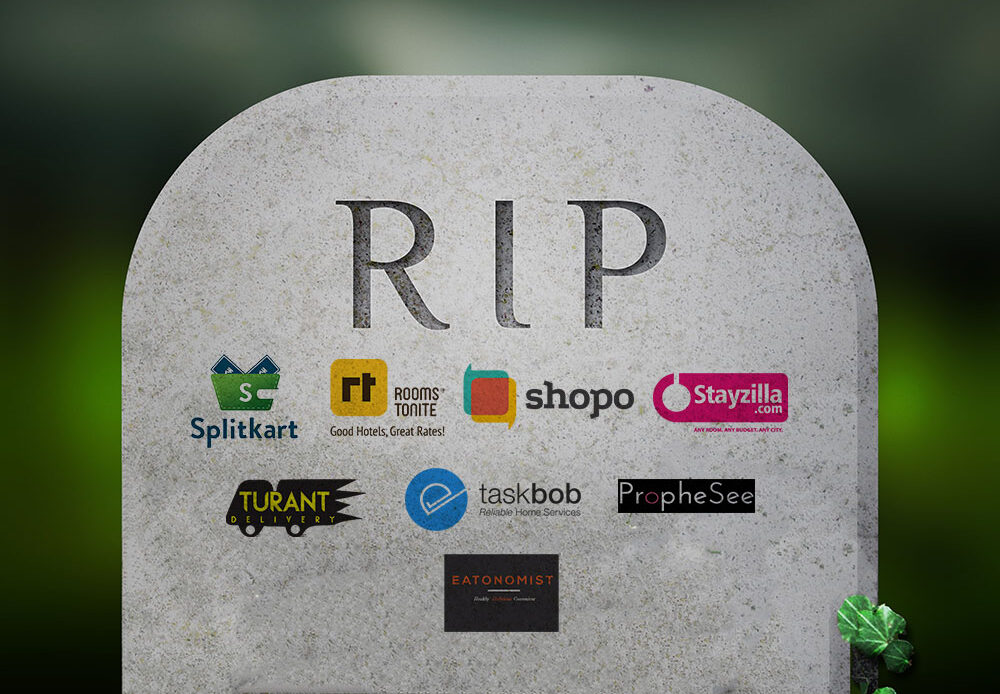
A unique project has appeared online — Startups.RIP, already being called a kind of “startup graveyard.” The platform hosts a database of over 5,700 closed companies that once went through one of the world’s most famous startup accelerators — Y Combinator. However, the project’s purpose is not merely to record the failures of the tech market. Its creators encourage viewing failed companies as a source of ideas and lessons for new entrepreneurs.
A Failure Archive as a Textbook for Founders
On the site, you can find profiles of startups that once raised investments, went through accelerator programs, hired teams, and launched products but ultimately failed to survive in the market.
Each project includes a description of the idea, the founding and closing year, possible reasons for failure, and an analysis of team mistakes. In some cases, comments from founders or investors are included if they were previously published.
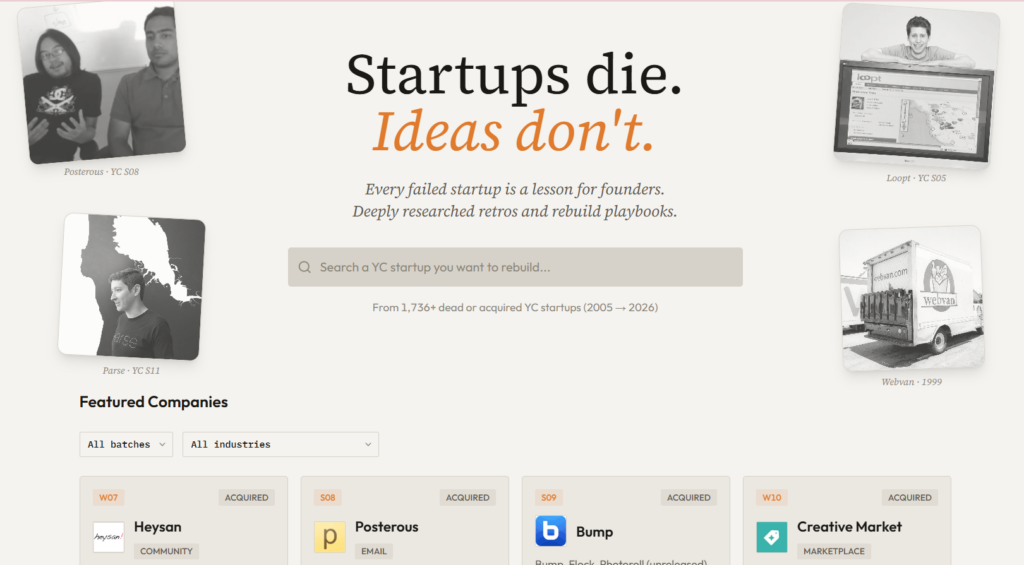
Thus, thousands of closed companies become a kind of library of entrepreneurial experience. While previously stories of failures disappeared with the companies, they now form an open knowledge base. Any entrepreneur can study the mistakes of predecessors, understand why an idea didn’t work, and try to implement it differently. Essentially, the platform turns startup industry failures into an educational resource.
Why Startups Close
Analysis of these projects shows that closure reasons often repeat:
- Lack of real demand for the product, when the team creates a solution for a problem that doesn’t actually exist;
- Launching an idea too early, when the market or technology isn’t ready;
- Incorrect business model: the product may be popular but not generate revenue;
- Internal team conflicts, financial management mistakes, too rapid expense growth, or dependence on a single investor.
The most interesting part of the project is that many of these ideas can be relaunched. The history of the tech industry shows that the first company with a new concept does not always become the winner. Sometimes an idea is simply ahead of its time or implemented in the wrong form.
Later, another team adapts it to a changed market.
- For example, Airbnb appeared several years after other attempts to create a short-term rental platform.
- Uber was not the first online taxi-hailing service.
- And TikTok is built on the concept of short videos, which existed long before its launch.

These examples show that the same idea can go through many failed attempts before being successfully implemented.
The Startups.RIP project emerged at a time when the startup industry is undergoing significant changes. After a period of cheap money and record investments, many tech companies faced tougher market conditions. Investors became more cautious, capital costs increased, and requirements for business sustainability strengthened.
Even companies like Stripe, Dropbox, and Coinbase once started as small experiments within the Y Combinator accelerator. But for every success story, there are thousands of projects that failed to survive.
Now these failures become a public source of knowledge. The platform effectively changes the perception of failure in entrepreneurship. Instead of hiding closed projects, they are viewed as experience that can help future teams avoid the same mistakes. This approach resembles a scientific process: each failed attempt is an experiment that brings you closer to the next successful result.
The Startup Industry Paradox
This is the main paradox of the startup industry. Companies may disappear, teams may break up, investments may burn out, but ideas rarely disappear completely. They can wait years until technology, the market, or user behavior changes.
It is entirely possible that among these 5,700 closed companies lies the concept of a future billion-dollar business — it just hasn’t been relaunched yet.
A video demonstrating the website can be viewed on our Telegram channel.
All content provided on this website (https://wildinwest.com/) -including attachments, links, or referenced materials — is for informative and entertainment purposes only and should not be considered as financial advice. Third-party materials remain the property of their respective owners.