

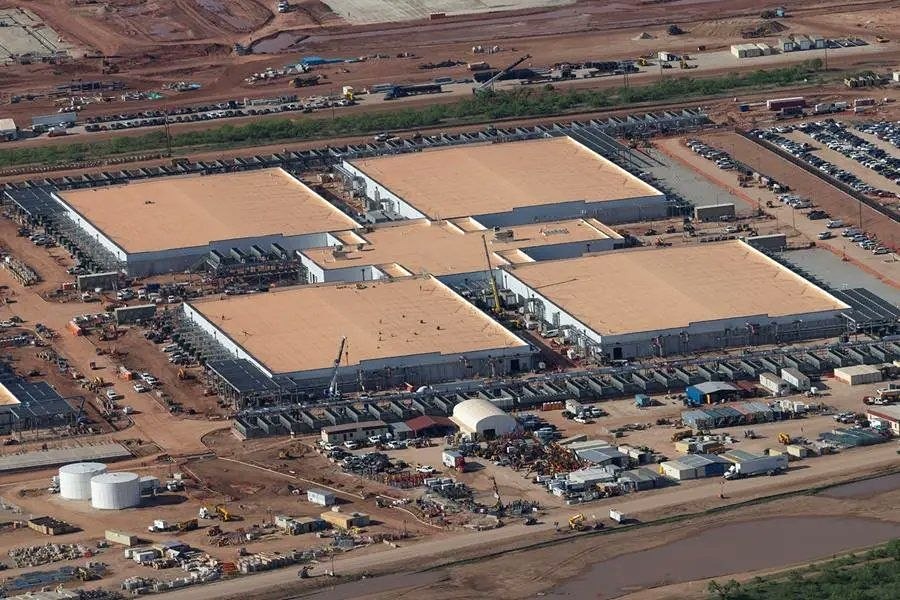
The situation around the threats against the Stargate project is no longer just a loud news headline, but a clear example of how technology has finally ceased to be “outside politics” and has become part of geopolitics on equal terms.
Iranian military officials have explicitly identified the Stargate data center in Abu Dhabi as a potential target. This is a project backed by giants such as OpenAI, Microsoft, and SoftBank. Formally, it is an infrastructure initiative worth tens of billions of dollars aimed at developing computing capacity for artificial intelligence. In essence, it is already a strategic asset comparable in importance to energy facilities or transport hubs.
The very fact of publishing satellite images of the site with the message “nothing stays hidden from our sight” is not just информационный noise. It is a signal. And a signal on several levels at once. First, a demonstration of intelligence capabilities. Second, an attempt at psychological pressure. And third, a formalization of a new reality: data centers are becoming legitimate targets in military logic.
The context here is крайне important. The threat came amid an escalation of conflict in which the United States is considering strikes on Iran’s civilian infrastructure — energy and water supply. In response, Tehran has clearly stated: the strikes will be symmetrical, but with a modern twist — not only oil facilities, but also technological infrastructure will be targeted.
And this is where it becomes most interesting. For a long time, we perceived data centers as “the cloud” — something abstract, distributed, and seemingly intangible. But reality, as always, brings things down to earth: the cloud is concrete, cables, transformers, and megawatts of energy.
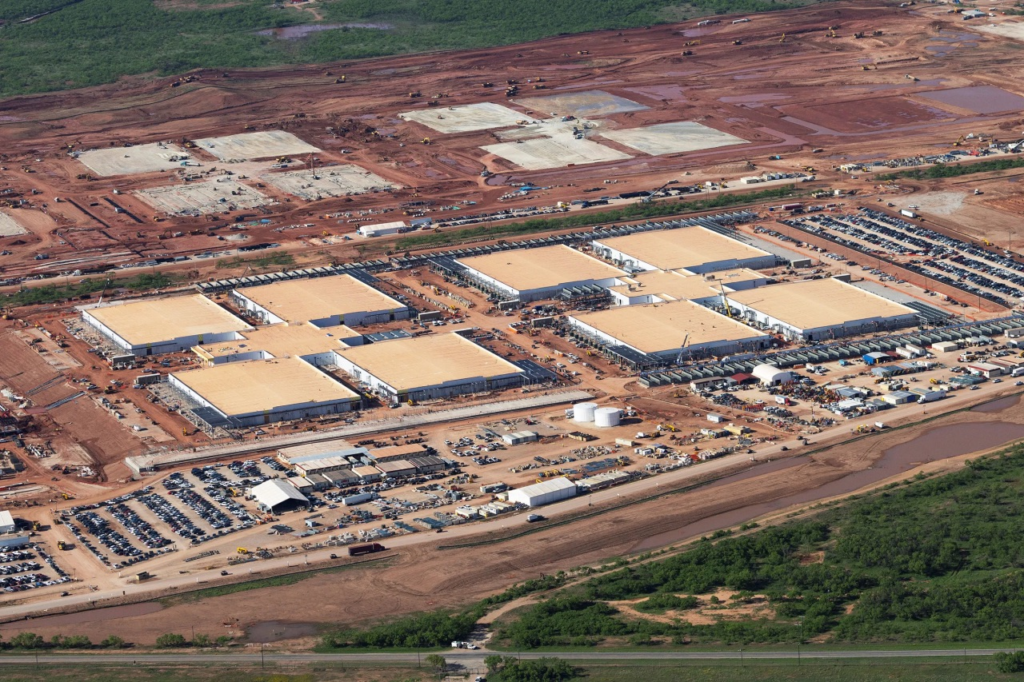
Which means it is just as physical a target as a factory or a power plant. There are already precedents. Missile strikes on Amazon Web Services facilities in Bahrain and an Oracle data center in Dubai are not hypothetical — they are real. Moreover, other technology companies, including Nvidia and Apple, have begun to appear in such rhetoric. This means that the tech sector has definitively entered the list of strategic targets.
The Stargate project itself is symbolic. It was conceived as a global AI infrastructure — a distributed network of data centers capable of supporting next-generation models. But as soon as infrastructure becomes global, it automatically falls into the field of geopolitical risk. And here lies a key mistake the market has long ignored: choosing a location for a data center is not just about energy, taxes, and access to talent. It is also about the geography of conflict.
Until recently, geopolitical risks were often buried somewhere at the end of presentations — in small print, like a footnote. Now they are becoming a central parameter. Because the cost of a mistake is no longer just higher expenses or project delays. It is the risk of physical destruction of the asset.
But there is an even deeper layer to this story. Artificial intelligence is no longer just a tool for analysis or automation. It is already embedded in military processes — from intelligence gathering to operational control. And this automatically makes AI infrastructure part of the military domain.
Simply put, technology used to serve the economy — now it serves security as well. And everything related to security becomes a target in times of crisis.
The mention of “Skynet” sounds ironic, but there is a grain of truth in it. Not in the sense of a machine uprising, of course, but in the sense that AI is already participating in conflicts. It does not fight on its own, but it amplifies those who do. Which means that the struggle for control over computing power is a new form of competition between states.
If we translate this into the language of investment and business, the picture becomes even more interesting. The AI market is currently valued through the lens of growth, demand, and technology. But increasingly, the factor of vulnerability will have to be considered. Where are the data centers located? How well are they protected? In which jurisdiction? In which risk zone?
This is where the new boundary lies between “just technology” and a “strategic asset.” In the end, a rather жесткий but logical conclusion emerges. The era when critical infrastructure could be built focusing only on electricity costs and internet speed is over. Now another parameter is officially added to the equation — the probability that the facility itself becomes a target.
And if раньше the question was “where is it cheaper and faster to build a data center,” now it is increasingly звучит differently: “where will it survive longer.”
All content provided on this website (https://wildinwest.com/) -including attachments, links, or referenced materials — is for informative and entertainment purposes only and should not be considered as financial advice. Third-party materials remain the property of their respective owners.