


Today, February 17, 2026, the markets begin a new week in a state of nervous anticipation — this is neither panic nor euphoria, but a kind of pause ahead of key macroeconomic data releases. The tone of the week is set by the combination of interest rates and artificial intelligence — two factors capable of dramatically changing the market landscape.
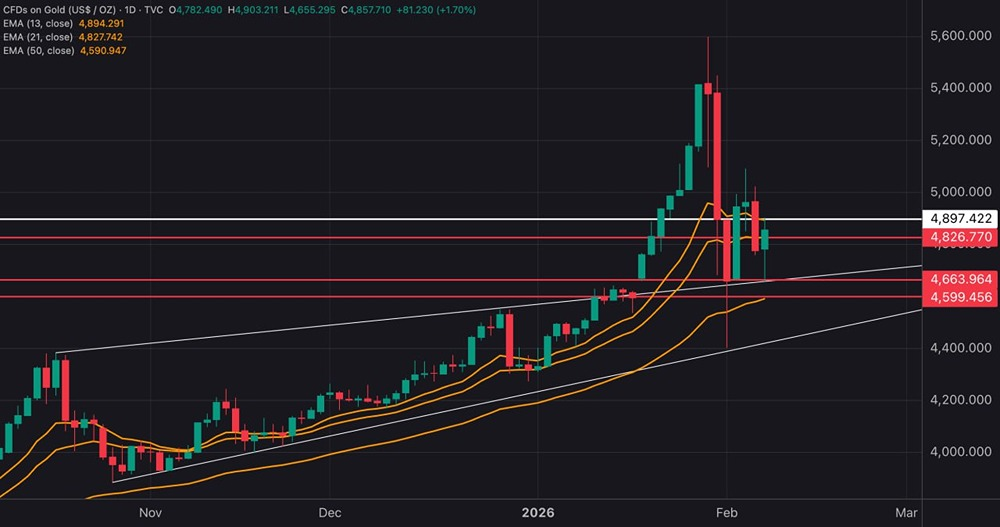
Gold Falls Below $4900
The precious metal no longer reacts to geopolitical events as it once did. Even the recent U.S.-Iran negotiations, which traditionally might have stimulated demand for “safe-haven” assets, had almost no impact on the market. Currently, gold behaves like a bet on Federal Reserve decisions: any expectations of rate changes are immediately reflected in prices. Investors are closely watching the upcoming Personal Consumption Expenditures (PCE) data, which will serve as a key guide for future monetary policy and determine the trajectory of rates.
Rotation Out of the Tech Sector
The Nasdaq index is under pressure as investors ask a simple but fundamental question: will the trillions of dollars invested in AI pay off? Apple is preparing a new presentation, but without a full-fledged AI-Siri — market expectations are adjusting once again. Today, investors are focused not on the number of new gadgets, but on revenue growth from AI-based products and services. After the market closes, Palo Alto Networks will report — a company that serves as an important test for the entire tech sector, as the cybersecurity segment remains one of the few with real demand growth and potential for sustainable revenue.
Europe: Unexpected Strength in the Commodity Sector
In Europe, the commodity market shows impressive results: miners record record profits, and copper is the main driver for BHP Group. This reflects market expectations for AI infrastructure and the electrification process, which supports demand for basic materials. Overall, the commodity sector appears stronger than broad indices, highlighting the growing role of fundamental factors, not just speculative interest.

Oil Declines
Oil prices are adjusting downward following U.S.-Iran negotiations, which removed part of the geopolitical premium. However, volatility persists: the market does not believe in a quick resolution of complex international issues, and any movements remain temporary and prone to sharp fluctuations.
Investor Takeaway:
Today’s market is not trend-driven; it is an expectations-driven market. The main trigger of the week is U.S. inflation data, which can set the direction for the coming months. Until these data are released, sharp but false movements are possible, so it is more important now to focus on risk management rather than seeking aggressive entry points. In this environment, discipline and caution become more important than trying to catch the “perfect moment,” as unpredictability and short-term fluctuations can deceive even experienced investors.
All content provided on this website (https://wildinwest.com/) -including attachments, links, or referenced materials — is for informative and entertainment purposes only and should not be considered as financial advice. Third-party materials remain the property of their respective owners.