

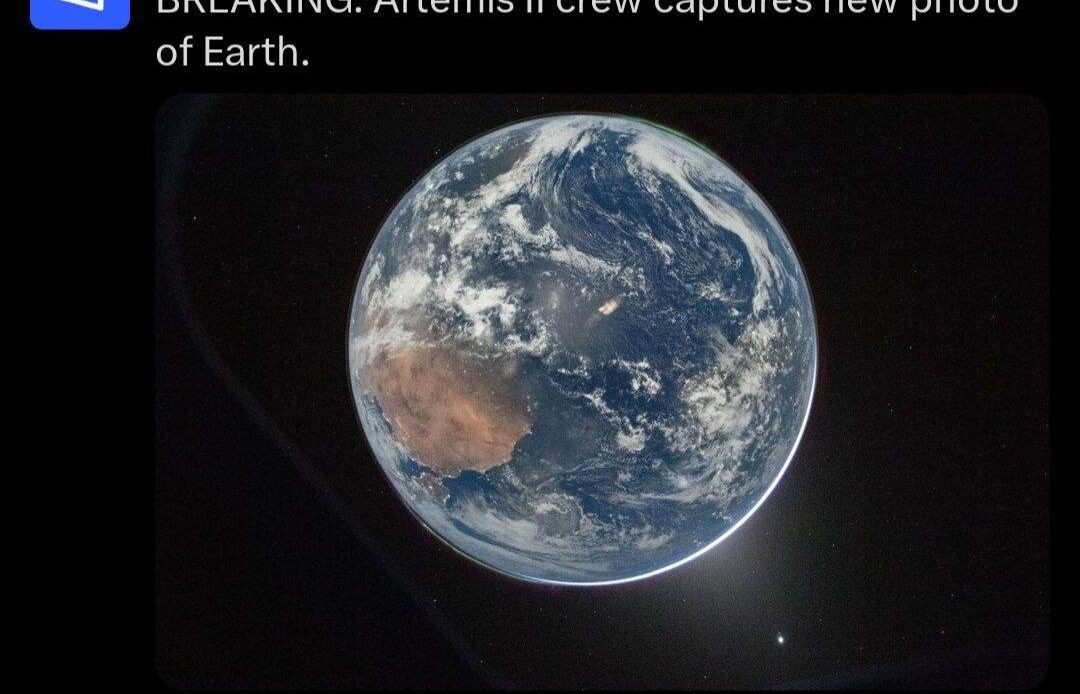
While everyone is arguing about where space ends and graphics begin, a new image of Earth from the Artemis II mission is gaining traction online. The photo was allegedly taken by the crew directly from orbit, and Polymarket is already actively posting it on X.

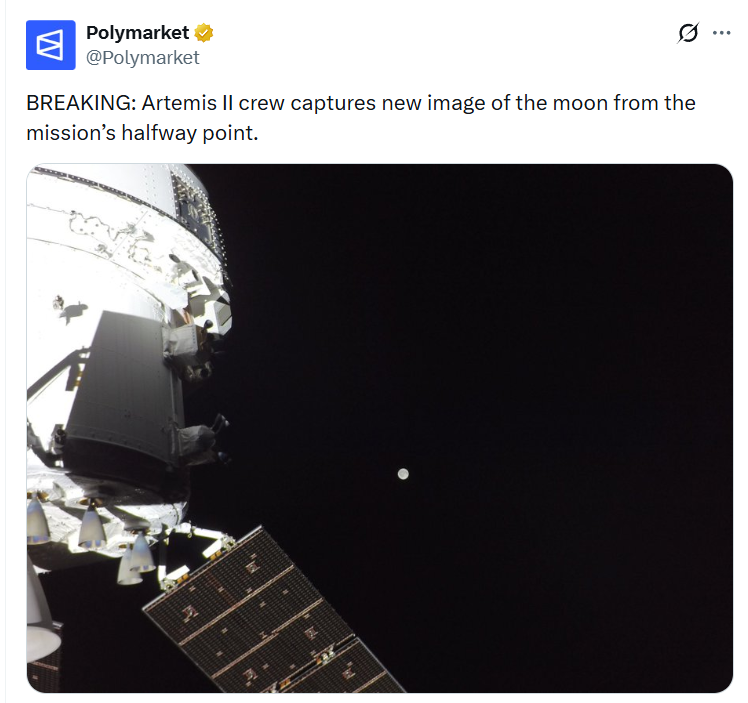
But the internet, as usual, doesn’t believe it. Under the post, the same eternal debate has flared up – the one that accompanies any “too perfect” image: is this a real photograph or CGI and neural network work? And this is not just a “believe it or not” argument, but almost a scientific analysis. Skeptics are literally examining the image pixel by pixel, looking at the edges of the atmosphere, searching for inconsistencies in lighting and geometry. Others, on the contrary, argue that this is exactly how Earth looks when it is captured not by tourists with an iPhone, but by professional equipment under ideal conditions.
And this is where things get interesting. The author of the post decided to add fuel to the fire and ran the image through ChatGPT, sharing screenshots of the analysis. It would seem that artificial intelligence should now settle the debate. But instead of a clear “yes” or “no,” the result was a careful, almost diplomatic breakdown.
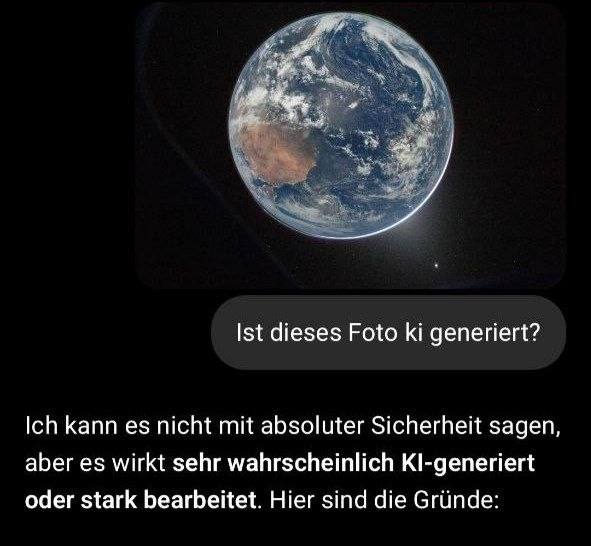
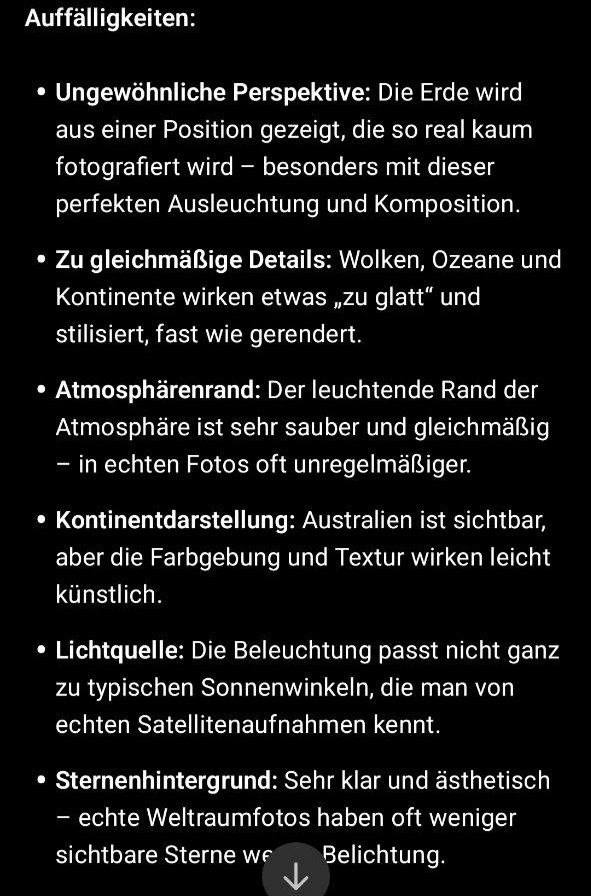

In short, the AI pointed out several details that look suspicious. The perspective is too perfect – Earth is shown at an angle that is rarely seen in real images, especially with such polished lighting. The clouds and oceans look almost artistic, as if they were slightly smoothed before publication. The atmospheric glow – that blue rim along the edge of the planet – is too even and clean, whereas in reality it is usually more “alive” and slightly chaotic.
Lighting also raises questions. It does not fully match the typical solar angles we are used to seeing in satellite images. In addition, the starry background looks unusually clean and vivid – while real space photography often “washes out” stars due to exposure.
At the same time – and this is the intrigue – none of this is direct proof of manipulation. These are not “errors,” but rather “oddities.” Such nuances can also appear in real images, especially when complex processing, stitching, or contrast adjustments are involved.
And here we столкнемся with a new reality where technology has caught up with our perception. In the past, fakes could be spotted by a crooked shadow or an extra finger. Today, an image can be so high-quality that even analytical tools hesitate. Not because they are flawed, but because the boundary itself has become blurred.
Add another factor – trust. When such images are not published directly through official channels but first appear on social media, and especially through platforms like Polymarket, the audience automatically switches to “is this a scam?” mode. And this is no longer about the image itself, but about the context in which it appears.
In the end, we are dealing with a classic 21st-century situation. There is an image, there are technologies, there are experts, there is AI – and still no final answer. Everyone sees what they are ready to believe. For some, it is another step in space exploration; for others, it is a perfect example of how easily a convincing illusion can be created today.
And the main question remains open. Are we really looking at Earth through the eyes of astronauts… or at such a high-quality image that the difference almost no longer exists?
All content provided on this website (https://wildinwest.com/) -including attachments, links, or referenced materials — is for informative and entertainment purposes only and should not be considered as financial advice. Third-party materials remain the property of their respective owners.