


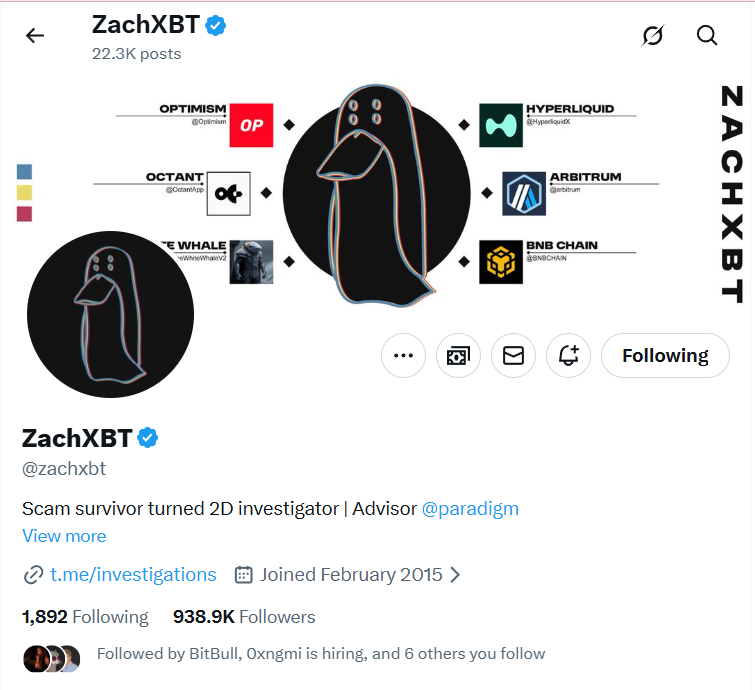
On January 10, 2026, the crypto market faced one of the most illustrative and alarming incidents of recent years. As a result of a social engineering attack, a large cryptocurrency holder lost assets worth more than $282 million. The losses included 1,459 BTC and approximately 2.05 million LTC stored on a hardware wallet. The incident was first highlighted by well-known on-chain investigator ZachXBT.
Events unfolded rapidly. Around 23:00 UTC, the attacker gained control over the victim’s funds without hacking the blockchain, exploiting code vulnerabilities, or using exploits. Everything happened through the human factor – the weakest point of any security system.
How the Attack Was Carried Out
According to the investigation, the attack was executed using social engineering techniques. This is a form of fraud in which attackers do not directly target infrastructure but instead manipulate trust, fear, or lack of awareness. The goal is to persuade the victim to voluntarily hand over access to assets, private keys, or to sign malicious transactions.
In this case, the victim used a hardware wallet, traditionally considered one of the most secure ways to store cryptocurrencies. However, even cold storage does not protect against situations where the user personally approves transactions while being misled.
BlockBeats notes that such attacks do not require sophisticated technical skills, yet they enable the theft of enormous sums. This is why social engineering became the dominant attack vector in the crypto space throughout 2025 and 2026.
Laundering Funds and the Role of Monero
After gaining control of the assets, the attacker acted quickly and methodically. The stolen BTC and LTC were distributed across multiple routes. The majority of Litecoin and a significant portion of Bitcoin were rapidly converted into Monero (XMR) through several instant exchange services.

This step served two purposes. First, Monero offers a high level of privacy, making it significantly harder to track the further movement of funds. Second, the scale of the conversion was so large that it affected the market. Over four days, the price of XMR rose by approximately 70 percent, which many market participants initially interpreted as a speculative spike or the beginning of a new trend.
It later became clear that a significant portion of this move was driven by emergency demand from the attacker, who was attempting to conceal the trail as quickly as possible.
Multichain Route and Thorchain
Part of the stolen Bitcoin was moved through Thorchain, a decentralized cross-chain exchange protocol. Using it, assets were distributed across the Ethereum, Ripple, and Litecoin networks. This approach significantly complicates on-chain analysis and makes reconstructing the full transaction chain extremely difficult.
At the same time, ZachXBT emphasized that there are currently no signs of involvement by North Korean hacking groups, which often appear in investigations of major crypto thefts. This is important because the incident shows that the largest losses today increasingly result not from state-sponsored APT groups, but from well-planned fraudulent operations targeting private individuals.
Why This Incident Is Especially Significant
This case became a symptom of a broader problem. Just days before the incident, Ledger reported a data breach that exposed users’ personal information. Against this backdrop, an attack on a hardware wallet owner appears particularly alarming: even physical devices and cold storage offer no protection if an attacker gains psychological control over the user.

The year 2025 already demonstrated a sharp shift in the nature of threats. While the primary focus used to be on vulnerabilities in smart contracts, bridges, and DeFi protocols, the center of gravity has now moved toward attacks on people. Scammers increasingly operate as professional psychologists rather than hackers in the traditional sense.
Market Implications
The $282 million incident is not just an isolated case. It reinforces several key trends:
- growing interest in privacy-focused assets like Monero during crisis situations;
- increasing regulatory pressure on instant exchange services and cross-chain protocols;
- a reassessment of the myth that hardware wallets alone guarantee security;
- heightened focus on user education and operational security.
For the market, this episode served as a reminder: there is no absolute protection in cryptocurrencies. Even the most advanced technologies are powerless if the user becomes the weakest link.
Conclusion:
The theft of more than $282 million without a single technical hack is a warning signal for the entire industry. Social engineering has firmly taken the top position among threats, while privacy coins and multichain infrastructure are increasingly used as tools to conceal traces.
This incident may go down in history not only because of the amount involved, but also as a clear example of how the nature of risk in the crypto world is changing. And judging by current trends, 2026 is likely to amplify this shift even further.
All content provided on this website (https://wildinwest.com/) -including attachments, links, or referenced materials — is for informative and entertainment purposes only and should not be considered as financial advice. Third-party materials remain the property of their respective owners.