


I won’t lie: the idea for this article isn’t mine, it came from the internet (Canada), but I found it intriguing and adapted it for our site. 👌
Sometimes it really seems that artificial intelligence is ready to take over everything — from writing school essays to managing your investment portfolio. All that’s left is to pour it a coffee, ask, “So, where are we investing, Guru?” and wait for the money. But… when different AIs start giving diametrically opposite advice, it becomes clear — we’re not dealing with an oracle, but rather a very smart conversationalist “with character.”
The experiment tells the story well. The same dataset, the same question — yet the conclusions diverged like opinions at a family council about kitchen renovations.
Google Gemini and Perplexity AI gently nudge toward the classics — more investment in the U.S. market via the S&P 500. Their logic is clear and even a bit “textbook”: the world’s largest economy, historically stable growth, liquidity, transparency. To a traditional investor, it’s almost like advice: “Eat your soup, stay healthy.”
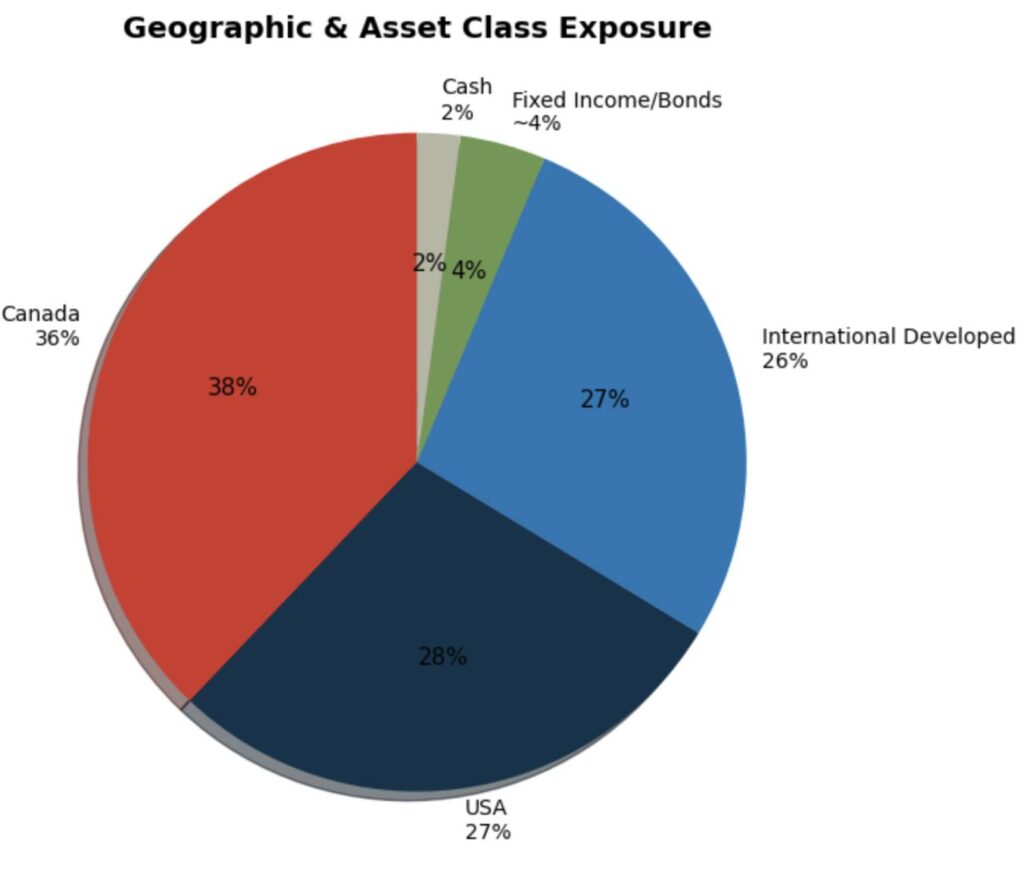
Claude, on the other hand, acts more like a cautious portfolio manager. He talks about diversification, pointing out that “all your eggs in one basket” is not a strategy, but a potential headache. Geography enters his worldview: Europe, Asia, emerging markets. He even hints at instruments like the Vanguard FTSE Emerging Markets ETF or iShares Core MSCI Emerging Markets IMI ETF.
It gets even more interesting. The Chinese model Kimi doesn’t just support emerging markets — it almost bets on them, with a focus on China and Taiwan. Here you sense not only diversification logic, but a regional perspective on potential growth, as if the advice comes from an analyst living in the region who believes in its potential.
Finally, the European school, represented by Mistral, offers a compromise: add Canada via dividend ETFs, like the Vanguard FTSE Canadian High Dividend Yield Index ETF. Calm, measured, focused on yield. This advice resembles the old reliable strategy: “slow and steady wins.”
At first glance — chaos. But look closer, and it’s not contradiction, it’s different investment philosophies. One AI thinks like a classic American investor: scale, stability, index. Another — like a global manager: diversification and balance. A third — a growth enthusiast: higher risk, but more interesting potential. The fourth — a dividend lover: not fast, but reliable.
So, does AI have bias? Short answer — yes. But not in the sense that “someone is deliberately tweaking the advice.” It reflects the data the model was trained on and the context in which it operates. American models rely more on English sources, where the S&P 500 is almost sacred. Asian models focus on growth and emerging markets. European ones traditionally favor balance and dividends.
AI doesn’t reinvent the market. It repackages existing ideas, approaches, and opinions. It just does it fast, confidently, and with the air of knowing the ultimate truth. That’s the danger — it creates an illusion of precision where there are only probabilities.
Should you trust such advice? As a source of ideas — yes. As the final decision — absolutely not. AI doesn’t know your real goals, your risk tolerance, or your life situation. It won’t suffer market drops with you, and it won’t sip valerian when your portfolio goes negative.
In essence, AI today is a very advanced assistant, but not a replacement for the investor. It can highlight options, show portfolio weak spots, remind you about diversification. But pressing the “buy” button is still up to you.
Bottom line: you can trust them — a little. And preferably with a cool head. Because the market, like life, punishes blind faith — even if the advice comes from a very smart algorithm.
All content provided on this website (https://wildinwest.com/) -including attachments, links, or referenced materials — is for informative and entertainment purposes only and should not be considered as financial advice. Third-party materials remain the property of their respective owners.