

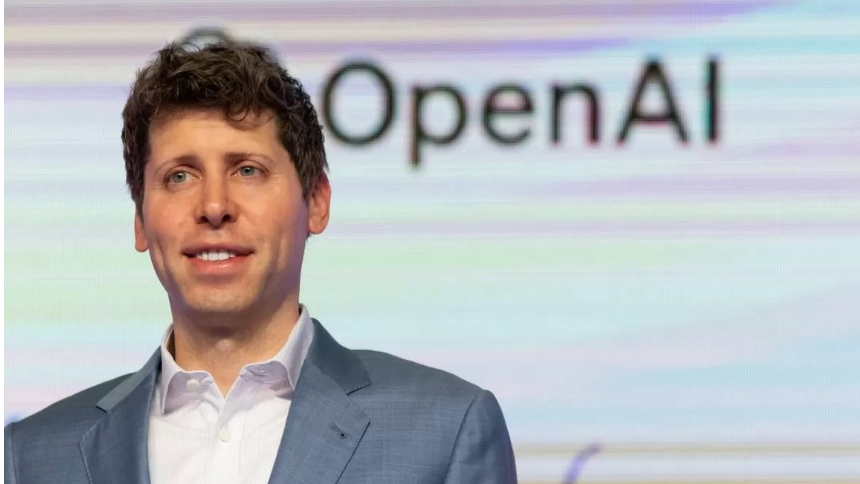
? OpenAI CEO Sam Altman has declared a “red code” inside the company — essentially a top-level alert activated only when the usual development pace becomes a luxury. WSJ reports that the internal memo demands temporarily scaling down some parallel directions and focusing all efforts on the main product — ChatGPT. In essence, the company decided to clench its fist, while all secondary initiatives were carefully shelved to avoid spreading resources too thin.
Management is convinced: this kind of mobilization will significantly boost the speed, stability, and reliability of future AI model versions. In addition, Altman wants to expand the range of queries the chatbot can correctly understand, interpret, and execute. WSJ emphasizes that this is not about cosmetic improvements, but a technological leap meant to restore OpenAI’s previous comfort of leadership.
The reason for this urgency has been in the air for a while, but now it has become obvious: increasing competitive pressure. The main challenge, according to Altman, comes from Google, which recently introduced a new version of the Gemini system. The model showed impressive performance in industry benchmarks and triggered a surge of user interest. This immediately affected the numbers: the number of Google’s monthly active accounts rose to 650 million, and tech commentators started talking about a serious shift in the balance of power. Additional competition comes from Anthropic, which is steadily strengthening its position in the corporate segment and is being viewed as a “calm but dangerous force” in the AI market.
At the same time, OpenAI is approaching large-scale projects to build new data centers — infrastructure without which further model development becomes impossible. And here the company faces the most painful question: monetization. WSJ notes that OpenAI remains unprofitable and still relies on external investments, while giants like Google can depend on stable operating revenue. This creates an obvious imbalance: competitors grow using their own resources, while OpenAI is forced to continuously raise funding. Available data suggests the company needs to raise 207 billion dollars by 2030 to cover future model training and infrastructure costs — a sum that, to put it mildly, is not something you find in a desk drawer.

That is why the memo announced Altman’s freeze of several projects: advertising developments, AI agents for healthcare, shopping systems, and the personal assistant Pulse. All teams working on ChatGPT have been switched to accelerated mode, and daily meetings are now a routine part of the work schedule. As ChatGPT head Nick Turley notes, the goal of the updates is to make the model more intuitive, convenient, and predictable for users. The wording is diplomatic, but the hint is clear: current limitations suit OpenAI about as much as a black screen suits a movie theater on a Friday night.
Interestingly, internal documents confirm that OpenAI previously declared an “orange code” to improve ChatGPT. WSJ states that the company uses a three-tier system: yellow — attention, orange — acceleration, red — absolute priority. Judging by the switch to “red code”, market stress tests were strong enough for the company to activate maximum power.
And all this is happening while OpenAI is recording record user dynamics. According to Altman, ChatGPT currently has more than 800 million active users per week — a figure that highlights both the scale of the load and the height of expectations. He also stated that the new reasoning model, scheduled for release in December, is already showing results that surpass the latest version of Gemini. If this is confirmed, the “red code” may work as effectively as a captain’s “all hands on deck” shout before a storm.
A new power configuration is emerging in the AI market, where stability stops being a comfort and becomes an advantage. Google is accelerating, Anthropic is strengthening, and OpenAI is effectively rebooting its development machine. And if earlier the industry looked like a race of technologies, now it is gradually turning into a race of strategies: who can not only create the smartest AI but also build a sustainable economy around it.
? It seems the era of “calm development” in the artificial intelligence sector is over. A new one has begun — much more tense, expensive, and ambitious.
All content provided on this website (https://wildinwest.com/) -including attachments, links, or referenced materials — is for informative and entertainment purposes only and should not be considered as financial advice. Third-party materials remain the property of their respective owners.