

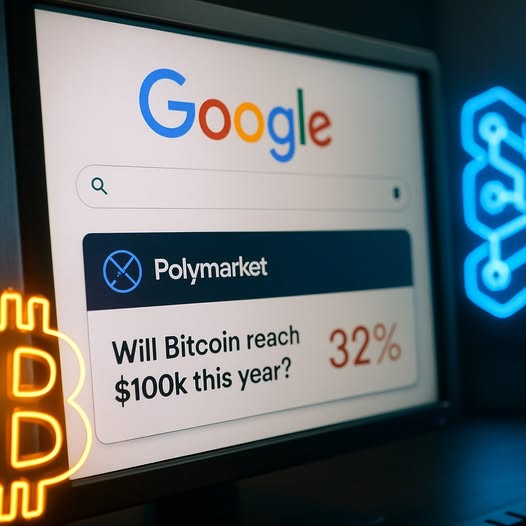
? Google integrates Polymarket: blockchain-based forecasts are now directly in search.
Google is betting on crypto analytics. The tech giant officially announced a partnership with prediction market platforms Kalshi and Polymarket to integrate their data into Google Finance and Google Search results.
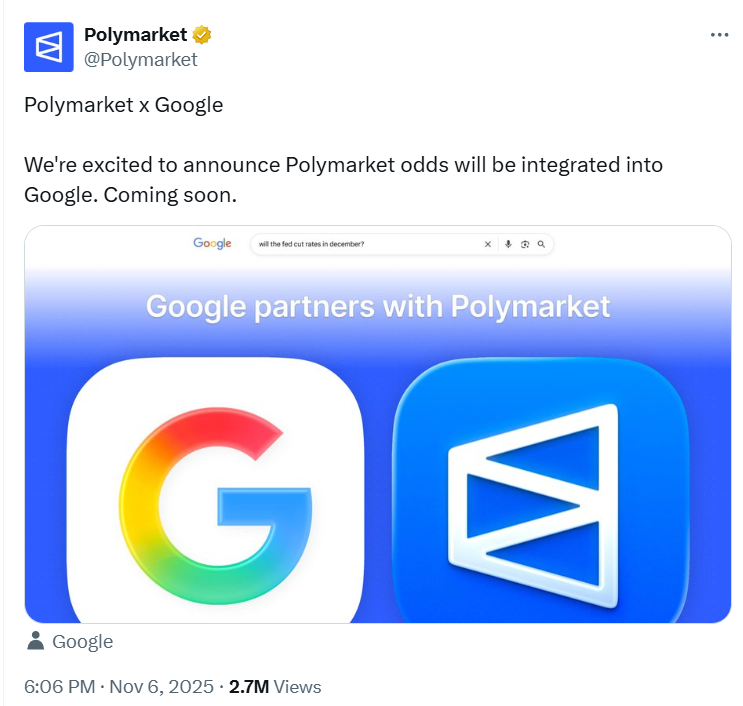
This move could fundamentally change how users access economic information — adding probabilistic forecasts based on collective user data from around the world to traditional charts and reports.
What exactly will change
Now, when a user asks a question like “What is the forecast for US GDP growth in 2025?” or “Will the Fed cut rates in December?”, they will see not only analytical materials and official indicators, but also real-time probability dynamics based on Polymarket and Kalshi data.
The integration will start with a testing phase via Google Labs and later become part of the main Google Finance interface. Thus, prediction markets will, for the first time, become directly embedded into the world’s largest search ecosystem.
Why it matters
Polymarket is a leading blockchain prediction platform built on the Polygon network. It allows users to place bets on the outcomes of events — from macroeconomic indicators to elections and even sports results.
Kalshi, in turn, is a US-regulated prediction platform licensed by the CFTC (Commodity Futures Trading Commission). Unlike Polymarket, Kalshi is fully compliant with US financial law.

By combining their data, Google is doing what once seemed impossible — linking traditional financial indicators with the dynamics of public expectations.
The power of collective wisdom
As noted by Rose Yao, Google’s Head of Product, “Prediction market data allows users to ask questions about the future and see how probabilities change over time.”
This marks a new paradigm of analysis. Instead of dry numbers and reports, users will be able to see market sentiment in action, in real time.
In this way, Google is turning “search” into a probability analysis tool, where each percentage point reflects the collective evaluation of thousands of participants.
Support from financial giants
Google’s deal coincides with major investments in Polymarket. In October, Intercontinental Exchange (ICE) — owner of the New York Stock Exchange (NYSE) — announced a $2 billion investment in the project. This signals that even traditional Wall Street players see huge potential in prediction markets.
In addition, the National Hockey League (NHL) signed agreements with Polymarket and Kalshi, confirming that the concept of probabilistic data extends far beyond finance — into sports, politics, and mass-interest analytics.
Polymarket’s return to the US market
Interestingly, this integration with Google comes amid Polymarket’s expected return to the US market. After temporarily losing access in 2022 due to regulatory issues, the company is preparing to relaunch with a new license.

Some sources say the process was delayed by a government shutdown, but the partnership with Google and support from ICE may significantly accelerate legalization.
What This Means for the Crypto Market
The integration of Polymarket data into Google marks one of the first cases where a crypto platform directly enters Big Tech infrastructure.
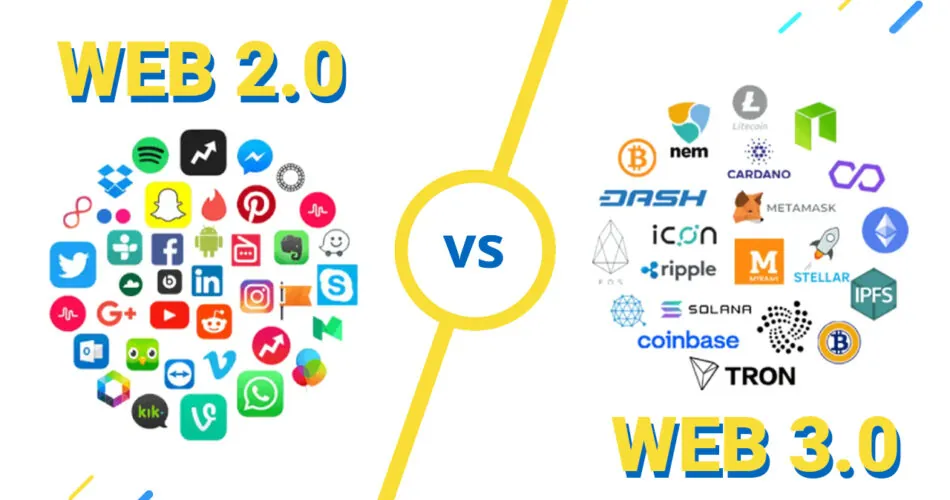
This is more than news — it’s a symbol of Web2 and Web3 convergence.
Now, millions of Google Finance users effectively become potential participants in the blockchain analytics ecosystem, even if indirectly.
It also increases transparency and trust in crypto projects, bringing them out of the “enthusiast niche” into the mainstream financial flow.
? Summary
Google is taking a step toward a probabilistic future, where analytics are built not only on data but also on human expectations.
Polymarket and Kalshi are becoming part of an infrastructure where AI, search algorithms, and blockchain predictions work together.
This is not just a partnership — it’s a new standard for how information turns into knowledge.
All content provided on this website (https://wildinwest.com/) -including attachments, links, or referenced materials — is for informative and entertainment purposes only and should not be considered as financial advice. Third-party materials remain the property of their respective owners.