

⚠️ Shares of the German defense giant Rheinmetall fell by 14 %, and the reason was not equipment or reports, but politics. The market reacted painfully to Donald Trump’s announced plan for resolving the conflict in Ukraine. Investors perceived the statements as a signal of a possible decrease in demand for weapons, which immediately affected quotations.
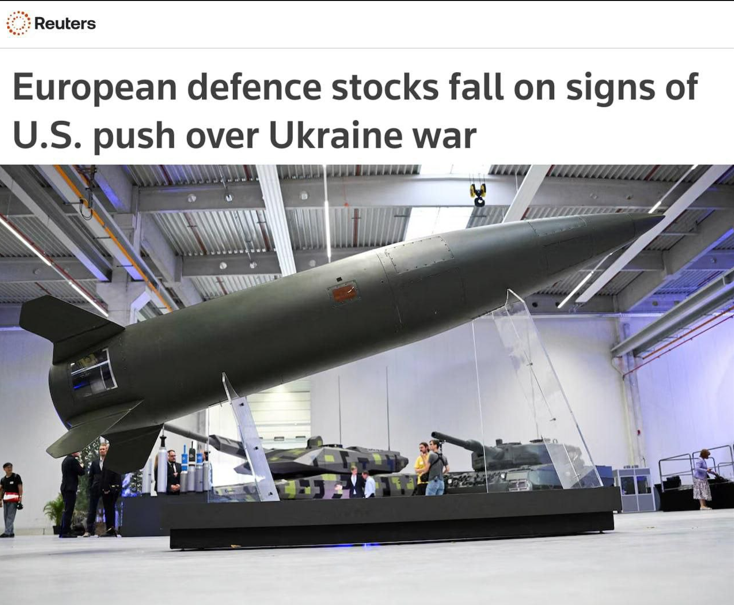
Since Thursday, Rheinmetall’s share price has dropped from €1678 to €1450, effectively returning to early autumn levels.
Another player in the German defense sector also came under sell-off pressure — Hensoldt, a company specializing in electro-optical systems and radars. Its shares also showed a significant decline, following the overall troubling trend in the sector.
European defense companies are experiencing one of the most notable downturns in recent months. Stock exchanges are seeing a significant drop in quotations of key sector players, and investors are actively taking profits amid rising expectations of a possible resolution of the conflict in Ukraine.
The STOXX Aerospace & Defense index, which tracks the performance of Europe’s aerospace and defense industry, fell by 3.3 % and updated its lowest levels since August of this year. Analysts link this negative trend to statements about potential progress in peace initiatives. Ukrainian President Volodymyr Zelensky announced readiness to work constructively on U.S. proposals, which the market interpreted as a signal: the likelihood of de-escalation is increasing, and with it the expected defense demand is decreasing.
Additional pressure on the sector also came from political statements by Donald Trump, who proposed his own conflict-resolution plan. These statements quickly appeared on market charts.
Largest companies’ stock prices fell the most this season
The most striking declines were recorded by German corporations.
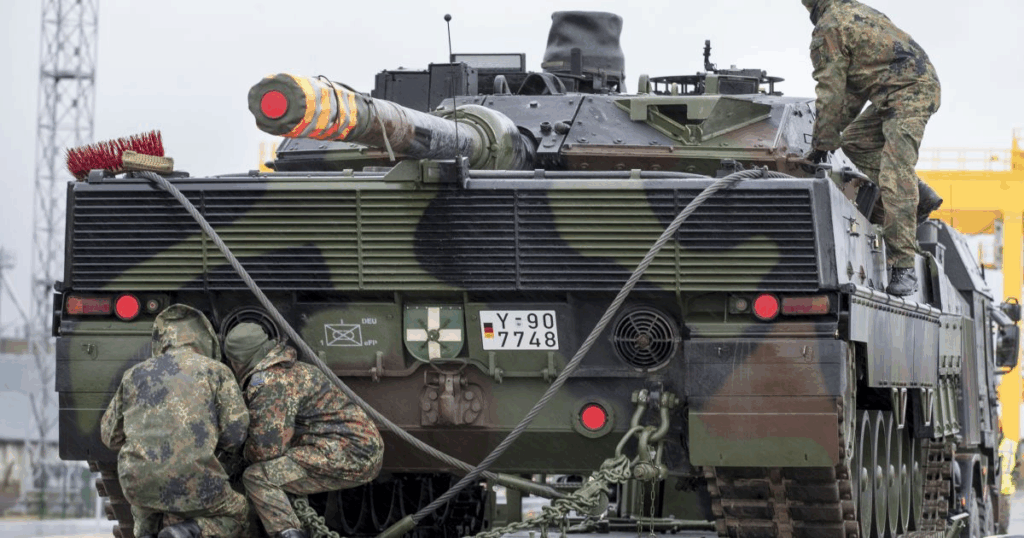
- Rheinmetall, the manufacturer of Leopard tanks and one of Europe’s main arms suppliers, lost about 14 %. The share price fell from €1678 to €1450.
- Hensoldt, which produces sensor systems for Eurofighter jets, fell by about 7 %.
- Renk lost around 11 % of its capitalization.
The downturn also affected other players in the sector:
- Italy’s Leonardo and Sweden’s Saab fell by 4-5 %,
- Germany’s naval shipbuilder TKMS — by 5 %,
- Spain’s Indra — by 4 %.
Investors are clearly showing heightened sensitivity to any signals of possible cessation of hostilities. Defense companies that have been actively expanding their order books in the past two years are now facing uncertainty: potential peace initiatives may cool demand for military products.
Context: the U.S. plan and the changing security architecture
The market is also reacting to Washington’s work on a comprehensive 28-point peace plan, which implies deep changes in the structure of regional security. Details have not yet been disclosed, but the very existence of the document is forcing investors to adjust expectations regarding future defense funding.
? Conclusion
Recent political statements and rising expectations of diplomatic progress are creating increased turbulence for the European defense sector. Until concrete details emerge, the market will continue reacting to any news related to peace initiatives. But it is already clear: even a hint of possible reduction in military spending results in an immediate and sharp revaluation of defense companies on European exchanges.
The market is now closely watching political statements and their impact on Europe’s defense companies. Investors are awaiting specifics regarding the resolution plan, and until then volatility in defense stocks may persist.
All content provided on this website (https://wildinwest.com/) -including attachments, links, or referenced materials — is for informative and entertainment purposes only and should not be considered as financial advice. Third-party materials remain the property of their respective owners.