


Palantir remains one of the most discussed AI companies in the market. It is often mentioned alongside trendy generative AI players, but this comparison is superficial. To understand Palantir’s investment case in 2026, it is important to cut through the hype and understand what the company actually does, how it generates revenue, and where its strengths and weaknesses lie.
At its core, Palantir is a developer of software for big data analytics and decision support in complex systems. Historically, the company worked almost exclusively with government entities: intelligence agencies, the military, special services, and law enforcement. This has left its mark on both its products and corporate culture. Palantir has never been about the mass market or convenient SaaS dashboards. It is heavy, expensive, and deeply integrated software that becomes part of the client’s infrastructure.
Over time, the company has actively expanded into the commercial sector, but the logic remains the same. Palantir does not sell a “box.” It sells a system tailored to a specific client. That is why the company has several key platforms, each grown from a specific class of tasks. Gotham traditionally serves the government and defense sector, Metropolis is oriented toward financial institutions, banks, and funds, and Foundry is used by corporate clients in industry, logistics, and manufacturing. On top of all this, in recent years, the company has built AIP — the Artificial Intelligence Platform — which aims to be the connecting layer between Palantir’s classical analytics and modern generative AI.

Today, AIP is the main driver of the investment narrative. The company has been actively promoting this platform since 2023, regularly demonstrating real implementation cases at its own conferences. Unlike many AI startups, Palantir shows working systems in large organizations, not prototypes or slides. This is a strength, but there is a flip side.
The company remains extremely cautious about disclosing AIP’s pricing model. Investors see client interest and growth in pilot projects, but the market is waiting for concrete, scalable revenue growth specifically from the AI segment. A key milestone is 2026. By this time, expectations for AIP monetization become stringent. If revenue growth does not meet the projected potential, the company’s valuation may come under pressure.
There is also a fundamental nuance of Palantir’s business model that is often underestimated. Its software is almost always customized for individual clients. This means large contracts, high fees, and long-term relationships. But it also means long implementation cycles. Projects can take months, sometimes years to launch, and revenue is distributed over time. Palantir is not a story of rapid quarter-to-quarter sales growth. It is a story of building a base and gradual scaling within clients.
Special attention should be paid to the figure of CEO and co-founder Alex Karp. He is a philosopher by education, publicly sharp, and ideologically strict. Palantir openly works with the US, NATO, Israel, and Ukraine, and equally openly refuses to cooperate with China and Russia. This is not a neutral position, and it has direct business implications. On one hand, the company is firmly integrated into the Western politico-military architecture and enjoys state trust. On the other — it voluntarily cuts itself off from part of the global market. It is important to understand that this is a deliberate choice, not a temporary limitation.
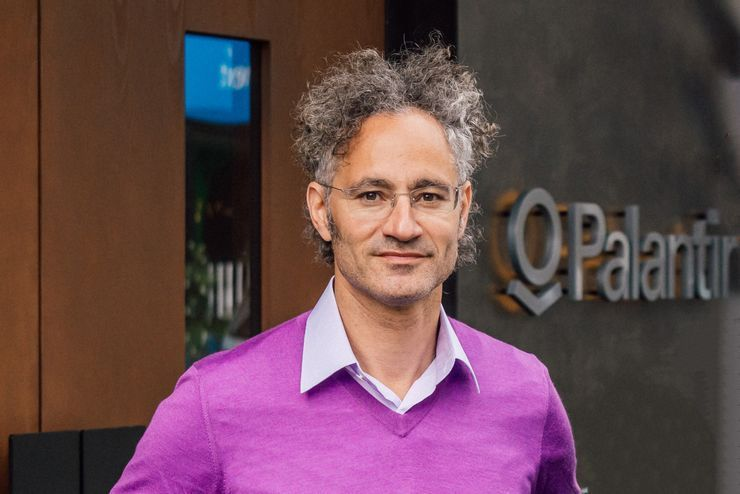
Karp also retains full control of the company through super-voting shares. For an investor, this means strategic predictability but less flexibility under market pressure. Palantir will follow its own path, even if it does not align with short-term shareholder expectations.
In conclusion, Palantir is not a bet on quick AI hype and not a company that will suddenly double revenue through one successful product. It is a long-term bet on the integration of government, corporations, and AI into a unified data and decision management infrastructure. This approach provides stability but requires patience.
For an investor in 2026, Palantir is a story of volatility, expectations, and testing the AI monetization hypothesis. If AIP truly becomes the standard for large organizations, the current valuation may be justified. If revenue growth proves slower than expected, the market will quickly remind that even the most advanced AI does not override financial metrics.
All content provided on this website (https://wildinwest.com/) -including attachments, links, or referenced materials — is for informative and entertainment purposes only and should not be considered as financial advice. Third-party materials remain the property of their respective owners.