

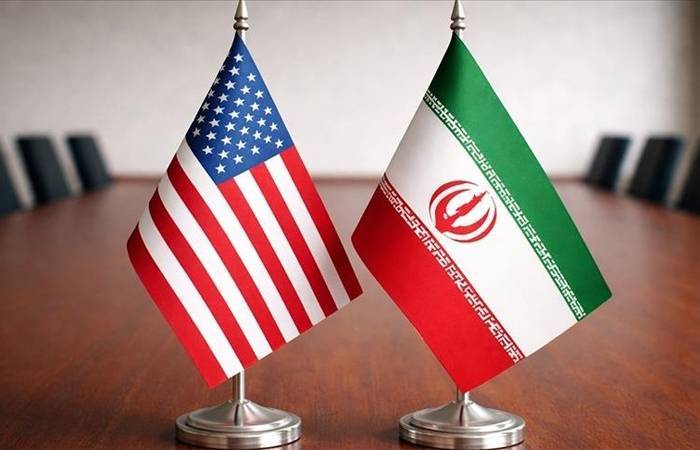
The escalation of the conflict between the United States and Iran has once again become the main factor putting pressure on global markets, and the cryptocurrency segment has not remained unaffected. On Sunday, March 22, Bitcoin fell below $68,000 in response to another round of sharp rhetoric between Washington and Tehran. The market, which had recently been trying to hold local levels, found itself under pressure not from internal factors but from external political tensions rapidly transforming into financial risks.
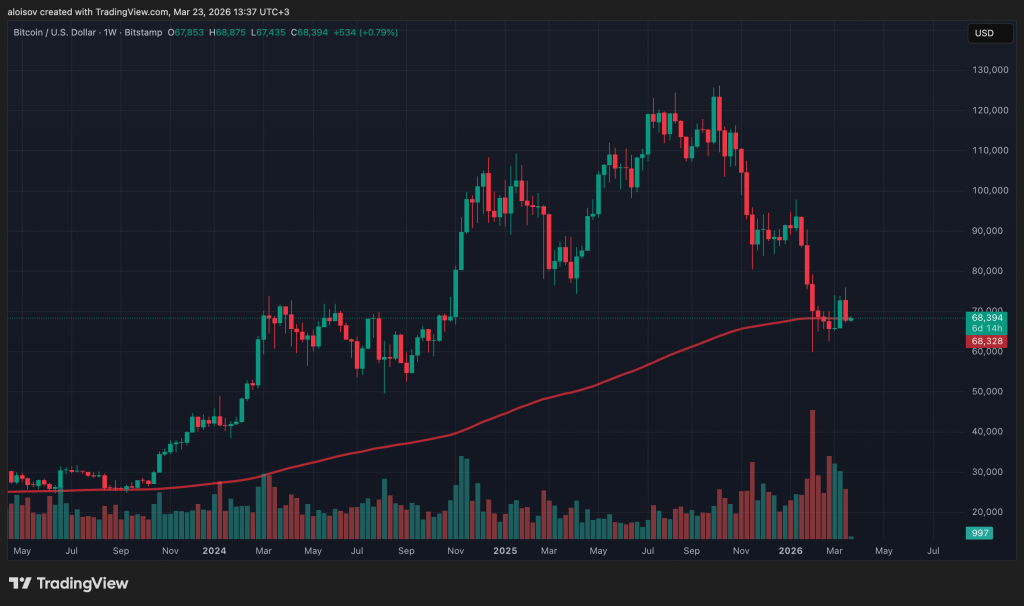
1-week BTC/USD chart. Source: Bitstamp
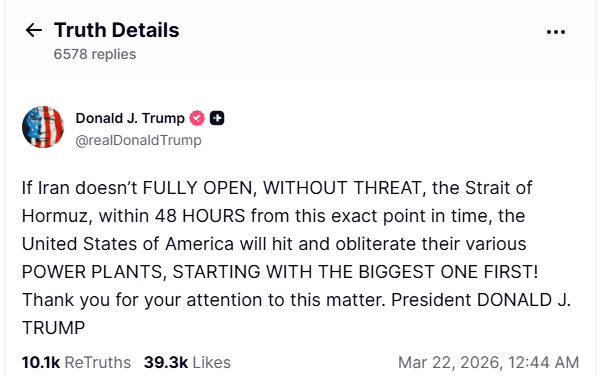
The situation sharply escalated following statements by Donald Trump, who, in his usual straightforward manner, threatened the destruction of Iran’s energy infrastructure. In particular, he stated that the U.S. is ready to “strike and destroy” power plants, starting with the largest facilities, if Iran does not open the Strait of Hormuz within 48 hours. Tehran’s response was immediate. Iranian authorities stated that any attacks on the country’s energy or water infrastructure would lead to retaliatory strikes on American and Israeli targets in the region. Furthermore, a threat to completely block the Strait of Hormuz — one of the key nodes of global oil logistics — was announced.
This factor triggered a chain reaction in the markets. Brent crude responded sharply, breaking the psychologically important $100 per barrel level. Although quotes later retreated to around $97-99, the very fact of exceeding $100 sent a signal: the market began pricing in scenarios of serious supply disruptions. At certain moments, Brent rose even higher, testing levels previously associated with full-scale energy crises.
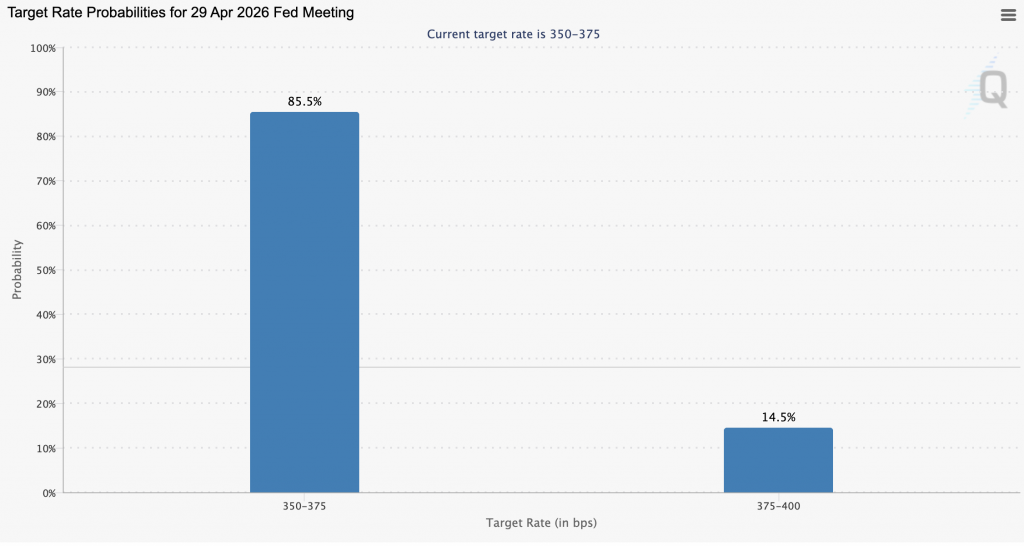
Probability of a Fed rate change. Source: Fedwatch
Stock market reactions were no less telling. Asian markets moved down in sync: Australian and New Zealand indices lost about 0.8%, while the Japanese market showed a sharper decline — over 4%. This is a classic reaction to rising energy prices: expensive oil increases inflation, pressures consumption, and raises the risks of economic slowdown.
Against this backdrop, it becomes clear that the cryptocurrency market has finally stopped living in its “parallel world.” Bitcoin behaves like a typical risk asset, moving in sync with stocks rather than as a safe haven asset that many expected. When tension rises, investors do not flock to cryptocurrencies; on the contrary, they reduce positions, moving into liquidity or traditional safe assets.
Market sentiment confirms this. The fear and greed index fell to extreme levels, signaling that investors are now more focused on preserving capital than seeking profits. In this phase, the market becomes especially sensitive to any news, and even neutral events can trigger disproportionate reactions.
Additional pressure comes from the re-evaluation of expectations for Federal Reserve monetary policy. Rising oil prices automatically heighten inflation expectations. If just a week ago the probability of a rate hike was barely priced in by the market, it has now increased noticeably. This is a fundamental shift affecting all asset classes. A higher rate means more expensive money, and thus less liquidity, which fuels growth in both equity and cryptocurrency markets.
As a result, a classic but extremely unpleasant situation for investors emerges, close to stagflation. On one hand — inflationary pressure from expensive oil; on the other — risk of economic slowdown and market declines. In such conditions, the regulator has few comfortable options: any action will have side effects. And markets, as known, dislike uncertainty most of all.
Nevertheless, there is a factor that prevents the crypto market from falling further. This is institutional demand. Despite geopolitical pressure, inflows into Bitcoin ETFs continue, amounting to approximately $1.43 billion this month. This is an important signal: major players are not exiting the market, but rather using dips to gradually build positions. Such behavior often forms the foundation for future recovery.
However, it is important to understand that geopolitics is no longer a short-term noise. Bitcoin has been under external pressure for about a month, and this pressure is becoming systemic. The market no longer reacts to individual news — it begins to live in a mode of constant uncertainty.
The key question now is not only how the confrontation between the United States and Iran will end. Far more important is what happens first: whether the market adapts to new conditions and re-evaluates monetary expectations or receives a political resolution that reduces tension. Until either scenario occurs, the cryptocurrency market will remain hostage to macro factors.
If de-escalation occurs, cryptocurrencies, like other risk assets, could be among the first beneficiaries of recovery. But until that moment, the market will likely remain in a state of high volatility, where any attempts at growth are accompanied by rapid pullbacks.
And perhaps the main takeaway: the crypto market has finally become part of the global financial system. It no longer lives separately from oil, politics, and central bank decisions. Therefore, to understand Bitcoin’s movement, one now needs to follow not only charts but also geopolitical news. Sometimes it is these developments that move prices more than any indicators.
All content provided on this website (https://wildinwest.com/) -including attachments, links, or referenced materials — is for informative and entertainment purposes only and should not be considered as financial advice. Third-party materials remain the property of their respective owners.