

Since ChatGPT rapidly gained popularity, the phrase “generative artificial intelligence” has started appearing almost everywhere — in the news, at conferences, in discussions about technology, and even in everyday conversations.
At the same time, it’s surprising that even many active users cannot precisely explain what the letters “GPT” in ChatGPT stand for, even though the abbreviation literally describes the essence of the technology and the principle of its operation. SuperCarBlondie writes about this.
The first letter — G, Generative. This is a key aspect that distinguishes modern artificial intelligence from traditional search or retrieval algorithms. Generative AI can create new content: texts, images, music, code, and much more, rather than just finding ready-made answers in a database. If you ask the model to write a recipe, a poem, explain a complex scientific concept, or create an analytical review, it generates a unique version each time based on patterns it learned during training. This is not copying or keyword matching — it is generation, a creative process guided by algorithms.
The second letter — P, Pre-trained. Before becoming available to the general public at the end of 2022, the model underwent large-scale pre-training on enormous text datasets. These included books, articles, public web pages, scientific papers, and much more. During this training, the model learns grammar, logical patterns, argument structures, and the nuances of human language. Additionally, it underwent fine-tuning with human feedback, which allows it to provide answers that are not only accurate but also useful, understandable, and as safe as possible for users. Pre-training is like an intensive school where the model masters the language before it starts “communicating” with real people.
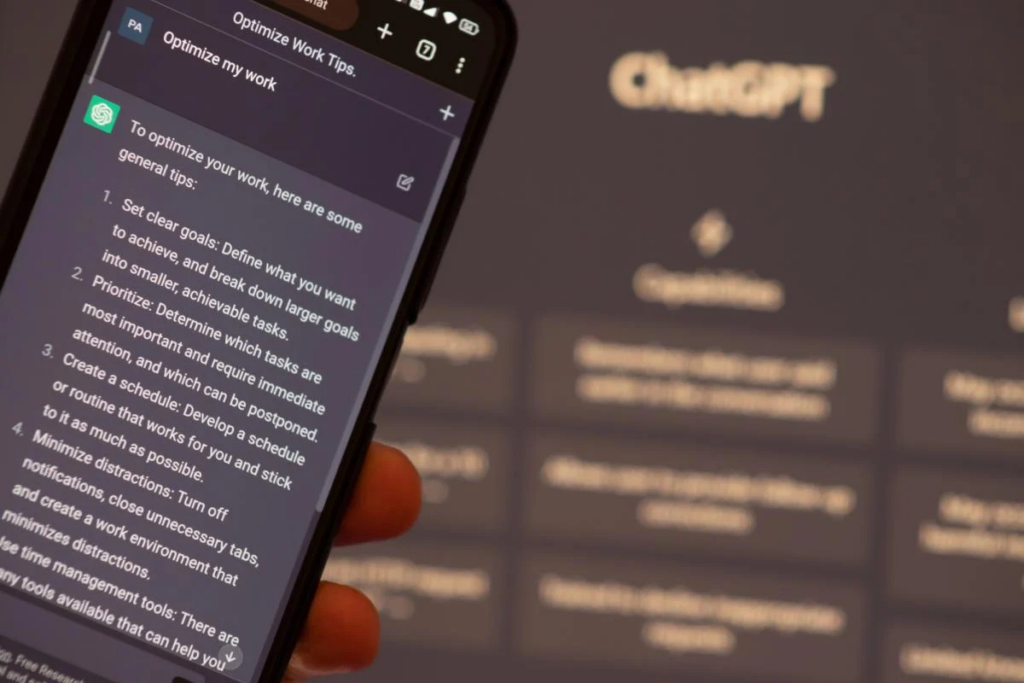
The third letter — T, Transformer. This is a type of neural network architecture that revolutionized language processing after its introduction in 2017. The transformer allows the system to understand context: which words and phrases are key, how they relate to each other, and how logical sequences are formed. Text is broken into small fragments — tokens — after which the model evaluates their “importance” and predicts what comes next. Thanks to transformers, ChatGPT can generate coherent, meaningful paragraphs rather than a random set of words, and adapt to a wide range of requests — from scientific explanations to creative writing.
Understanding how the GPT letters work helps not only technical specialists but also ordinary users. It allows for a more adequate assessment of the model’s capabilities and limitations. For example, the generative nature ensures text originality, pre-training guarantees correctness and factual knowledge, and the transformer ensures logical coherence and context — three factors that together make ChatGPT a tool capable of performing a wide range of tasks.
It is also worth noting the practical application of this knowledge in career and recruitment. Many candidates face situations where, after sending dozens of resumes, they receive no response.
One modern way to improve the effectiveness of a resume and adapt it to labor market requirements is to use ChatGPT and other generative models. With carefully crafted AI prompts, one can quickly identify weaknesses in a document, improve phrasing, highlight achievements, and optimize keywords for modern resume selection algorithms. This is an example of how understanding how GPT works helps not only in theory but also in practical everyday life — from text generation to improving one’s competitiveness in the job market.
Thus, the abbreviation GPT is not just a set of letters but a reflection of the technology’s essence: Generative — creative generation of new content, Pre-trained — learning from massive data before interacting with users, Transformer — the ability to maintain context and predict the logical flow of text. Awareness of this makes using ChatGPT thoughtful and effective, whether for learning, creativity, work, or interview preparation.
All content provided on this website (https://wildinwest.com/) -including attachments, links, or referenced materials — is for informative and entertainment purposes only and should not be considered as financial advice. Third-party materials remain the property of their respective owners.