

The company Google is effectively rewriting one of the most conservative rules of its ecosystem: for the first time in the entire history of Gmail, users are allowed to change their email name — the very part before @gmail.com that was previously considered “once and forever.” The news may look almost бытовой, but in fact it is an important shift in the product philosophy, which for decades was built on the principle of an immutable identifier. If раньше an unfortunate nickname like the условного “nagibator666” stayed with you as a digital reminder of a wild youth, now it can be replaced without creating a new account and losing data, correspondence, subscriptions, and the entire digital life long tied to Gmail.
The essence of the update is that the user gets the ability to assign a new address, while the old one does not disappear. It turns into an additional alias: emails will still be delivered to it, and if necessary, messages can even be sent from it. This is an important point because Google does not break the old structure but carefully builds a new one on top of it. The account with all services — from Google Drive to YouTube — remains intact, only the “label” changes. Essentially, the company separates the user’s identity from their historical login, which was previously impossible.
However, freedom, as usual, is strictly дозирована. The address can be changed no more than once every 12 months, and the total number of new names is limited to three for the entire lifetime of the account. This looks like a compromise between flexibility and protection against abuse. Google clearly does not want to turn Gmail into a service with endless identity changes where a user can “switch shoes” every week. Additionally, there is an option to revert to one of the previous versions, but there is also a pause — after reverting, you must wait 30 days before making further changes.
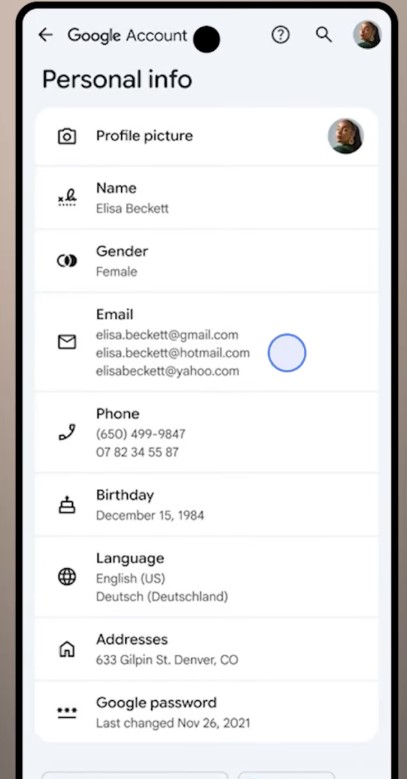
For now, the feature is available only to users in the United States, which is also a typical Google approach: first testing on a limited audience, then gradual scaling. The company does not disclose timelines for a global rollout, leaving intrigue for millions of users worldwide who have long been waiting for such an option. This is especially relevant for those who use email not only for personal communication but also as part of their professional image. In today’s digital world, email is not just an address but an element of reputation, a business card that appears in resumes, professional correspondence, and financial services.
The emergence of this feature reflects a broader trend. The internet is maturing along with its users. What was created in the era of forums and nicknames now needs to meet the requirements of a professional environment and digital identity. People change surnames, build careers, launch businesses — and it is logical that their email should also have the ability to “evolve.” Previously, Google offered a workaround through creating a new account and migrating data, but this was always inconvenient and risky. Now this barrier is partially removed.
At the same time, the update has strategic importance for Google itself. The company is strengthening user retention within its ecosystem. The easier it is to adapt an account to new life circumstances, the fewer reasons there are to leave or create alternative profiles. This is especially important amid competition with other services and the growing attention to digital identity and privacy.
It is also interesting how carefully Google balances between convenience and security. The ability to change an address could potentially be used for fraud or hiding digital history, so the limitations are not just a formality but part of a control system. A fixed number of changes and time intervals create a predictable user behavior model, which simplifies monitoring and reduces risks of abuse.
As a result, the update looks like a small interface change, but in essence it is a shift in the fundamental principle of how Gmail works. An email address stops being a “digital passport” that cannot be changed and becomes a more flexible tool that adapts to the user. This is a step toward personalization, where technology adjusts to life, not the other way around. And if раньше the internet remembered us as we were at the moment of registration, now it has a chance to catch up with reality.
All content provided on this website (https://wildinwest.com/) -including attachments, links, or referenced materials — is for informative and entertainment purposes only and should not be considered as financial advice. Third-party materials remain the property of their respective owners.