

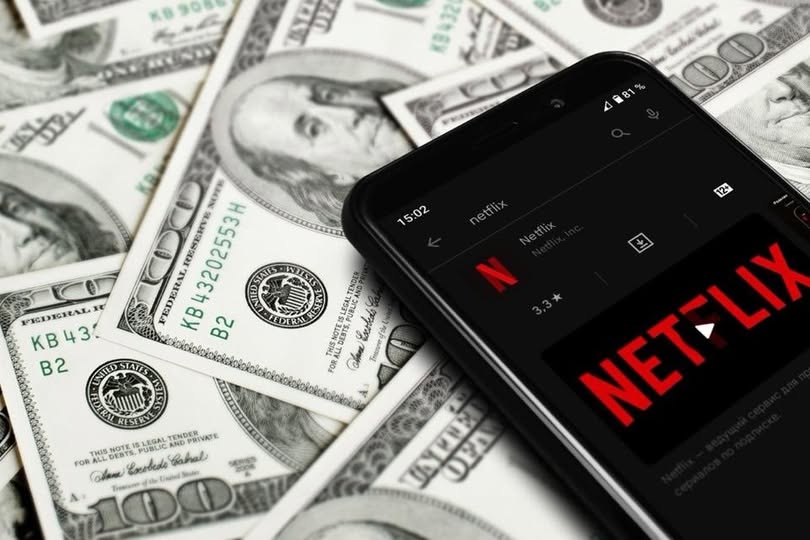
Raising prices is always a delicate moment for any company. On one hand, it is the simplest way to increase revenue. On the other, it is a quick way to test how much customers truly value the product. In Netflix’s case, the market increasingly sees such moves not as a risk, but as a sign of business strength.
The latest subscription price increase — already the second in roughly the past 15 months — at first glance looks like a standard corporate step. Prices rose by just $1–2, which does not seem critical on its own. But at the scale of an audience of about 325 million users worldwide, even such a small change turns into a significant revenue boost. The math is simple: a small price increase multiplied by a massive subscriber base creates an effect that is hard to achieve through audience growth alone.
The key question investors are now asking is very simple: will people continue to pay? So far, judging by previous increases, the answer is yes. This means the company has what is known in financial terms as “pricing power.” Users are not just subscribing — they become accustomed to the ecosystem, content, and convenience of the service to the point where a few extra dollars do not become a reason to cancel.
This is the core signal for the market. When a company can raise prices without losing its audience, it effectively begins to grow not through expansion, but through deeper monetization. This is a more mature and generally more sustainable model. Subscriber growth eventually slows down, while the ability to earn more from the existing base becomes the main driver.
However, this strategy has an obvious limit. The question is not whether prices can be raised again, but where the boundary of user tolerance lies. As long as increases remain modest, the market reacts calmly. But as prices approach psychologically significant levels — roughly $25–30 per subscription — user behavior may change. And then the effect of price increases may start working in the opposite direction.
That is why the company’s upcoming earnings report is particularly important. The results Netflix will present on April 16 will show not only financial performance but also user reaction. The most sensitive indicator here is subscriber churn. If it remains low, the strategy is working. If it begins to rise, it is the first sign that the company is approaching the limits of its pricing power.
It is important to understand that the current situation reflects a broader trend. The streaming market is gradually moving out of a phase of aggressive growth and entering a stage of maturity. Competition is intensifying, content is becoming more expensive, and acquiring new users is getting harder. In such conditions, raising prices becomes not just an option, but a necessity to maintain margins.
From an investor’s perspective, this looks like a cautiously positive signal. The company demonstrates the ability to manage its revenue and is not solely dependent on attracting new customers. However, sensitivity to product quality increases. Users are willing to pay more only as long as they perceive value. Once that balance is disrupted, the reaction can be swift.
Simply put, the situation now looks like this: the market believes in the strength of the business but is closely watching the limits of audience tolerance. And that boundary will be the key factor for future stock performance.
All content provided on this website (https://wildinwest.com/) -including attachments, links, or referenced materials — is for informative and entertainment purposes only and should not be considered as financial advice. Third-party materials remain the property of their respective owners.