

The incident at NASA became a serious wake-up call for the entire cybersecurity and space technology industry. The agency almost lost missions worth billions of dollars due to a critical software vulnerability that engineers had not noticed for three years. The issue concerned CryptoLib software — a key component responsible for encrypting and protecting data transmitted between spacecraft and ground control centers. This vulnerability could have given hackers direct access to control rovers, satellites, and other expensive space systems.
AI discovered what humans missed
The artificial intelligence algorithm from AISLE demonstrated remarkable efficiency: in just four days, it detected a problem that NASA specialists had been unable to find over three years. AISLE performed a comprehensive analysis of all codebases, checked authentication algorithms, and detected patterns that remained invisible to the human eye.
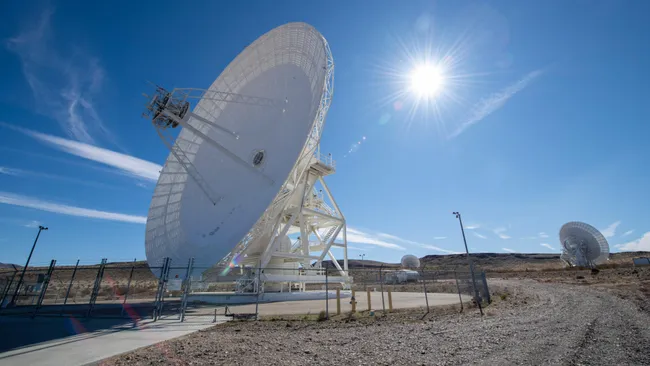
Artificial intelligence could be key to the future of space security. (Image credit: NASA/JPL-Caltech)
The vulnerability was in the CryptoLib authentication system — software responsible for encrypting communication channels between Earth and spacecraft. If exploited, attackers could use compromised operator credentials to gain unauthorized access, potentially controlling spacecraft or intercepting transmitted data.
“For three years, the security system designed to protect communication between spacecraft and Earth contained a vulnerability that could have undermined the entire protection,” noted AISLE specialists in the company’s official blog. They emphasized that the vulnerability went unnoticed despite regular security audits and continuous monitoring by NASA engineers.
How hackers could attack space missions
The potential attack scenario was highly realistic. Attackers could obtain NASA employee credentials in several ways:
- Social engineering — deceiving employees to obtain confidential information.
- Phishing attacks — creating fake websites or services to capture logins and passwords.
- Malware infection — via USB drives or other external devices.

With these data, a hacker could hijack control of a spacecraft, interfere with navigation systems, or access critical data. Missions worth billions of dollars were at risk, including Mars exploration programs, where each spacecraft is a high-tech complex with unique scientific objectives.
It should be noted that successful exploitation would have required local access to the system, significantly complicating the attack compared to a fully remote one. Nonetheless, the existence of such a potential threat prompts a reevaluation of cybersecurity approaches for critical infrastructure.
4 days vs. 3 years: a contrast of capabilities
The difference between human capabilities and AI was striking. What NASA engineers could not find in three years of regular audits and checks, AISLE detected and helped fix in just four days. This example vividly illustrates how effective automated code analysis and monitoring tools can be, especially in critical systems.
The researchers emphasize that automated checks do not replace humans but greatly enhance their capabilities. “Human review remains important, but autonomous systems can systematically analyze all code, detect suspicious patterns, track changes, and operate continuously as software evolves,” AISLE specialists stated.
Consequences and lessons for space missions
Today, the vulnerability has been completely resolved, and NASA’s space missions continue to operate normally. The incident is further proof that artificial intelligence technologies can not only speed up the detection of vulnerabilities but also prevent potential disasters that human oversight might miss.
The NASA case also highlights that in the era of complex digital systems and high-stakes security, AI efficiency comes to the forefront. Automated analysis becomes a necessary complement to human expertise, especially where mistakes can cost billions and endanger nationally significant scientific programs.
Thus, the story demonstrates not only the achievements of artificial intelligence but also the need to integrate modern technologies into critical sectors. Space agencies, engineering companies, and high-tech software providers receive a clear signal: security automation and intelligent analysis are not a luxury, but a necessity to protect valuable and strategically important assets.
All content provided on this website (https://wildinwest.com/) -including attachments, links, or referenced materials — is for informative and entertainment purposes only and should not be considered as financial advice. Third-party materials remain the property of their respective owners.