

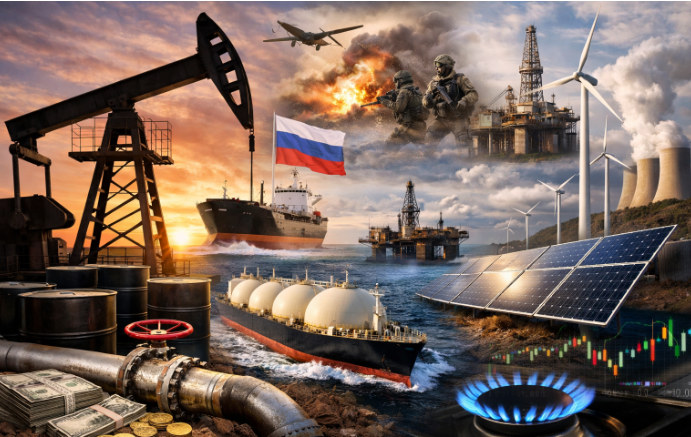
The new trading week starts under strong geopolitical pressure. The main trigger was the military strikes by the United States and Israel on Iran. This is not just another news report — such events are capable of shaping market participants’ sentiment on a daily basis, influencing capital flows and changing expectations regarding central bank monetary policy. In such periods, geopolitics stops being background noise and becomes a full-fledged driver of volatility.
Oil market
Oil remains the central indicator of the current conflict. On the one hand, there is a risk of supply disruptions. A particularly sensitive factor is the Strait of Hormuz — a strategic maritime corridor through which about 20% of global oil trade passes. Any threats of blockage or even temporary restriction of navigation are automatically priced into the cost of raw materials, even if actual disruptions have not yet occurred.
On the other hand, the market is partially offset by producer policy. The countries of the OPEC+ alliance continue to demonstrate readiness to flexibly regulate production volumes in order to avoid excessive price shock and maintain a balance between the interests of producers and consumers.
As a result, oil is rising, but the growth is moderate in nature. It is not a panic spike in prices, but rather a risk premium for geopolitical uncertainty.
Stock markets
The situation in the stock market remained weak even before the conflict began. This is an important point, since geopolitics in this case acts not as the cause of the decline, but as an accelerator of already started correction processes.
The S&P 500 index showed weak dynamics, declining for seven weeks out of the last nine trading periods. The Nasdaq technology index was also under pressure, and the Dow Jones industrial index broke several technically significant support levels, which strengthened bearish sentiment among traders.
During such periods, investors usually reduce the share of high-risk assets and increase positions in more stable instruments.
Who benefits from the situation
Traditional beneficiaries of geopolitical tension remain:
- defense companies, which receive increased orders amid rising military spending;
- energy corporations benefiting from rising commodity prices;
- gold as a safe-haven asset, to which investors often turn during growing uncertainty.
Who is under pressure
The most vulnerable remain:
- airlines, as rising fuel prices increase operating costs;
- cruise operators dependent on the stability of international routes;
- growth companies, especially in the artificial intelligence sector, which are sensitive to changes in the cost of capital and investor sentiment.
The AI sector had already been under pressure after a period of rapid growth and profit-taking. Geopolitical events only strengthen existing correction trends.
Key corporate factor of the week
Investors will pay special attention to Broadcom’s corporate earnings report. A strong report may support the artificial intelligence and semiconductor sector, as the company plays an important role in digital infrastructure. Weak results, on the contrary, may intensify correction sentiment and accelerate capital outflows from technology assets.
Insight from Berkshire Hathaway
The volume of Berkshire Hathaway’s cash reserves has reached approximately 373 billion dollars. At the same time, the company is not conducting active share buybacks.
For the market, this is perceived as a signal of caution from large institutional investors. Major players often accumulate liquidity before periods of increased uncertainty, waiting for more attractive entry levels.
Main risks
The main risk remains related to escalation of the conflict. Any expansion of military actions may lead to a new rise in oil prices, strengthening of inflationary pressure and subsequent decline of stock indices, especially in high-risk segments.
Recommendations for investors
In current conditions, a conservative approach is considered more rational:
- do not make impulsive purchases;
- keep part of capital in liquid form;
- closely monitor oil price dynamics;
- react to confirmed facts, not rumors;
- wait for clear signals of trend reversal.
Main idea of the current period
The market now is not a story about quick profit. It is a period of risk management and waiting for a clearer direction of capital movement. Sometimes the best strategy in periods of high uncertainty is to preserve capital rather than try to aggressively multiply it.
The main priority now is not to miss the moment of stabilization, when fear is replaced by calculation.
All content provided on this website (https://wildinwest.com/) -including attachments, links, or referenced materials — is for informative and entertainment purposes only and should not be considered as financial advice. Third-party materials remain the property of their respective owners.