

Mark Twain once remarked that the best way to hide something is to place it in plain sight. In the 21st century, this phrase has unexpectedly become an accurate description of the strategy pursued by the world’s largest technology corporations. Artificial intelligence is no longer hidden in laboratories or presented as something exotic and experimental. On the contrary, it is displayed everywhere – in phones, televisions, refrigerators, and office software. And that is precisely why we stop noticing it.
But the key change is not even the scale of its spread. A much deeper shift is taking place. Artificial intelligence is ceasing to be a tool we turn to when needed and is becoming the environment in which we exist. It is no longer a button that is pressed, but a background that is always on.
For decades, technology was perceived as a set of separate objects. A phone sits in a pocket, a computer stands on a desk, an application is launched with a click. There was always a clear moment of conscious interaction between humans and technology. Today, that moment is disappearing. Technology dissolves into reality like electricity in walls or the internet in the air. We do not think about it – we simply live inside it.
Robots Without Orders
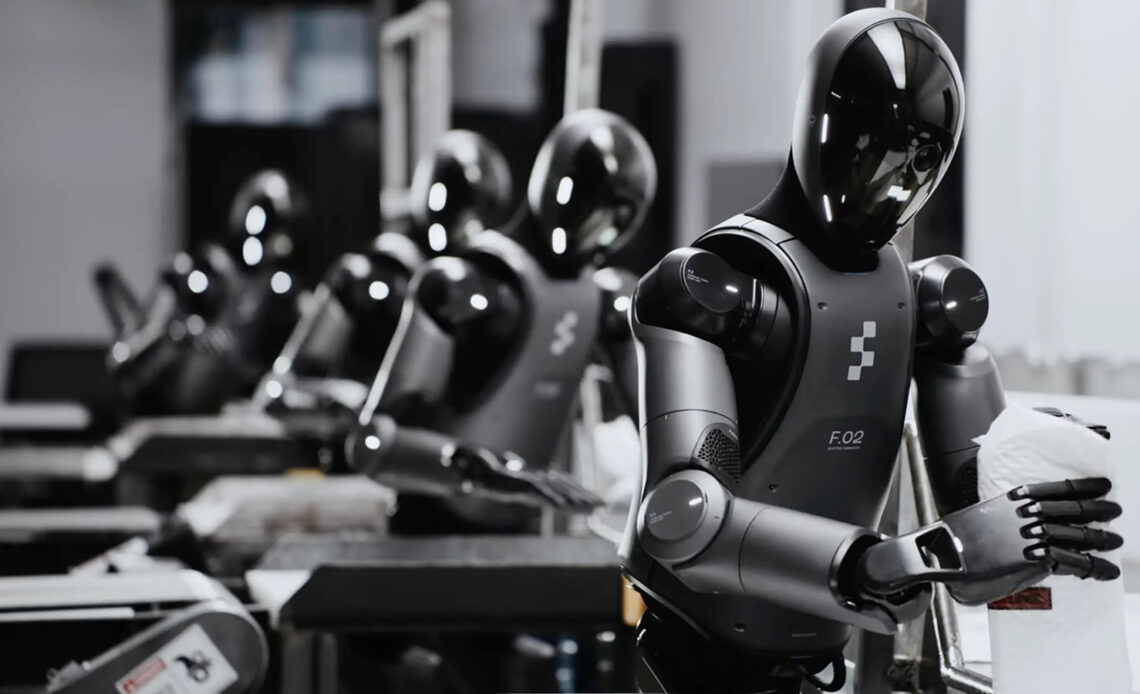
Boston Dynamics is preparing to deploy autonomous versions of Atlas at Hyundai factories in the United States. These are no longer machines executing predefined scripts. The robots independently assess their surroundings, make decisions, and adjust their behavior in real time. Humans are no longer conductors, but observers and last-resort safeguards.
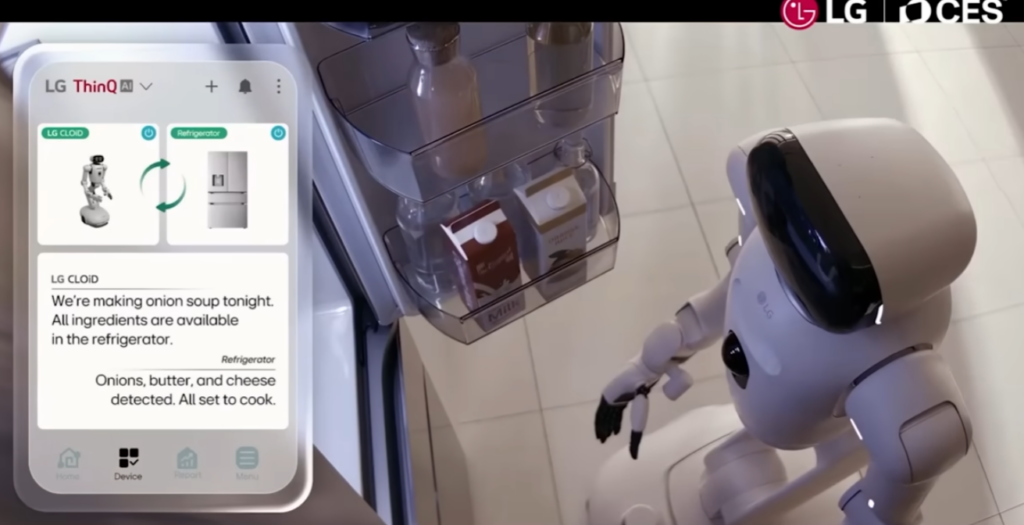
LG has introduced CLOiD, a domestic robot that goes far beyond traditional automation. It does not merely execute commands; it attempts to anticipate the needs of the household by analyzing daily habits, routines, and behavior. The home ceases to be a collection of devices and begins to resemble a single living organism.
When the Home Gains a Mind
Samsung is increasingly promoting the concept of artificial intelligence as the coordinating layer of the entire home ecosystem. This is no longer a smart kettle or a voice assistant. It is a distributed intelligence stretched across dozens of devices. The refrigerator analyzes the family’s diet and plans purchases. The air conditioner adapts to residents’ biorhythms, creating a personalized microclimate. Lighting responds not to commands, but to mood and context.
This is where the boundary between automation and thinking lies. The system does not simply execute instructions – it interprets reality and acts within it.
Hardware That Thinks
Dell and AMD are embedding artificial intelligence directly into processors. This represents a fundamental shift. Thinking becomes a basic function of hardware, alongside computation and graphics. Arm is developing Edge AI, enabling devices to make complex decisions locally without relying on the cloud. Intelligence thus becomes not a centralized service, but a distributed capability of the physical devices themselves.
The computer no longer merely calculates. It interprets.
Machines as Cultural Co-Authors
The most dramatic transformation is occurring in the content sphere. Artificial intelligence is rapidly penetrating every channel of information creation and distribution. Netflix uses AI to generate previews, adapt subtitles, analyze scripts, and even create individual scenes. YouTube Shorts allows videos to be assembled from textual descriptions. Social platforms are filled with filters and effects that create alternative versions of reality rather than simply embellishing images.

Quality has reached a level at which users often cannot determine whether content was created by a human or an algorithm. This changes the very nature of the media environment. Machines become not tools, but full participants in the cultural process.
OpenAI has trained voice models to speak so naturally that interlocutors forget the digital nature of the dialogue. What emerges is not an imitation, but a sense of intuition. Artificial intelligence begins to surprise even its creators. And this is no longer a question of quality – it is a question of authorship.
Business in Symbiosis Mode
The corporate environment is moving toward a model of deep integration between humans and machines. Microsoft Copilot is gradually evolving from an assistant into a background intelligence that analyzes workflows and proposes improvements without direct prompts. Slack AI structures corporate knowledge, forming a living memory of the organization.
The role of humans is changing radically. We cease to be system operators and become curators of autonomous processes. Artificial intelligence takes over execution, planning, coordination, and part of strategic analysis. Humans retain responsibility for meaning, ethics, emotion, and unconventional breakthroughs.
The Invisible Foundation of the World
Einstein once said that the most important things in life are invisible. Today, this idea takes on a technological dimension. Artificial intelligence is becoming not a visible assistant, but an intangible infrastructure of reality. Like gravity or time, it influences everything while remaining out of sight.
Religious traditions have long spoken of visible and invisible worlds, where the latter is no less real than the former. Today, we are witnessing the emergence of a new hidden reality – artificial intelligence that shapes the material world while remaining immaterial.
It is the digital spirit of the age. It exists between atoms and bits, between intention and action. Humanity has created a machine that operates not only according to the laws of physics, but also according to the laws of metaphysics. And, as is often the case, the most significant changes happen quietly – right before our eyes.
All content provided on this website (https://wildinwest.com/) -including attachments, links, or referenced materials — is for informative and entertainment purposes only and should not be considered as financial advice. Third-party materials remain the property of their respective owners.