

The company Tether has announced preparations for the presentation of a new product based on artificial intelligence, which the management describes as “revolutionary.” According to CEO Paolo Ardoino, the company will present a solution as early as next week that could significantly influence the development of both the cryptocurrency industry and the ecosystem of decentralized technologies.


Ardoino stated that the product is being developed by a specialized division within the company dedicated to research and development in the field of artificial intelligence. According to him, the new tool will represent “a real breakthrough” and may demonstrate an alternative approach to AI development – one that does not depend on centralized cloud platforms or large technology corporations.
The QVAC Platform and Local Artificial Intelligence
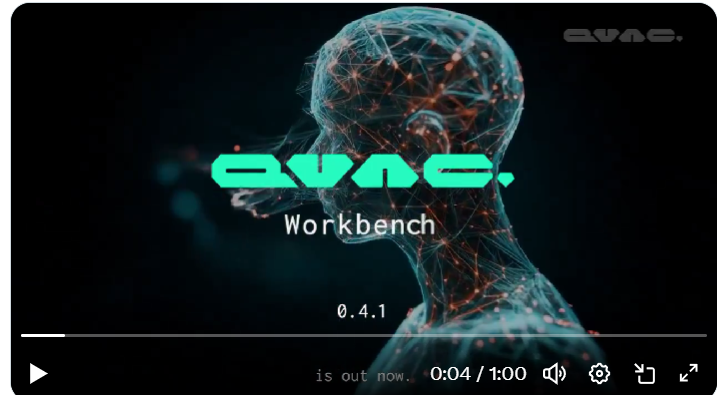
The announcement came shortly after the release of the Workbench version 0.4.1 update by the QVAC team. In the new version, developers redesigned the application interface and improved the operation of local artificial intelligence models both on desktop computers and on mobile devices.
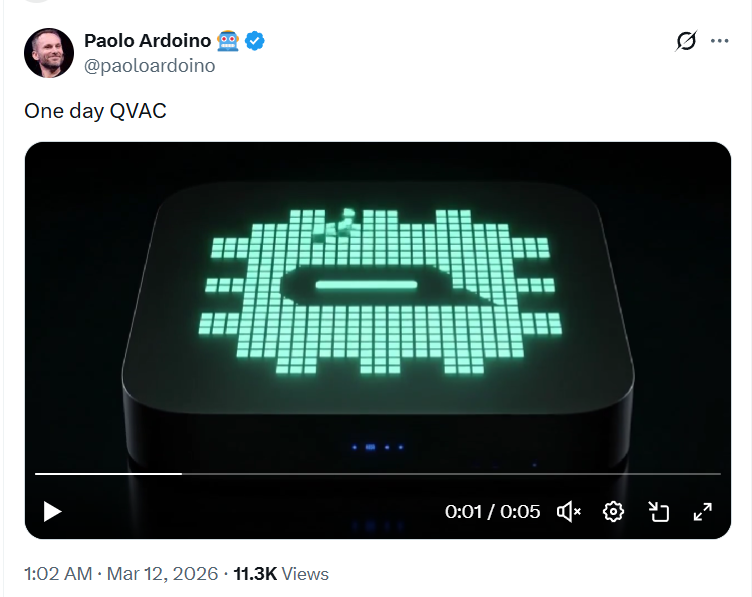
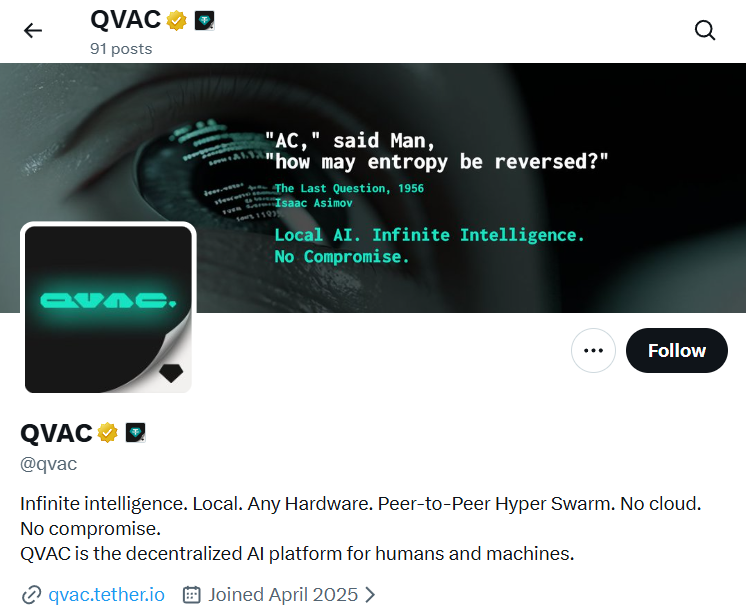
QVAC (QuantumVerse Automatic Computer) is an experimental platform that Tether has been developing for more than a year. The main idea behind the project is to move artificial intelligence computations directly onto user devices. Unlike traditional AI services that operate through cloud servers, QVAC allows models to run locally without the use of remote infrastructure and without API keys.
Such an approach offers several potential advantages. First, it increases the level of privacy, since user data does not leave the device. Second, it reduces dependence on centralized providers of computing power. Third, it allows AI tools to function even in conditions of limited internet access.
The development of QVAC is carried out by the Tether Data division – a technological structure within the company focused on new digital products. For Tether, this project represents an important strategic shift, as the company is gradually expanding beyond its core business related to issuing the stablecoin Tether (USDT), which still remains the largest stablecoin in the world by market capitalization.
Financial Foundation for Technological Expansion
Tether has substantial resources to develop new directions. According to the company’s latest financial report, its net profit for 2025 exceeded 10 billion dollars. The main part of this income was generated through the management of a large portfolio of U.S. government bonds.
According to the company, Tether holds around 141 billion dollars in U.S. Treasury bonds on its balance sheet. These assets generate stable income through interest payments, providing the company with significant free cash flow.
Part of these funds is actively invested in promising technological sectors. In addition to artificial intelligence, the company invests in energy infrastructure, P2P communication systems, as well as projects related to robotics and neural interfaces.
Challenging Centralized AI
According to Paolo Ardoino, the development of decentralized AI solutions could shift the balance of power in the technology market. In an interview with Fortune in February, he explained that the company aims to create an alternative ecosystem of digital services that would allow users to operate without relying on large centralized platforms.
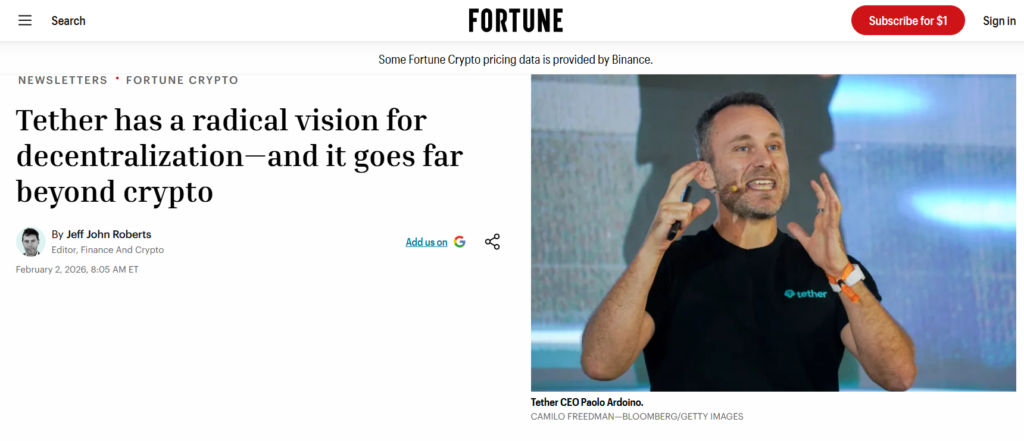
This vision includes not only financial tools but also a broader range of technologies – from cloud computing to communication systems. Ardoino believes that in the future users will be able to interact with artificial intelligence directly from their own devices without transferring their data to external companies.
This approach closely aligns with the ideology of the cryptocurrency industry, where decentralization and user control over personal data are considered fundamental principles.
Possible Features of the New Release
Experts suggest that the upcoming release could significantly expand the functionality of QVAC. According to analysts, several new capabilities may appear in the product.
One potential feature is a fully open-source version of the QVAC assistant framework, which would allow developers to create their own AI agents based on the platform. This could stimulate the formation of a new ecosystem of applications built around Tether’s technology.
Improvements to the local AI model optimized for edge inference are also expected. This refers to performing computations directly on user devices rather than in centralized data centers. Such an approach is rapidly gaining traction in the industry because it reduces latency and decreases the load on cloud infrastructures.
Another possible direction of development is deeper integration between AI agents and Tether’s payment infrastructure. The company is already testing mechanisms that allow software agents to perform autonomous cryptocurrency transactions, including Bitcoin and USDT.
If such functions are implemented, they could open new use cases for artificial intelligence within the digital economy. For example, AI agents could independently pay for services, interact with decentralized applications, or manage users’ digital assets.
Investments in Related Technologies
The development of Tether’s AI direction is accompanied by active investments in related technological companies. One of the most notable deals was the acquisition of a controlling stake in Blackrock Neurotech for approximately 200 million dollars. This company develops brain-computer interface technologies.
In addition, Tether has invested in the Italian startup Generative Bionics, which specializes in robotics and generative control systems for bionic devices.
Such investments indicate that the company views artificial intelligence not as a standalone product but as the foundation of a broader technological ecosystem that combines financial services, computing infrastructure, and human-machine interaction interfaces.
Results and Market Expectations
A separate division of the company – EVO – has already demonstrated certain results. In February 2026, its developments ranked fourth in a global AI benchmark focused on interface technologies. This became one of the first indications that the company is attempting to establish a serious presence in the artificial intelligence market.
However, a certain degree of skepticism remains within the market. The history of Tether has repeatedly been accompanied by debates about the transparency of the company’s financial reporting and reserves. As a result, some analysts approach loud technological announcements with caution, pointing to the gap between marketing statements and actual products.
What the Presentation May Show
Nevertheless, the upcoming presentation could become an important moment for the entire industry. If Tether indeed presents a working system of local artificial intelligence integrated with cryptocurrency payments, it could create a new market segment at the intersection of AI and blockchain.
Within the coming days it will become clear whether the scale of the announcement corresponds to the expectations created by the company’s CEO. For the crypto industry, this could either turn out to be another loud statement or the beginning of a new technological trend.
All content provided on this website (https://wildinwest.com/) -including attachments, links, or referenced materials — is for informative and entertainment purposes only and should not be considered as financial advice. Third-party materials remain the property of their respective owners.