

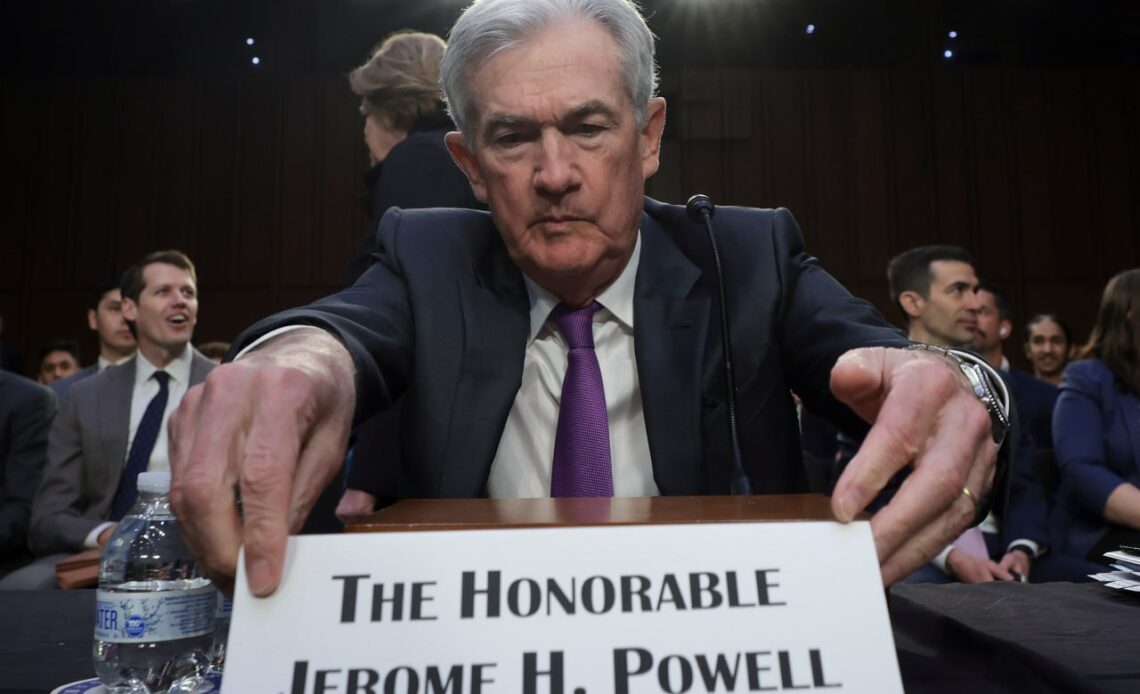
Jerome Powell’s press conference after the FOMC meeting of the U.S. Federal Reserve was in his usual style — calm, without sharp statements, but with fairly clear hints: it’s too early to relax, but no reason to panic yet.
The main message: inflation is stubborn. It’s no longer at its peak, but there’s still a long way to go to reach the desired 2%. Meanwhile, the economy, despite forecasts of “imminent collapse,” continues to grow. Not on steroids, of course, but not on crutches either. It’s like a patient who has gotten out of bed, but the doctor still doesn’t allow running a marathon — knowing how that usually ends.
Powell considers current monetary policy appropriate. Translation from central bank language: “we won’t change anything for now because things are already tight enough.” Last year’s rate cuts, he says, have brought the system closer to the so-called neutral level — that mythical balance where the economy neither overheats nor falls asleep. Of course, as always, no one knows exactly where it is. It’s like the perfect weight — everyone talks about it, but everyone’s scales are different.
A separate line — geopolitics. Events in the Middle East remain a source of uncertainty. Powell frankly admits: no one knows how this will end or how exactly it will impact the economy, especially through oil and energy. And oil, as we know, can spoil the mood of even the most optimistic forecasts. Rising energy prices can drive inflation higher than desired, and the Fed currently has neither a precise scenario nor, more importantly, confidence.
Short-term inflation expectations have risen — a worrying signal. Because expectations in the economy are not just numbers, they are almost a self-fulfilling prophecy. If businesses and consumers start believing prices will rise, they behave as if it has already happened. Then inflation must be chased rather than prevented.
Powell emphasizes: inflation is not a one-time price jump, but a sustained process. Tariffs, for example, theoretically give a one-time effect. In practice, it’s more complex — supply chains, second-order effects, psychological factors. Therefore, the Fed expects tariff effects on inflation to become clearer and possibly weaken toward mid-year. But this is “expects,” not “guarantees” — the difference can be roughly one crisis.
A key point for markets: if there’s no progress in reducing inflation, there will be no rate cuts. It’s simple and a bit grim. Moreover, Powell states that a rate hike is not the baseline scenario, but it’s not being fully ruled out. So the door isn’t just ajar — it was never closed. This is precisely when investors start nervously checking for drafts.
Interestingly, the possibility of a rate hike was discussed. Not as the main plan, but as a working “just in case” scenario. This signals that the Fed does not feel fully confident that inflation is under control. If necessary, they are ready to hit the brakes again, even if the economy has already started slowing.
The labor market, according to Powell, should benefit from previous rate cuts. This is an important part of the Fed’s dual mandate — balancing inflation and employment. And he openly admits: it’s a tricky situation. Treating one problem can worsen another. A classic central bank dilemma, seemingly as old as central banks themselves.
Powell also dismisses comparisons to the 1970s and stagflation. According to him, the current situation has no direct analog. Yes, there’s tension between growth and inflation, but it’s not a scenario where the economy is stagnant and prices run ahead screaming “catch me if you can.” The mere fact that such questions are asked shows market sentiment.
On oil — honest answer: no forecasts. And there won’t be. Forecasting oil during a conflict is like predicting the weather a month ahead while watching a hurricane outside. You can try, but the result will be more philosophical than practical.
Final emphasis — inflation expectations should remain anchored at 2%. This is almost a Fed mantra. Losing confidence in this level leads to a completely different economy, with different rules and much harsher decisions.
Bottom line: the Fed is in “wait and watch” mode. Too early to cut rates, hesitant to raise them, but if necessary, they will. Inflation is not yet defeated, geopolitics adds uncertainty, and the market again faces the situation where good news is scarce, and bad news arrives uninvited. As they say, investors have one thing to do — not react to every headline and remember that central banks dislike surprises, but markets thrive on them.
All content provided on this website (https://wildinwest.com/) -including attachments, links, or referenced materials — is for informative and entertainment purposes only and should not be considered as financial advice. Third-party materials remain the property of their respective owners.