

This Friday, January 30, Japan may trigger a chain reaction capable of destabilizing global financial markets.
An extremely dangerous configuration is forming in the currency market. The US dollar is weakening, while the Japanese yen is strengthening sharply amid rising expectations of currency intervention. The key source of concern is that the United States, based on current signals, may for the first time this century sell dollars and buy Japanese yen.
The Federal Reserve has already conducted a so-called rate test. Formally, this is a technical procedure, but historically it has almost always preceded actual currency operations. For markets, this is a clear signal of preparation for intervention. According to available information, the critical moment may arrive as early as January 30.
If this scenario materializes, it would not be merely a currency operation but a potential systemic stress point capable of affecting all global markets.
Japan’s Problem as a Source of Global Risk
Japan has approached a dangerous boundary of its financial model. High debt, demographic pressure, years of ultra-loose monetary policy, and its role as the world’s main provider of cheap liquidity have made the economy highly vulnerable to sharp currency moves.

In practice, Japanese authorities may find themselves forced to use their last major financial buffer – US Treasury securities – to stabilize the domestic economy.
Japan holds approximately $1.13 trillion in US Treasuries, making it the largest foreign holder of US government debt. Even China, with a comparable portfolio, refrained from fully using this lever during trade conflicts, fully aware of the consequences for the global financial system.
If Japan needs to urgently defend its economy, selling Treasuries may become unavoidable. This is precisely what makes the situation potentially explosive.
Why the Fed May Act First
A large-scale sell-off of US Treasuries by Japan would push yields sharply higher, drive Treasury prices lower, and trigger accelerated dollar weakness. For the US financial system, this would be a severe shock.
To prevent such a scenario, the Federal Reserve may attempt to act preemptively. Selling dollars and buying yen would help stabilize Japan’s currency market and reduce pressure on its reserves. In essence, this would represent a form of managed, artificial dollar devaluation.
Such actions appear to be an attempt to preserve balance in a system where one major player risks dragging everyone else down.
Why This Matters for the Crypto Market
The link to cryptocurrencies is direct and historically confirmed. In the last three episodes of large-scale liquidity shifts from the dollar into the yen, the crypto market reacted with sharp declines:
Facts:
- April 29, 2024: Bitcoin fell by approximately 23%;
- May 1, 2024: the decline reached about 26%;
- July 11, 2024: losses extended to roughly 31%.
In all cases, Japan was the catalyst. The current situation is potentially even more dangerous, as it may involve direct intervention by the United States.
For decades, Japan has been the center of cheap money. The yen has been widely used for carry trades, with investors borrowing at low rates to buy equities, bonds, cryptocurrencies, and other risk assets. Any disruption to this mechanism leads to a sharp contraction in liquidity and forced position unwinding across global markets.
Yen Intervention Is About Liquidity, Not Headlines
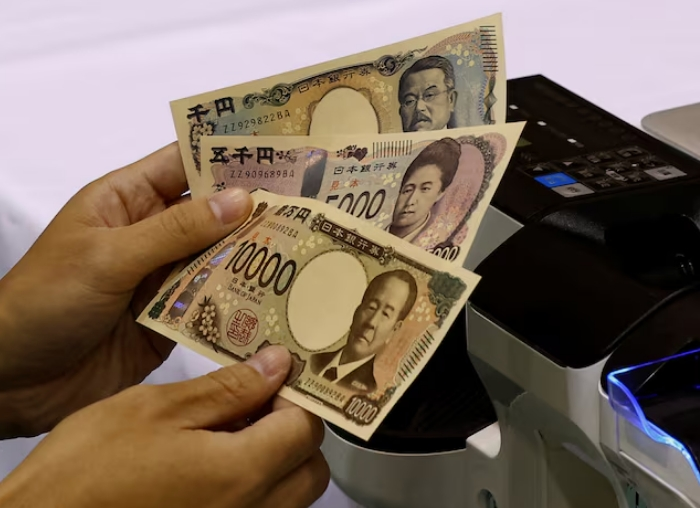
Japanese currency interventions are not unusual, but they always involve massive volumes, typically in the range of 2.5 to 5 trillion yen per operation. This is not a symbolic signal but a direct shock to the financial system.
Markets are hit not through news headlines, but through real capital flows. Liquidity exits risk assets faster than participants can fully process what is happening.
In a broader context, this reinforces the dominant trend of recent years: the global economy is entering a phase of debt confrontation, where government bonds are no longer neutral assets and are increasingly used as tools of pressure and defense.
Final note
All that remains is to wish the US Federal Reserve good luck. It cannot be ruled out that in an emergency scenario it will have to print another one or two trillion dollars in order to stabilize not only Japan, but the entire global system.
This scenario no longer looks like fantasy. In 2025, many understood where things were heading. Now the processes are unfolding in real time and right before our eyes.
Those who understood this in advance have long since reallocated risks toward cryptocurrencies and gold.
All content provided on this website (https://wildinwest.com/) -including attachments, links, or referenced materials — is for informative and entertainment purposes only and should not be considered as financial advice. Third-party materials remain the property of their respective owners.