

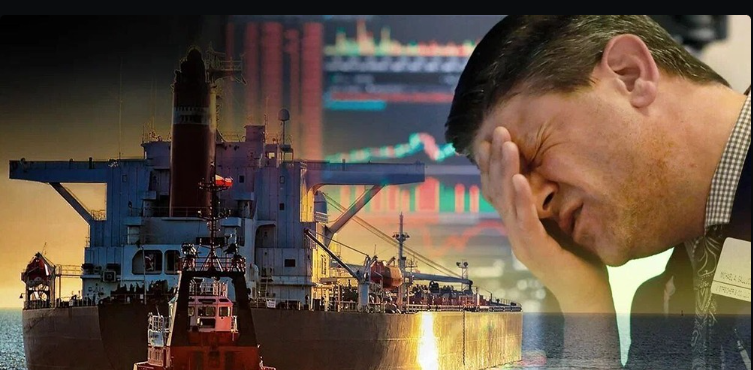
The market is once again under pressure, and this is now felt not as a normal correction, but as a shift in sentiment. When indices fall for several consecutive weeks, investors can still attribute it to profit-taking or technical factors. But when the decline drags on and the backdrop becomes increasingly heavy, the main driver comes into play — fear.
American indices continue to decline for the fourth week in a row. The S&P 500 loses about 1.5% in a day, the Nasdaq Composite falls even more, and the Dow Jones Industrial Average drops by hundreds of points. This is no longer a targeted pressure on individual sectors, but a broader movement affecting the entire market.
The main reason is obvious — geopolitics. Increased U.S. presence in the Middle East, troop deployments, the ongoing conflict with Iran, and the absence of a clear resolution scenario create an environment in which the market cannot feel confident. And it’s not just the war itself, but the chain reaction of consequences it triggers, which directly impacts the economy.
The key link in this chain is oil. Any escalation in the region automatically raises supply risks, especially through the Strait of Hormuz. As a result, oil prices have already settled above $100, becoming the main factor pressuring markets. Expensive energy is not an abstraction, but concrete business costs. Companies pay more for logistics, production, raw materials, and this directly hits margins.
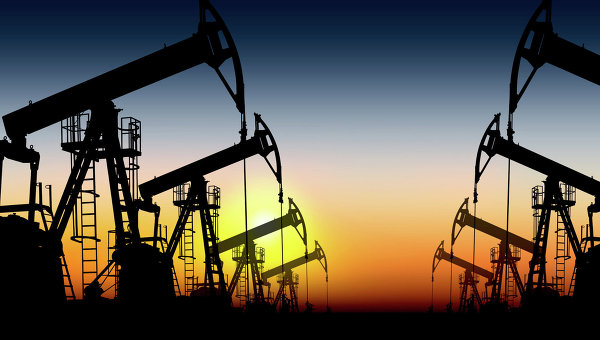
Then a second level effect comes into play. Rising oil prices accelerate inflation. And inflation is what the Federal Reserve System fights. In this situation, the regulator cannot afford rapid rate cuts. On the contrary, the market begins to price in a “high rates for longer” scenario. And expensive money is one of the strongest brakes for the stock market.
That’s why investors fear not the war itself, but its economic consequences. While the conflict remains local, the market can adapt. But if it begins to affect inflation and monetary policy, this becomes a systemic risk.
Against this backdrop, the behavior of individual sectors is particularly telling. Even those that were recently considered “growth locomotives” start to crack. The story with Super Micro Computer became a vivid example. The company’s shares fell more than 30% in a single day amid a scandal related to AI-chip shipments to China. Formally, this is a separate story, but in fact, it perfectly fits the overall trend: the market sharply reassesses risks, especially when linked to politics and regulation.
And this is an important signal. Even “hot” AI companies, which yesterday seemed almost invulnerable, prove sensitive to external factors. Geopolitics, sanctions, technology export restrictions — all of this becomes part of the investment equation.

Looking more broadly, the picture appears quite tense. Indices are breaking key support levels, small companies are already in full correction, and the overall market is pricing in a tighter rate scenario. This is the moment when optimism gradually gives way to caution.
It is important to understand that what is happening now is not a classical crash, but worsening conditions. Liquidity is gradually disappearing, risks are rising, and investors become more selective. The market stops “forgiving mistakes” and begins to react more harshly to any negative news.
The further development of the situation largely depends on three factors. First — the dynamics of the conflict. If tensions increase, pressure on markets will continue. Second — oil. As long as prices remain high, the inflationary factor does not disappear. Third — central bank policy. If rate expectations continue to worsen, this will restrain any attempts at growth.
There are several scenarios for the near term, but none of them is simple. If the conflict drags on, the market will likely continue to decline under inflation and rate pressure. If signs of de-escalation appear, a sharp rebound is possible — and quite strong, because the market is already saturated with negativity. There is a third scenario in which oil remains high, but the situation does not worsen — in this case, the market may enter a prolonged sideways pattern under constant pressure.
For the investor, this is not the most comfortable period. The market is no longer about fast growth and easy money. It is about risk management, patience, and selection. In such moments, it is especially important not to rush decisions, not to try to guess the “bottom,” and to closely monitor key indicators, the most important of which remains oil.
And perhaps the main conclusion here is quite simple. The market does not break instantly — it gradually loses stability. And it is precisely these periods, when it is still “not panic,” but clearly worse than before, that are the most difficult for decision-making.
All content provided on this website (https://wildinwest.com/) -including attachments, links, or referenced materials — is for informative and entertainment purposes only and should not be considered as financial advice. Third-party materials remain the property of their respective owners.