


Geopolitical crises rarely remain limited to a single region. Events taking place thousands of kilometers away can instantly change the balance of power in global markets, especially when it comes to energy. This is exactly what is happening now, as a new escalation in the Middle East has unexpectedly confronted Europe with a question that until recently was considered almost taboo for public discussion: is a return to Russian gas possible? This was reported by Foreign Policy columnist Anchal Vohra.
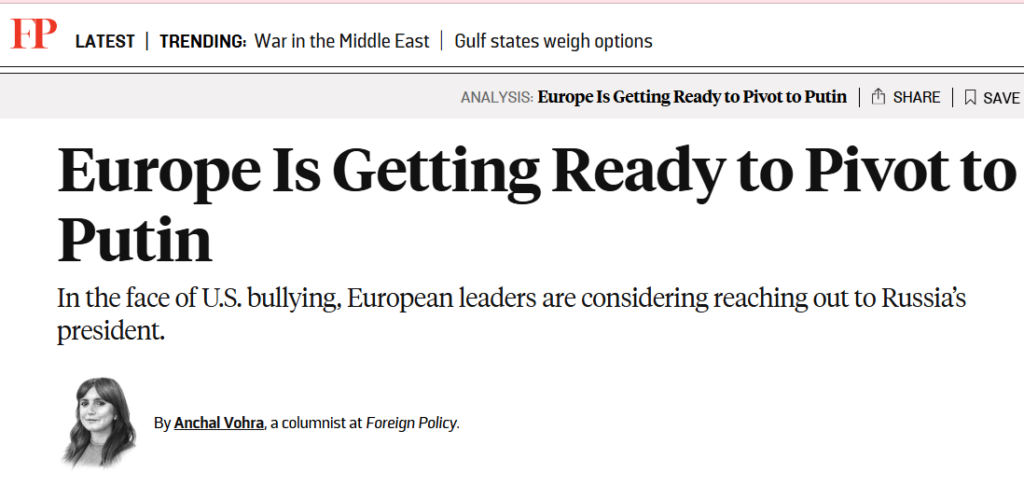

After the start of the war in Ukraine, European countries made a sharp political and economic turn. Imports of Russian gas were significantly reduced, many long-term contracts were terminated or not renewed, and governments promised to accelerate the energy transition and diversify sources of supply. Europe began actively increasing purchases of liquefied natural gas from the United States, Qatar and other countries, investing in LNG receiving terminals and developing renewable energy sources.
However, Europe’s energy system remains extremely sensitive to external shocks. The current situation in the Middle East has once again reminded policymakers how fragile the energy balance can be. While Israel is carrying out strikes on targets in Tehran and Iran warns of possible attacks on oil and energy infrastructure in the Persian Gulf, global energy markets are beginning to react with growing nervousness. Any threat to oil and gas supplies from the region automatically triggers price spikes and forces traders and governments to reconsider their strategies.
One of the first signals that the market had begun to worry was a change in the routes of liquefied natural gas shipments. According to data from analytical companies and maritime traffic tracking systems, several LNG tankers have changed course directly at sea in recent days. Instead of heading to European ports, they have redirected toward Asia.
The reason is simple and well known to participants in the energy market: in conditions of shortage, Asia is often willing to pay a higher price for gas. When the price difference becomes large enough, traders redirect shipments to where profits are higher.
A similar situation occurred in 2022 during the energy crisis in Europe, when European countries were forced to compete with Asian buyers for limited volumes of liquefied natural gas.
Now many analysts warn that what is happening may only be the beginning of larger energy shocks. The key risk factor remains the situation around the Strait of Hormuz. This narrow maritime corridor connects the Persian Gulf with the world’s oceans and is one of the most strategically important energy routes on the planet. About one fifth of global oil exports passes through it, along with a significant share of liquefied natural gas shipments.
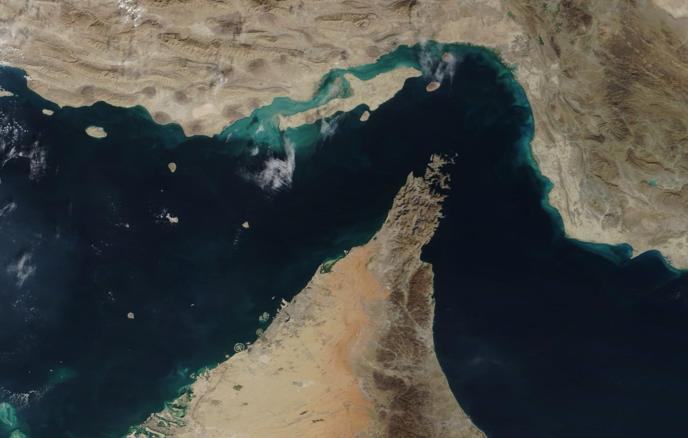
If traffic through this strait becomes restricted or completely blocked, the consequences for the global energy market could be extremely serious. Even a short disruption in supplies could trigger a sharp increase in oil and gas prices and cause a chain reaction across global financial markets.
For Europe, such a scenario is particularly dangerous. Despite efforts to diversify supplies, the continent still depends heavily on energy imports. If global prices rise sharply, European countries will face a difficult choice: either pay dramatically more for energy or reconsider their energy policy.
It is in this context that discussions about Russian gas have begun to reappear in European political and economic circles. The head of the International Energy Agency, Fatih Birol, recently acknowledged that the current crisis in the Middle East has forced some European circles to consider the possibility of returning to Russian supplies. According to him, energy security remains a key priority for many countries, especially amid instability in global markets.
At the same time, Birol emphasized that such a step could become a political mistake. In his view, returning to previous dependence on Russian gas would place Europe in a vulnerable position and undermine efforts to build a more diversified energy system.
However, the reality of energy markets often proves stronger than political statements. Prices, supply and demand shape decisions faster than diplomatic negotiations. Meanwhile, the situation in the Middle East continues to escalate rapidly. According to various sources, Israeli forces have carried out strikes on several energy facilities in Tehran and its surrounding areas. At least five facilities linked to energy infrastructure were reportedly targeted.
These actions triggered a very harsh reaction from Iran. Representatives of the Islamic Revolutionary Guard Corps issued a warning that effectively hinted at the possibility of large-scale energy escalation. The statement included a phrase that quickly spread across global media and financial markets: if opponents are ready to withstand oil prices above two hundred dollars per barrel, they can continue this game.
For investors, such statements are an alarming signal. Even if such scenarios do not fully materialize, the mere risk of their emergence is already capable of sharply changing market behavior. Against this backdrop, urgent activity has begun in diplomatic circles.
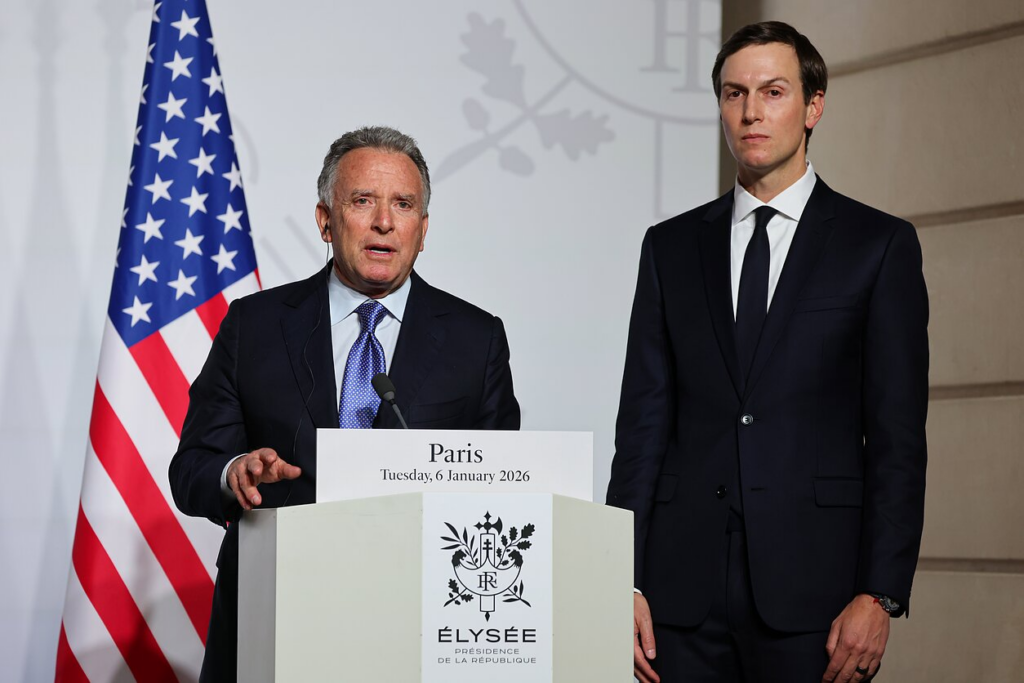
Former U.S. President Donald Trump, according to American media reports, is sending his representatives to Israel in order to reduce tensions and persuade the Israeli leadership to exercise caution in further actions against Iran.
According to sources, Steve Witkoff and Jared Kushner are expected to arrive in Israel on Tuesday. Their task is to hold negotiations and attempt to convince the Israeli side to limit the scale of possible strikes. In Washington, they understand that further escalation could lead to an extremely dangerous scenario. If the conflict spirals out of control, the United States could find itself drawn into another large-scale war in the Middle East.
For American politics, this would become an extremely difficult test, especially against the backdrop of already existing global tensions and domestic economic problems. European capitals are closely monitoring the development of the situation. Nervousness in energy markets is already beginning to be felt.
Particularly alarming signals are coming from the United Kingdom. According to estimates from a number of analysts, the volume of gas in British storage facilities is at an extremely low level. Some assessments say that reserves may be sufficient for only a few days if consumption rises sharply.
Although such estimates may be subject to debate, the very fact of limited reserves increases concern. If supplies from the Persian Gulf are disrupted and global energy prices rise sharply, Europe may face a new energy crisis. Moreover, this crisis could develop much faster than political leaders will be able to formulate a joint response.
The history of energy markets shows that such crises often unfold rapidly. First, local conflicts and supply threats emerge, then prices begin to rise, after which states are forced to make urgent and often unpopular decisions.
That is why many experts warn: if tensions in the region continue to grow, Europe’s energy security will once again become one of the central issues of global politics.
All content provided on this website (https://wildinwest.com/) -including attachments, links, or referenced materials — is for informative and entertainment purposes only and should not be considered as financial advice. Third-party materials remain the property of their respective owners.