


The cryptocurrency market is once again showing signs of active recovery. The price of Bitcoin has risen to around 74,000 dollars, reaching its highest level in almost the past month. Over a relatively short period of time, the growth has been noticeable: in just one day the asset gained several percent, and since the beginning of the latest impulse the increase has exceeded 7%.
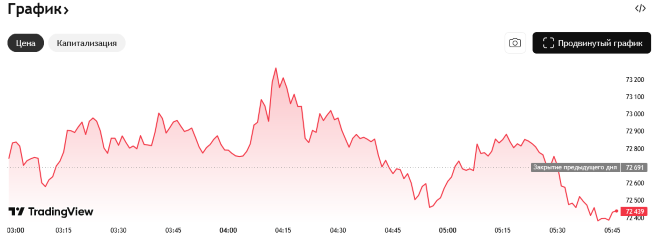
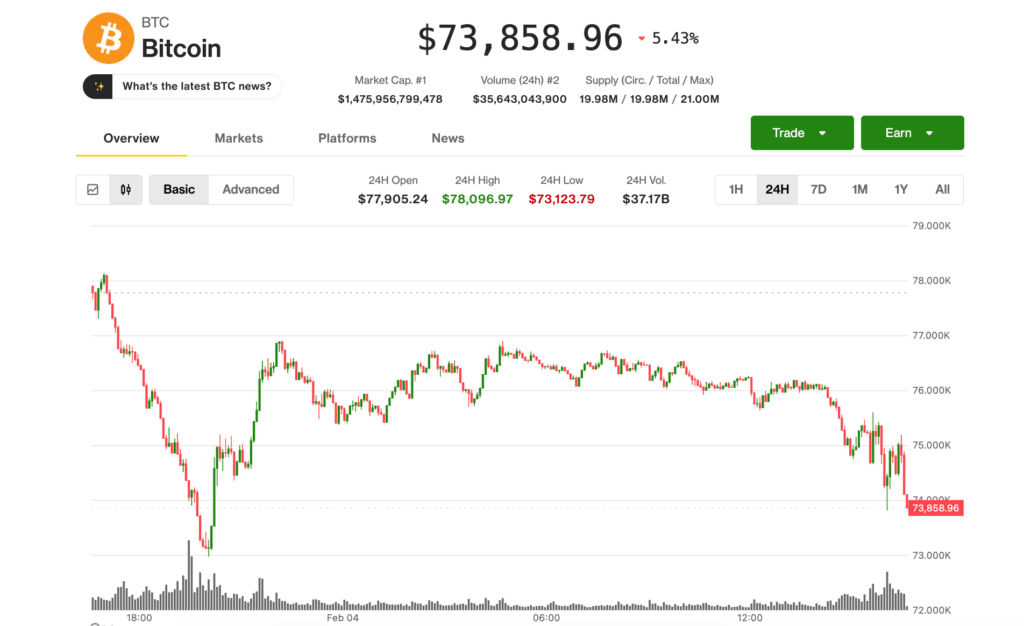
At first glance such movement may appear to be ordinary volatility of the crypto market, however the current dynamics are taking place against the background of a more complex and interesting macroeconomic picture. Unlike many previous periods of growth, the current impulse is being formed not only due to retail investors or speculative demand. More and more signs indicate the return of institutional capital to digital assets.
The key channel of capital inflow has become spot Bitcoin ETFs. Over the past few days about 1.4 billion dollars has entered the market through these funds. The total volume of capital that investors have already directed into such funds has approached 55 billion dollars. For the cryptocurrency market this is a significant indicator, since ETFs have become a kind of bridge between the traditional financial system and the crypto industry.
In fact, spot funds allow institutional investors to gain exposure to Bitcoin without the need to directly buy, store and manage crypto assets. For large funds, banks and investment companies this significantly reduces operational and regulatory barriers. Therefore the growth of inflows into such instruments is often viewed as an indicator that large players are beginning to accumulate positions.
Against the backdrop of the recovery of cryptocurrencies, the stock market of companies connected with the digital asset industry has also sharply intensified. First of all this concerns crypto exchanges, brokers, infrastructure companies and platforms that earn from the trading activity of users.
One of the most notable beneficiaries of the movement was the American crypto exchange Coinbase. The company’s shares rose by about 14% in a short period of time. Such a jump is explained quite simply: when interest in cryptocurrencies grows and trading volumes increase, exchanges receive more commission income.
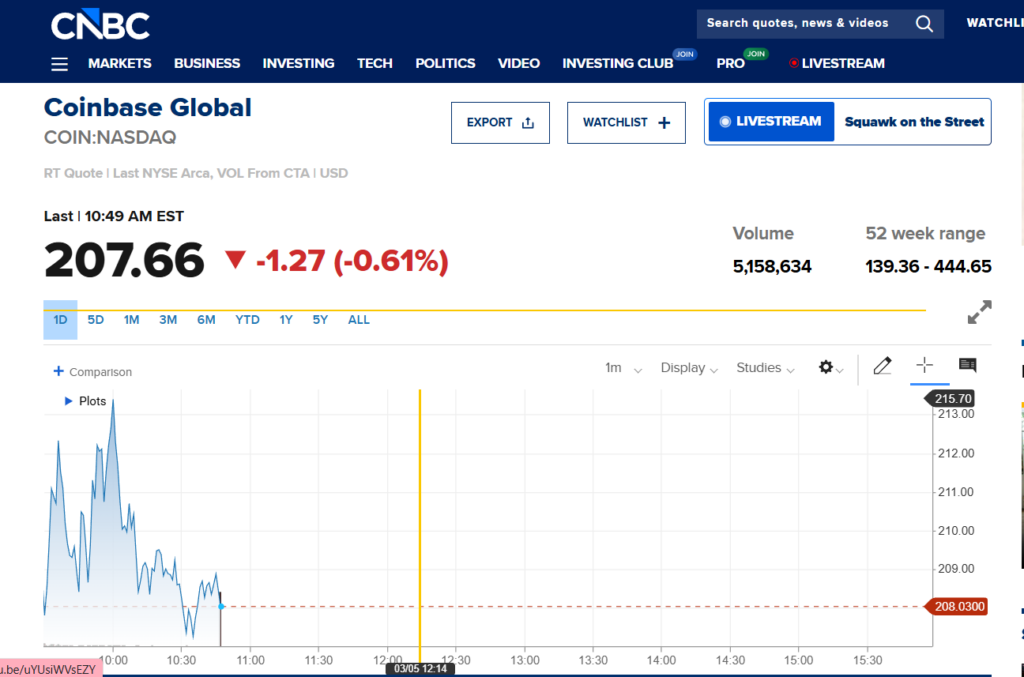
A similar dynamic was shown by the platform Robinhood, which actively works with retail investors and offers cryptocurrency trading alongside stocks and options. Its shares gained about 8%.
Such movements are not accidental. Historically, shares of crypto companies react to Bitcoin’s growth faster and often more sharply. The reason lies in the so-called operating leverage. When the price of cryptocurrency rises, user activity increases disproportionately faster. People begin to buy, sell and transfer assets more often, which means the number of transactions and commissions grows. For infrastructure companies this directly translates into revenue growth.
Additional market attention was drawn by the actions of well-known investor Cathie Wood and her investment company ARK Invest. The fund, long known for its bets on technological and innovative industries, recently purchased shares of Coinbase and Robinhood worth millions of dollars.

Such purchases rarely go unnoticed. Cathie Wood has for many years been one of the most well-known supporters of cryptocurrencies and technological innovation. Therefore her investment decisions are often viewed as an indicator of a long-term outlook on the industry. If such funds begin to increase positions in crypto infrastructure, this may signal expectations of a new growth cycle.
However the current market situation is interesting not only because of price growth. Its uniqueness lies in the fact that the rally is happening amid a rather tense macroeconomic environment.
Over the past few days cryptocurrencies have risen by more than 10% since the beginning of a new round of geopolitical tensions in the Middle East. Usually during periods of military conflict investors try to avoid risky assets and move into so-called safe instruments.
Nevertheless this time the market reaction turned out to be different. In addition to Bitcoin, other large digital assets also rose. In particular, noticeable growth was demonstrated by cryptocurrencies such as Ethereum, XRP and Solana. Many of them gained several percent within a day.
The overall state of the market is reflected by the CoinDesk 20 index, which tracks the dynamics of the largest crypto assets. This indicator has also shown growth, confirming that the movement is broad and not limited to Bitcoin alone.
Particularly curious is the fact that the rise of cryptocurrencies is occurring simultaneously with the strengthening of the US dollar. The US Dollar Index rose by more than one percent this week and reached a level of about 99.68 — a value last observed in November.
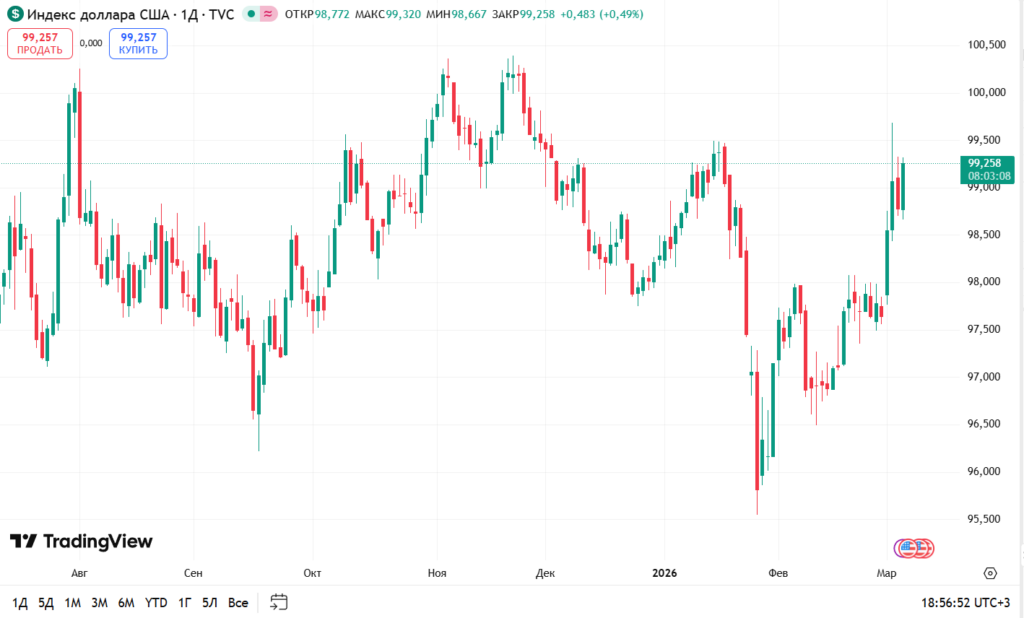
From a historical perspective such a combination appears unusual. Traditionally a stronger dollar puts pressure on assets denominated in dollars, including Bitcoin. As a rule there is an inverse correlation between them: when the dollar strengthens, cryptocurrencies and other alternative assets experience pressure.
Therefore the current situation raises questions for many analysts. In fact the market demonstrates that several different forces are acting on it simultaneously. On one side there are macroeconomic factors and global risks. On the other side there are structural changes within the crypto industry itself.
One of these changes has been the emergence of regulated investment instruments such as spot ETFs. They have significantly expanded the range of potential investors. Now not only private traders or crypto funds can enter the crypto market, but also traditional institutional players managing tens and hundreds of billions of dollars.
At the same time a political discussion around cryptocurrency regulation is developing. In the United States discussions continue regarding a legislative framework that should define the structure and rules of the digital asset market.
In this context the President of the United States Donald Trump recently stated that large banks are slowing down the adoption of a key law on the structure of the crypto market. According to him traditional financial institutions fear stronger competition from the crypto industry.
Regulatory uncertainty remains one of the main risk factors for the market. However at the same time it also creates potential for future growth. Clear rules of the game could attract even more institutional investors who have so far acted cautiously due to legal uncertainty.
For investors the current situation carries several important signals. When large money begins to return to Bitcoin, infrastructure companies react first. Exchanges, brokers, payment services and mining companies often grow faster than the cryptocurrency itself.
This is because they earn from the entire activity of the market, not only from the growth of the price of a particular asset. The higher the interest in cryptocurrencies, the more transactions, trading operations and services are used.
If inflows into ETFs continue and institutional interest strengthens, the crypto market may receive a new long-term impulse. In this case growth may spread not only to Bitcoin but also to shares of companies that form the infrastructure of the digital economy.
The history of previous cycles shows that such periods often become the beginning of larger movements in the market. The only question is whether the current impulse will become a short burst of activity or the beginning of a new stage in the development of the crypto industry.
All content provided on this website (https://wildinwest.com/) -including attachments, links, or referenced materials — is for informative and entertainment purposes only and should not be considered as financial advice. Third-party materials remain the property of their respective owners.