

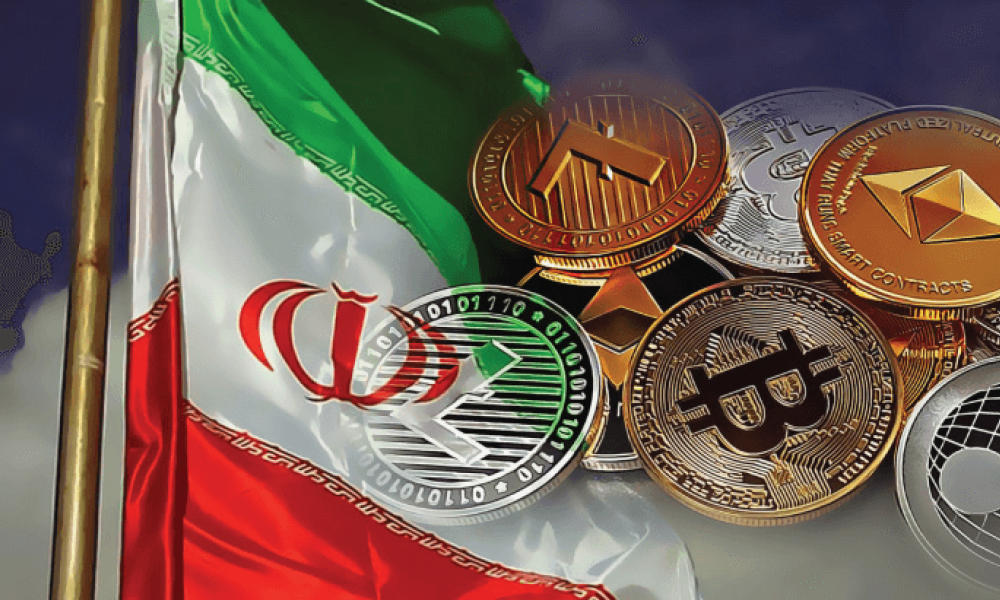
The Bitcoin community is actively discussing reports that Iran is considering accepting cryptocurrency as payment for the passage of oil tankers through the Strait of Hormuz — one of the key nodes of global energy infrastructure, through which around 20% of global oil supply flows. The mere emergence of such an idea is already drawing attention, as it does not concern private payments but a potential use of crypto at the level of state infrastructure.
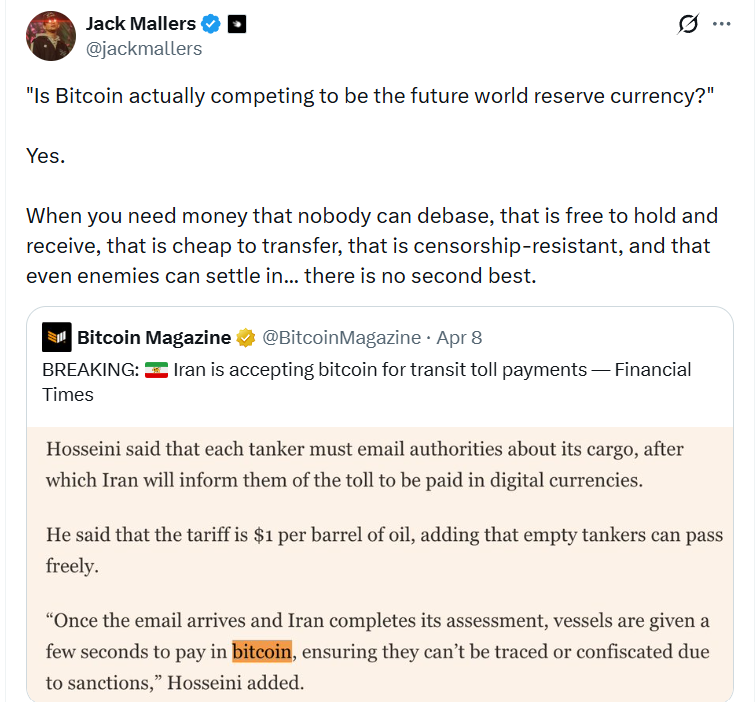
The topic was initially raised by the Financial Times. The publication, citing a representative of Iran’s Union of Oil, Gas and Petrochemical Exporters, mentioned the possibility of introducing fees in digital currencies, including Bitcoin, as a way to bypass US sanctions pressure. Under the described scenario, vessels would first send cargo information via email, after which they would receive the fee amount — around $1 per barrel — and be given a short window to complete payment.
Alex Thorn, head of research at Galaxy Digital, highlights the inconsistency in the information circulating. According to him, some sources suggest not only Bitcoin but also stablecoins or Chinese yuan as possible payment methods.
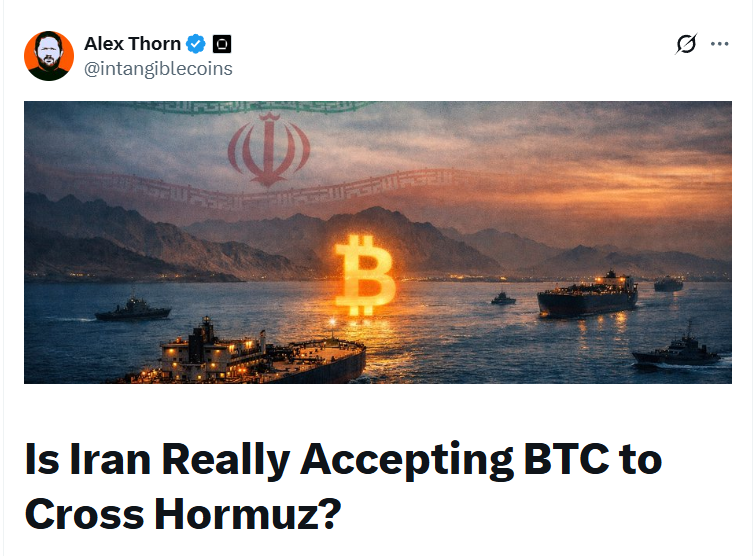
At the same time, he tracks on-chain activity to identify potential transactions related to transit payments. He estimates that the fee per tanker could range from $200,000 to $2 million — amounts already significant even for institutional players.
From a settlement perspective, Bitcoin has fundamental advantages in such scenarios. Assets like Tether and USD Coin include built-in address blacklisting mechanisms. Issuers can freeze funds, effectively making them inaccessible. Bitcoin, by contrast, has no centralized issuer, no authority that can be compelled to enforce rules, and no mechanism for forced freezing. This architectural feature is precisely what makes it attractive for countries under sanctions pressure.
If Iran were to begin accepting Bitcoin for tanker passage, it could become an important signal for the market. This would not be a mere experiment but a potential case of cryptocurrency being used in international trade at a sovereign level. In this framework, Bitcoin begins to function as a neutral settlement asset, not tied to any jurisdiction and not controlled by external power centers.
From a technical standpoint, payment speed remains a key issue. The mention of payments within seconds suggests the possible use of the Lightning Network — Bitcoin’s second-layer solution enabling near-instant transactions. However, as Thorn notes, the largest known transactions on this network are currently limited to around $1 million. Therefore, a more likely scenario involves standard on-chain transfers, with a Bitcoin address or QR code provided after approval of the request.
The Strait of Hormuz remains a critical component of the global economy. Around 21 million barrels of oil pass through it daily. At a fee of $1 per barrel, potential revenue could reach tens of millions of dollars per day. On an annual basis, this represents a substantial volume that, if converted into cryptocurrency flows, could create sustained demand.
Within the crypto community, such initiatives are seen as further evidence of the growing role of decentralized assets. Unlike traditional currencies or even stablecoins, Bitcoin provides a mechanism for value transfer without intermediaries and without the possibility of external interference. This is especially relevant in a world where financial infrastructure is increasingly used as a tool of geopolitical pressure.
At the same time, practical implementation questions remain open. How transactions will be confirmed under tight time constraints, how operational security will be ensured, and how traceable such payments will be — all of this is still unresolved. Analysts continue to evaluate possible scenarios and their market implications.
Even with alternatives such as yuan-based settlements through banking systems, Bitcoin still stands out as the most resilient option in terms of independence. This makes it a logical tool for countries seeking to maintain control over key trade flows under external pressure.
Further developments will depend on multiple factors: international response, technical execution, and the actual volume of transactions that can be observed on-chain. But even now, the discussion shows that cryptocurrencies are gradually moving beyond private investment narratives and starting to position themselves as elements of global financial architecture.
In simple terms, the market is observing a potential precedent. And the key question is not whether Bitcoin will be used, but whether this could mark the beginning of a broader practice.
From a data analysis perspective, this situation illustrates a new stage in the use of decentralized assets under sanctions pressure. Similar attempts have previously been observed in other countries where cryptocurrencies were considered tools for bypassing restrictions and maintaining access to international settlements.
Analytical models suggest that the key factor is not technology itself, but the scale of adoption. Such solutions may work in isolated cases, but transitioning to a systemic level requires a combination of infrastructure, liquidity, and participant trust.
Ultimately, a pragmatic conclusion emerges: cryptocurrencies are gradually shifting from speculative assets to tools considered within the context of real-world economic activity. The only question is how quickly this transition will become mainstream.
All content provided on this website (https://wildinwest.com/) -including attachments, links, or referenced materials — is for informative and entertainment purposes only and should not be considered as financial advice. Third-party materials remain the property of their respective owners.