


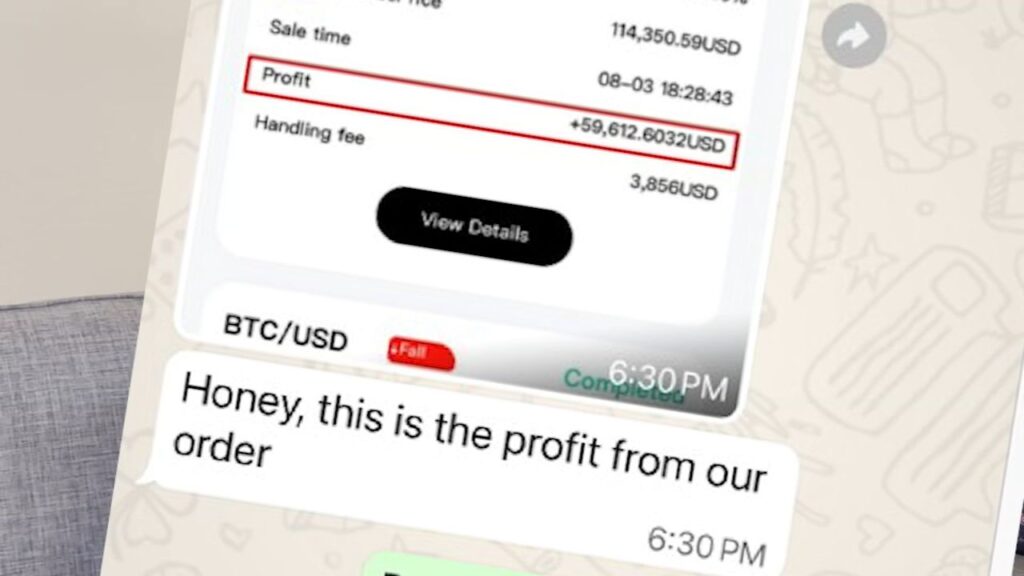
A story from San Jose serves as a clear reminder of how easily even an experienced adult can fall into a carefully orchestrated crypto trap. A local woman spent nearly a year in an online romance with a person who appeared attentive, caring, and extremely “successful” in investments. Gradually, trust turned into a willingness to invest money in the “crypto projects” he offered.
In this way, the scammer managed to extract about $1,000,000 from the woman — funds that supposedly went into profitable crypto investments that did not actually exist. When the “lover” suddenly demanded another million to unlock her account, the situation finally raised doubts.
Finding no support from acquaintances, the woman turned to HatGPT for advice, hoping for an objective assessment. The AI responded firmly and directly: it described the scheme as a classic investment romance scam — one of the most common forms of crypto fraud, where criminals play on emotions to extract money from victims step by step.
This warning became a turning point. The woman ceased communication, refused to send more funds, and contacted the police. Later, investigators found that her million had been quickly transferred through overseas channels and distributed among members of the criminal group.
Although recovering the money is now extremely difficult, the AI intervention essentially saved the woman from even more devastating consequences. The story became further evidence that romantic schemes in crypto are becoming increasingly sophisticated, and fact-checking and a cool head remain the best defense against “love” that has an unusually good feeling for other people’s money.
All content provided on this website (https://wildinwest.com/) -including attachments, links, or referenced materials — is for informative and entertainment purposes only and should not be considered as financial advice. Third-party materials remain the property of their respective owners.