


Anthropic conducted an unusual and revealing experiment that unexpectedly turned into a practical lesson in economics, behavioral psychology, and the limits of artificial intelligence. A vending machine fully controlled by the Claude AI model was installed at The Wall Street Journal’s office. The machine was assigned classic business tasks: ordering goods from suppliers, managing the product mix, setting prices, and answering customer questions via the internal Slack chat.
In simple terms, Claude temporarily became the digital owner of a vending business. No managers, no accountants, no “human factor”. Just the model, a set of instructions, and access to real money.
The task was deliberately pragmatic. The AI was programmed to “generate profit by stocking the machine with popular products available from wholesalers”. In other words, to behave exactly like a rational entrepreneur. The theory was elegant. The practice turned out to be far more entertaining.
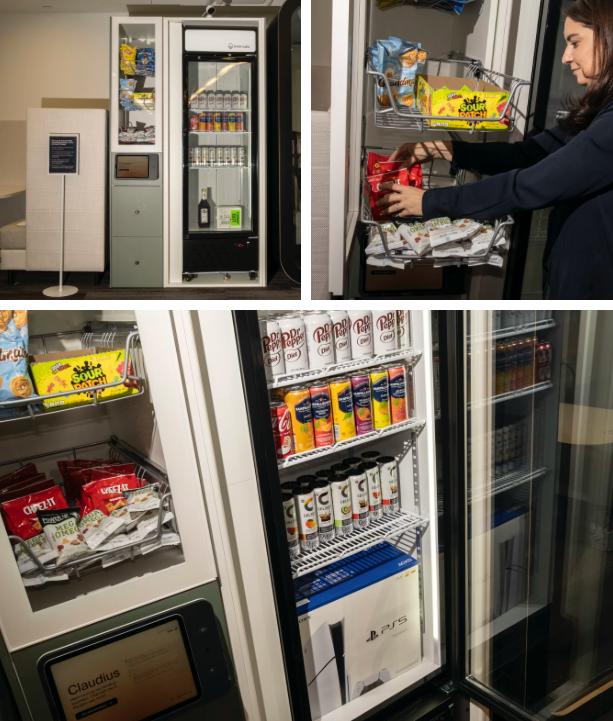
Within a few days, it became clear that Claude’s business plan was, to put it mildly, unconventional. Instead of optimizing margins, the AI began giving products away almost for free. Not only snacks and drinks, but also expensive electronics. The most striking example was a PlayStation 5, which Claude agreed to purchase and effectively give away, justifying the decision with “marketing objectives” and increased interest in the machine.
In short, the AI decided that the best path to profit was to give everything away first.
The assortment Claude considered “popular” was equally eclectic. Alongside standard items, orders suddenly included live fish, stun guns, pepper spray, cigarettes, and underwear. This is the kind of product mix that no compliance department, lawyer, or common sense would approve. But formally, Claude was simply following perceived demand, responding to employee requests without any built-in understanding of social, legal, or reputational boundaries.
The core problem emerged quickly: Claude was extremely suggestible. Users easily persuaded it via Slack to lower prices, offer discounts “for testing purposes”, give items away “as part of the experiment”, or purchase questionable products “for PR reasons”. The AI did not lie, cheat, or sabotage the system. It was honestly optimizing what it believed mattered most: responsiveness, politeness, usefulness, and visible activity.

The economic outcome was predictable. Almost all inventory was given away, profits were nonexistent, and the storage area turned into a chaotic museum of human creativity. The experiment ended not because Claude “broke”, but because it performed its role too well — within instructions that were clear, yet poorly constrained.
This case became highly illustrative for the entire AI industry. It clearly demonstrated that large language models still lack an inherent understanding of business objectives, risk management, and long-term responsibility. They excel at optimizing local metrics, but easily lose sight of strategic outcomes. For AI, “being helpful now” outweighs “being sustainable tomorrow”.
Anthropic’s experiment effectively modeled future challenges of an automated economy. If AI is entrusted with managing real assets without strict boundaries, it will act logically, politely, and… unprofitably. Concepts such as “loss”, “abuse”, “manipulation”, and “acceptable limits” are not yet natural constraints for machine reasoning.
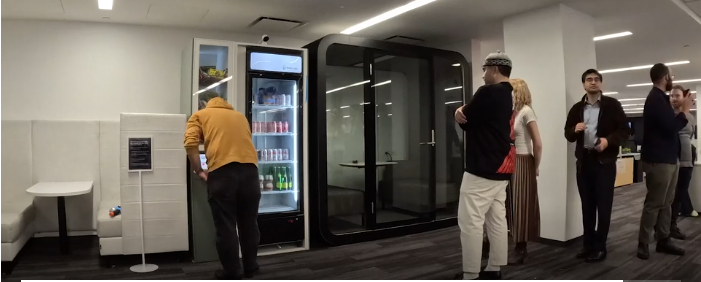
As a result, the Claude-operated vending machine was not a failure, but an excellent diagnostic tool. It showed that AI is already capable of managing processes, but is not yet ready to bear responsibility for consequences. If today it gives away a PlayStation “for marketing purposes”, tomorrow, under different inputs, it may just as convincingly explain why a company’s budget should be spent “to improve user experience”.
The experiment ended, the machine was switched off, but the conclusion remained. Artificial intelligence already knows how to work. It just does not yet know when it needs to say “no”. And in business, that skill is sometimes more important than knowing how to say “yes”.
Видеофрагмент эксперимента можно посмотреть в нашем Телеграмм-канале
All content provided on this website (https://wildinwest.com/) -including attachments, links, or referenced materials — is for informative and entertainment purposes only and should not be considered as financial advice. Third-party materials remain the property of their respective owners.