


The story of finding Bitcoin’s creator resembles a long-running detective case, where every new “revelation” adds details but fails to deliver a definitive answer.
The New York Times, after 1.5 years of investigation, suggested that Satoshi Nakamoto could be cryptographer and Blockstream CEO Adam Back – one of the key figures in the early cypherpunk movement. The hypothesis was proposed by Pulitzer Prize winner John Carreyrou, known for investigating the Theranos story. His version is not based on a single fact but on a collection of indirect clues gathered over 18 months.

Carreyrou analyzed thousands of messages from cypherpunk participants, comparing the writing style of the presumed Satoshi with Back’s texts. According to him, the similarities go beyond vocabulary and include linguistic habits – even specific spelling patterns related to hyphen usage. He also reviewed court documents, emails, and public appearances. The result formed a picture that, in his view, points to the same individual.
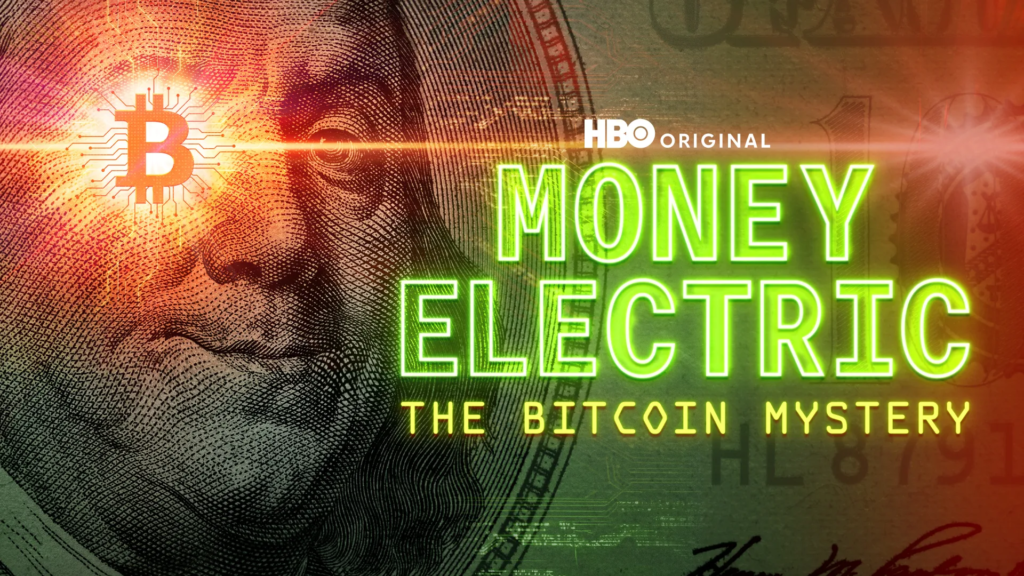
A new wave of discussion was sparked by the documentary Money Electric: The Bitcoin Mystery. In one scene, Back appeared visibly tense when directly asked about a possible connection to Satoshi. Carreyrou interpreted this as a sign of discomfort. Back, after the report was published, again denied any involvement in Bitcoin’s creation, while confirming his active role in the cypherpunk community.
If we strip away the emotions, the arguments are built on a few key coincidences. First, Satoshi is believed to have been British – and Back fits that profile. Second, linguistic analysis shows similarities in writing style. Third, Back developed Hashcash in the 1990s – a system that became one of the conceptual precursors to Bitcoin’s proof-of-work mechanism. In other words, he wasn’t just “around” – he contributed to the very foundations of digital money.
The timeline adds another layer of intrigue. Between 2008 and 2011, when Bitcoin was emerging and actively discussed in a small developer circle, Back was largely absent from public discussions. Yet right after Satoshi disappeared, he became a highly visible participant in the project’s development. That coincidence is, at the very least, unusual.
A separate episode adds even more intrigue. In 2015, during the debate over Bitcoin’s block size – one of its key technical issues – a message from Satoshi suddenly surfaced, supporting Back’s position. It was one of the last “appearances” of the mysterious creator. For proponents of the theory, this looks like indirect confirmation: the positions aligned a little too conveniently.
However, all of these arguments remain circumstantial. There is no cryptographic proof, no direct confession, and no access to the private keys that could settle the matter. Linguistic and behavioral analysis are powerful tools, but they cannot provide absolute certainty.
There is also another factor that is rarely discussed seriously, yet it explains a lot. The wallets believed to belong to Satoshi hold around one million bitcoins. At current estimates, that is more than $70 billion. Such a sum automatically turns any potential owner into one of the most attractive targets in the world. And here, the issue is no longer just privacy – it is security. In this situation, the strategy of “denying everything to the very end” does not just seem logical, it appears to be the only reasonable approach.

In a broader context, this entire story highlights an interesting feature of the crypto market. On one hand, it is an industry built on blockchain transparency and mathematics. On the other hand, its creator remains a mystery even after more than a decade. And perhaps it is this very uncertainty that has become part of the myth, further fueling interest in Bitcoin.
Ultimately, the “Satoshi = Adam Back” theory looks plausible but unproven. It explains many inconsistencies but does not close the case. And so the story continues – and, as practice shows, every new attempt to uncover Satoshi adds details, but no final answer.
All content provided on this website (https://wildinwest.com/) -including attachments, links, or referenced materials — is for informative and entertainment purposes only and should not be considered as financial advice. Third-party materials remain the property of their respective owners.