


Markets love symbols. And when a country that was buying gold faster than anyone else yesterday suddenly starts selling it in bulk today – this is no longer just news. It is a signal. And a rather loud one.
Over the past two weeks, Turkey’s central bank has sold about 58 tons of gold worth more than $8 billion. To understand the scale: this is not a minor portfolio adjustment, but a full-scale market move with heavy artillery.
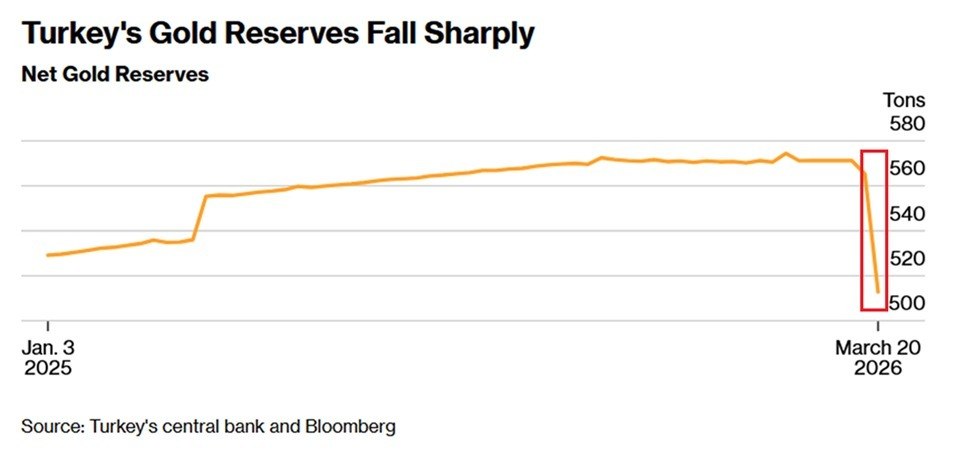
The situation has effectively turned 180 degrees – from accumulation to liquidation.
Until recently, gold was a strategic safety cushion for Ankara. In an environment of currency instability, high inflation, and limited trust in the financial system, physical metal served as an anchor. This was the classic logic of emerging economies: if you don’t trust the currency, buy gold. Especially considering that since 2020 Turkey had been among the top three gold buyers globally, alongside China and Poland.
But the current crisis has revealed the other side of this strategy. Gold works well as a long-term reserve, but in the short term it becomes the last liquid asset that can be quickly sold to plug immediate gaps. And Turkey has used exactly that option.
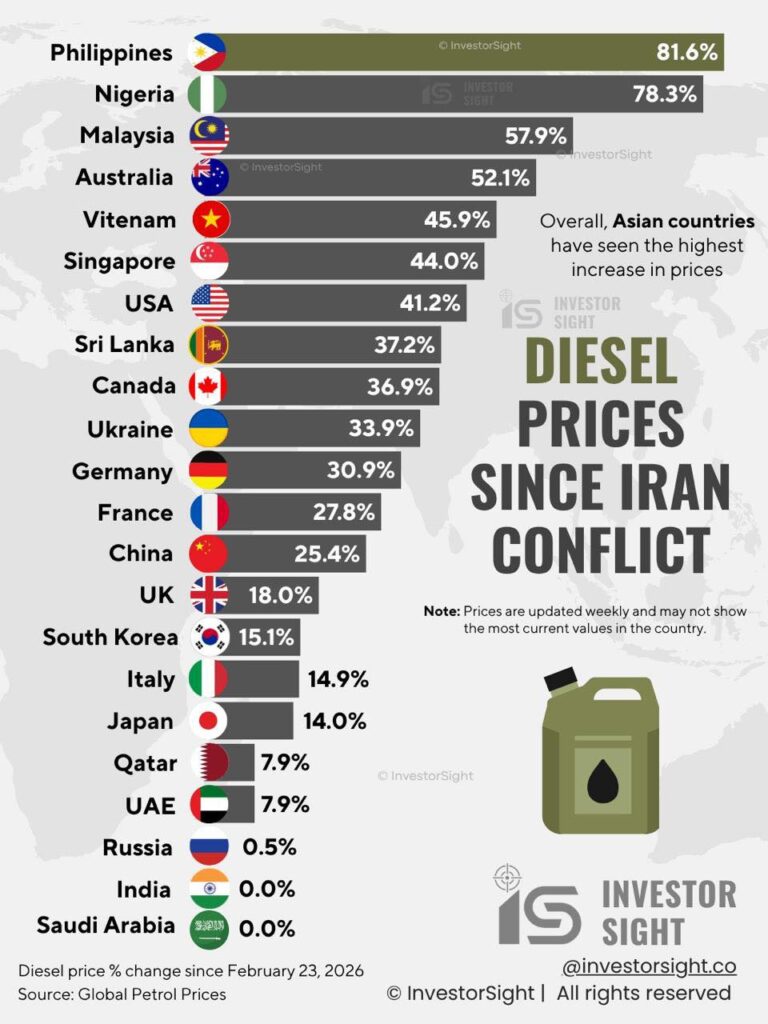
The trigger was the conflict around Iran. As soon as tensions escalated, the market immediately priced in higher oil costs and potential supply disruptions. For a country dependent on energy imports, this means one thing – pressure on the trade balance, inflation, and the national currency.
The lira was already under pressure, and in the context of an energy shock, it began to weaken even faster. In such a situation, policymakers have limited tools: raise interest rates, restrict liquidity, or intervene in the market.
The problem is that all these measures come with side effects. High rates suppress business activity. Liquidity constraints slow down the economy. As a result, the heavy reserve comes into play – gold.
Selling 58 tons is not just a transaction, it is a survival strategy. In essence, Ankara is converting a physical asset into currency to stabilize the exchange rate and prevent the financial system from overheating.
In this context, gold becomes the “last resort.” It can be quickly converted into dollars, used for interventions, support banking liquidity, and cover external obligations. Simply put: when the currency market starts shaking, everything that can be sold quickly is put into play – and gold is exactly that kind of asset.
Why is this a warning signal? The sale itself is already significant, but the context matters even more. Turkey is not a weak economy without reserves. It is a major regional player that until recently was actively accumulating gold reserves. If even such a country is forced to “unlock” its reserves, it indicates the scale of pressure.
Moreover, the volume matters. 58 tons in two weeks is a pace that cannot be ignored. It signals not just pressure, but rapidly increasing pressure. The market is effectively being told that in times of geopolitical crisis, even a traditional safe haven like gold turns into a consumable resource.
The key question is not about Turkey, but about what comes next. The world is entering a phase where countries increasingly use reserves to solve immediate problems. Rising energy prices, currency pressure, and higher debt servicing costs force governments to act quickly rather than strategically. This raises a logical question: who will be next to tap into their reserves?
Countries most at risk are those heavily dependent on energy imports, with weak currencies and limited access to external financing – especially if the Middle Eastern conflict drags on and oil prices remain elevated.
The situation with Turkey clearly illustrates a paradox of the modern economy. An asset that is considered a “safe haven” turns into an emergency response tool during a crisis. Gold does not disappear – it simply changes its role. From a symbol of stability, it becomes a source of liquidity. And this changes the very logic of markets. Because if even gold starts to be actively sold, it means the pressure has reached a level where the “rainy day reserve” is already treated as current spending.
The story of Turkey is not an isolated episode, but part of a broader picture. The world is gradually moving into a mode where reserves are no longer untouchable. Geopolitics accelerates processes that once took years. Currencies become more vulnerable. Energy becomes more expensive. And decisions become more drastic.
The key takeaway is quite pragmatic: when a country starts selling gold, it is not about growth strategy. It is about survival. And if the current crisis continues to unfold, there will be more stories like this.
All content provided on this website (https://wildinwest.com/) -including attachments, links, or referenced materials — is for informative and entertainment purposes only and should not be considered as financial advice. Third-party materials remain the property of their respective owners.