

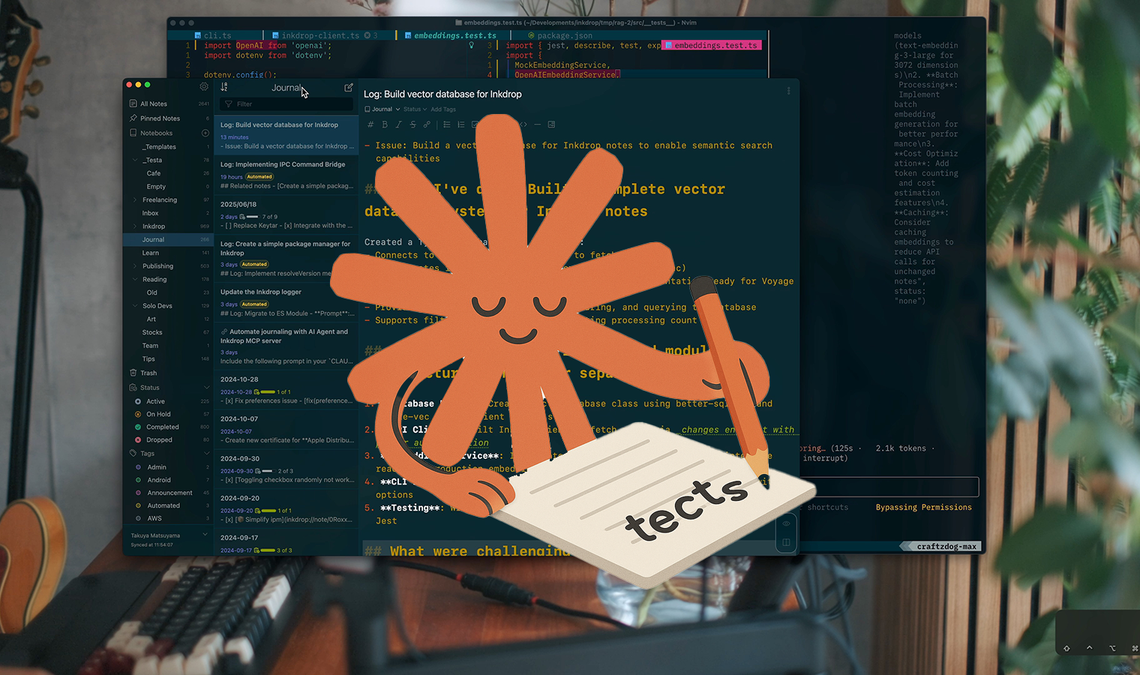
Claude Code has become noticeably more convenient and closer to a developer’s real working rhythm. It can now be launched on a laptop while the process is managed from a smartphone. In essence, artificial intelligence continues to write, analyze, and refine code on your computer while you are anywhere — in the office, on the road, or even outside your workspace.
Previously, the scenario was familiar and somewhat exhausting: you start a task, sit at your computer, and have to stay nearby to monitor the process. Step away — the work stops. Have a new idea — you need to return to the screen. Even if the AI was capable of autonomous operation, your physical presence near the device remained mandatory.
Now the logic has changed. You initiate a task on your laptop: this could be generating a new module, refactoring existing code, writing tests, optimizing architecture, or analyzing a large repository. After launch, the process no longer requires constant “supervision.” From your phone, you can view progress, logs, and intermediate results. If necessary, you can adjust the direction of work, уточнить requirements, add new instructions, or completely change the task.
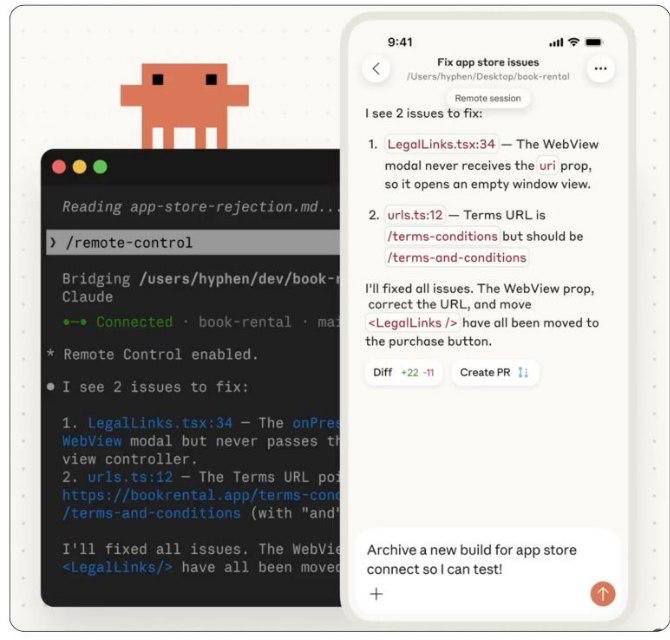
In practice, it looks like this: in the morning, you launch a large task — for example, rewriting part of the backend, structuring an API, or preparing technical documentation. Then you head to a meeting or attend to personal matters. On the way, you open the interface on your phone and check the status. You see that the AI has completed one stage — you give the next command. You notice an inaccuracy — you adjust the requirements. The process does not break, freeze, or require you to sit constantly in front of a monitor.
The main shift is the transition from session-based work to continuous work. Previously, AI agents could be autonomous, but their autonomy was limited to the boundaries of an active user session. Now there is a sense of a permanent background assistant working independently of whether you are at your computer. This brings the interaction model closer to asynchronous team management: you assign tasks, receive reports, and make adjustments — except instead of several developers, a single intelligent agent is working.
From a productivity standpoint, this is a significant step forward. First, it saves time. There is no need to spend hours at the screen waiting for generation or analysis to finish. Second, it adds flexibility: the workflow is no longer rigidly tied to one location. Third, it achieves continuity — code is created and processed virtually 24/7 as long as the task is running and the computer is available.
It is also worth noting the simplicity of implementation. There are no complex server configurations, no need to deploy separate infrastructure, and no requirement to manually configure remote connections. The user scenario remains intuitive: launch — monitor — adjust.
In essence, not only the tool changes, but the entire development approach. Working with AI stops being a “computer session” and becomes a managed process that can be supervised from anywhere. This is especially valuable for those who combine development with project management, meetings, or teaching.
Previously, autonomy meant that an agent could act independently within a given task. Now autonomy is combined with continuity. The AI does not simply execute a command — it becomes a continuously operating working mechanism that you manage as needed. It is no longer just an assistant, but a полноценный background digital work instrument integrated into everyday life.
All content provided on this website (https://wildinwest.com/) -including attachments, links, or referenced materials — is for informative and entertainment purposes only and should not be considered as financial advice. Third-party materials remain the property of their respective owners.