


School as a “fiat” system of knowledge: how the ideas of Ivan Illich anticipated decentralized education
In 1971, when blockchain was still decades away and the internet existed only as the experimental network ARPANET, philosopher and social critic Ivan Illich published the book Deschooling Society. In this work he proposed a radical rethinking of the very nature of education. Illich argued that schools and universities had become not so much sources of knowledge as centralized institutions controlling access to social status.
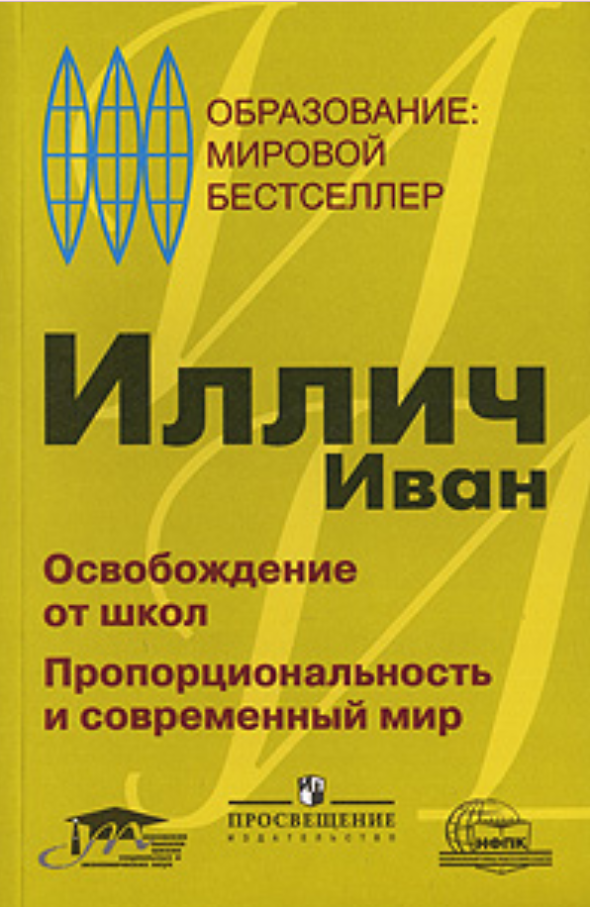
His ideas appeared long before the emergence of digital networks, yet today they are increasingly interpreted through the lens of decentralization, crypto-economics and peer-to-peer interaction. Many observers note that Illich’s concepts closely resemble the architecture of modern distributed knowledge systems, including educational communities built around open-source software, online platforms and even blockchain ecosystems.
The philosopher was born in 1926 and spent much of his life criticizing industrial society and its institutions. In addition to Deschooling Society, his work Medical Nemesis became widely known, in which he analyzed how the medical system can undermine human autonomy. The central theme of his research was the idea that institutions created to help society gradually begin to control it and generate dependency.
The industrial logic of education
The modern school system was formed during the era of industrialization. Factories and government institutions required millions of workers with basic literacy, discipline and the ability to perform standardized operations. School became an effective tool for preparing such personnel.
The learning process took on the form of a production line. Students were grouped by age, moved through levels according to a predefined schedule and received standardized knowledge. At the end of this chain they were awarded a diploma or certificate confirming their readiness to work in an industrial economy.
However, in the modern post-industrial economy the situation has changed. Companies increasingly need not performers of routine tasks but specialists capable of adapting quickly, mastering new technologies and independently solving complex problems. The pace of technological development is so high that university curricula often become outdated even before the approval process is completed.
As a result, a diploma guarantees professional success less and less. Employers increasingly evaluate candidates’ real skills, projects and portfolios. The formal document is no longer the only indicator of competence.
School as a centralized intermediary
Illich’s main thesis was that the institutionalization of education gradually destroys the learning process itself. In his view, society mistakenly equated learning with teaching. People begin to believe that knowledge can arise only through participation in institutional systems.
The philosopher wrote that people tend to attribute to institutions functions that actually belong to individuals themselves. We assume that hospitals create health, police create safety and schools create knowledge. In reality these institutions merely organize processes that can exist without them.
Illich compared the educational system with the monopoly of a central bank. Just as the financial system controls the issuance of money, schools control the “issuance” of social status through diplomas. Without such a certificate a person falls outside the official recognition system.
In modern technological language this situation can be described as the problem of a trusted third party. School acts as a centralized validator of knowledge. Even if a person knows how to program, treat patients or design complex engineering systems, without institutional endorsement those competencies may be ignored.
Diploma inflation
As higher education expands, an effect emerges that resembles inflation in fiat currencies. The more people receive diplomas, the lower the value of each individual document. To maintain social status increasingly longer education becomes necessary.
This race leads to rising education costs and growing student debt burdens. Universities become providers of expensive services while employment guarantees become less certain.
Illich also argued that schools perform another function he called the “hidden curriculum”. Formally educational institutions teach academic disciplines, but at the same time they shape a particular type of behavior.
According to him the school system cultivates passivity – the belief that knowledge must come from outside rather than be obtained independently. It fosters dependence on institutional approval and reinforces a consumer mindset in which needs are satisfied through the purchase of services.
As a result, a graduate of the system becomes a good performer and a loyal citizen, but may lose the ability to learn independently.

Educational networks instead of schools
The most radical part of Illich’s concept concerns what could replace centralized education. He proposed the idea of “learning webs” – networks in which people gain access to knowledge directly, without centralized intermediaries.
He identified several types of infrastructure necessary for such a society.
First, open access to educational resources such as libraries, laboratories, tools and technical equipment.
Second, skill-exchange systems where people could publish lists of their abilities and offer to teach others in exchange for knowledge or assistance in other areas.
Third, communication networks that help people find learning partners.
Finally, directories of independent mentors whose reputation is built not on academic titles but on feedback from students and real outcomes of their work.
In essence Illich described a model that today resembles online knowledge platforms, professional communities and decentralized collaboration networks.
Technology as a tool of autonomy
Despite his criticism of industrial society Illich was not opposed to technology. He emphasized only that the way technologies are used is crucial. The philosopher introduced the concept of “convivial tools” – technologies that enhance human autonomy rather than make people dependent on centralized systems.
He considered the telephone or mail as examples of such tools. They allow people to interact directly without centralized control. In contrast, television or the traditional school system function as one-way channels of information transmission.
The emergence of the internet partially realized this idea. Platforms such as GitHub became spaces where developers from around the world can exchange knowledge, review each other’s code and build reputations based on real projects.
In such communities competence is evaluated not by diplomas but by contribution to collaborative work.
Decentralized communities and the skills economy
The development of blockchain technologies added a new layer to this model. In distributed networks participants form communities and working groups that explore new technologies, build software and collectively finance projects.
Such structures are sometimes organized in the form of a Decentralized Autonomous Organization, where decisions are made collectively and funding occurs through transparent smart-contract mechanisms.
Such structures sometimes take the form of Decentralized Autonomous Organization, where decisions are made collectively and funding occurs through transparent smart-contract mechanisms.
Thus learning ceases to be exclusively an expenditure of time and money. It may be accompanied by real economic rewards.
The problem of verifying qualifications is also gradually receiving new solutions. For example, the concept of Soulbound Tokens proposes using non-transferable tokens to record a person’s achievements on the blockchain. Such digital records can confirm participation in projects, victories in hackathons, or contributions to software development.
Unlike diplomas, such records cannot be forged or purchased. They are formed automatically on the basis of actual activity.
Educational sovereignty
Illich’s work remains controversial even today. His ideas are often criticized as overly radical. The complete disappearance of schools and universities seems unrealistic, especially in fields such as medicine or engineering where strict training systems are required.
Nevertheless, the diagnosis the philosopher made more than half a century ago sounds remarkably modern. The world still largely depends on intermediary institutions that control access to knowledge, status and professional opportunities.
At the same time technology for the first time makes alternative educational models possible. Internet communities, open-source software and decentralized networks create infrastructure where knowledge can spread directly between people.
Self-education is gradually transforming from a hobby into a fundamental skill of the modern economy. In an era of rapid technological change the ability to learn independently becomes more important than formal certificates.
Illich saw “deschooling” not as the destruction of education but as the rejection of a monopoly on knowledge. In his view it is a step toward educational sovereignty – a situation in which individuals manage their own learning process and do not depend entirely on institutional structures.
In the language of the digital age, this idea can be expressed by a principle familiar to cryptocurrency users: control over the tools means control over the outcome. Applied to knowledge, this means returning responsibility for the development of one’s own intellect to the individual.
All content provided on this website (https://wildinwest.com/) -including attachments, links, or referenced materials — is for informative and entertainment purposes only and should not be considered as financial advice. Third-party materials remain the property of their respective owners.