

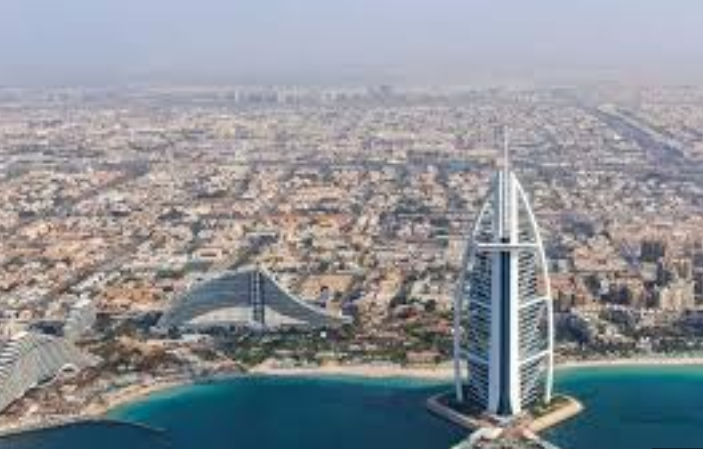
The Dubai real estate market has come under strong pressure amid a sharp escalation of tensions in the Middle East. In just two weeks, the emirate’s real estate index fell by about 30%, marking one of the fastest declines in recent years. Until recently the situation looked completely different. The market demonstrated impressive growth dynamics that attracted investors from around the world. By the end of 2024 the Dubai real estate index had increased by about 63%, and in 2025 it added another roughly 30%. Even the beginning of 2026 looked extremely optimistic: from January to February the index rose by another approximately 20–21%, according to data from the Dubai exchange.
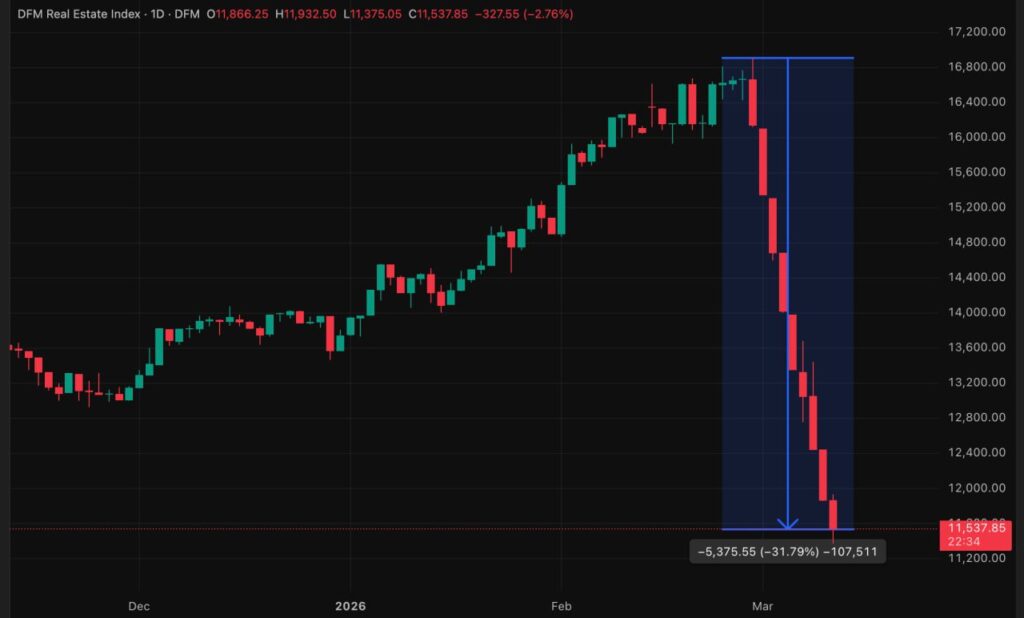
However, the events of early March sharply changed market sentiment. In just the last five days the index dropped by about 20%, effectively wiping out all the growth of the current year. Investors began rapidly taking profits and withdrawing capital from the market, fearing further escalation of the conflict and deterioration of the region’s overall security.
The main reason for such a sharp reaction was a new wave of military tension between Iran and countries supporting the operation against Tehran. The trigger for the escalation was the events of February 28, 2026, when the United States and Israel conducted an operation against facilities on the territory of Iran. In response Tehran began striking infrastructure in the United Arab Emirates, which are considered one of the key allies of the West in the region.
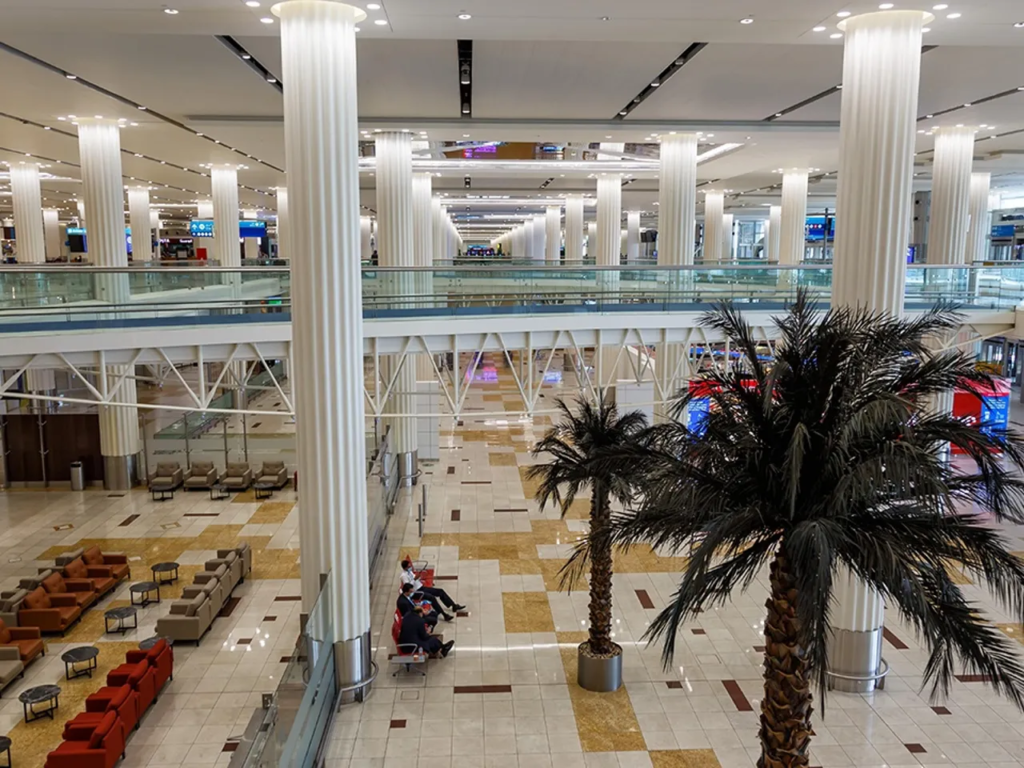
Already in early March 2026 the situation sharply worsened. One of the first incidents was a drone attack on Dubai International Airport. The drone struck the territory of the region’s largest aviation hub, damaging one of the terminals. The explosion led to the evacuation of people and the temporary suspension of airport operations. One person died as a result of the incident. The air hub’s operations were halted, causing serious disruptions in international transportation and tourist flows.
Dubai International Airport is one of the busiest aviation hubs in the world and a key element of the emirate’s infrastructure. Tens of millions of passengers pass through it every year, and the tourism sector is directly linked to activity in the real estate market. Therefore any security threats or disruptions in airport operations immediately affect the investment climate.
Another incident followed later. One of the drones crashed into the Marina hotel located in a popular tourist district of Dubai. According to sources, American military personnel and intelligence staff may have been present in the building. As a result of the strike a fire broke out and fragments of the drone scattered across nearby streets. Some fragments landed on a bridge in the Dubai Hills area where several cars caught fire.
On the same day a second strike hit Dubai Airport. A drone exploded near the second terminal, again leading to the suspension of flights. Airlines were forced to temporarily cancel or reroute many flights, while some passengers were stranded in transit zones.
According to various sources, since the beginning of the conflict Iran has launched 189 missiles and 941 drones toward the UAE. Most of them were intercepted by air defense systems, however the very fact of regular attacks sharply increased anxiety among investors, developers and property owners.
The Dubai real estate market has traditionally been highly sensitive to international events. The emirate actively attracts foreign capital and a significant share of property buyers are investors from Europe, Asia and Middle Eastern countries. Many view real estate in Dubai not only as a place to live but also as an investment instrument or a means of preserving capital.
In recent years the market experienced a real boom. Price growth was supported by several factors simultaneously: inflow of international investors, tax advantages, infrastructure development, large-scale construction projects and strong demand from wealthy buyers. An additional driver was the political stability of the region thanks to which Dubai was positioned as a safe haven for capital.
However current events have called into question one of the key factors of the emirate’s attractiveness – the sense of security. Even if most attacks are intercepted by air defense systems, the very news of missile and drone strikes can instantly change market sentiment.
Financial markets traditionally react to such events very quickly. Investors seek to minimize risks and often prefer to temporarily withdraw funds from assets connected with a region of potential conflict. According to analysts this is exactly what caused the sharp decline in the real estate index.
In addition the real estate market is closely linked to the tourism industry and air transportation. If Dubai International Airport operates with disruptions, tourist flows may temporarily decrease. This directly affects demand for hotel properties, apartment rentals and investments in new projects.
Developers and investment funds are closely monitoring the situation. Some companies have already reported revising the timelines for launching new projects and adopting more cautious investment policies. In conditions of increased uncertainty many market participants prefer to take a wait-and-see position.
Nevertheless a number of experts believe that the current correction may be temporary. Historically Dubai has already faced periods of heightened geopolitical tension, yet the real estate market often recovered quite quickly after stabilization.
Much will depend on the further development of the conflict. If the escalation continues and attacks on infrastructure are repeated, pressure on the market may increase. In this case investors may begin a larger withdrawal of capital, which would lead to additional price declines.
If tensions gradually decrease and the operation of key infrastructure facilities is fully restored, the market may stabilize. Dubai still remains one of the largest international financial and tourism centers, and its long-term attractiveness for investors is determined not only by current events but also by the emirate’s overall economic strategy.
Thus the sharp fall in the Dubai real estate index reflects how closely modern markets are connected with geopolitics. Even strong and rapidly growing markets can face sudden volatility if a region becomes the center of an international conflict. The situation of recent weeks has become a clear example of how political events can literally change the dynamics of one of the most dynamic real estate markets in the world within just a few days.
All content provided on this website (https://wildinwest.com/) -including attachments, links, or referenced materials — is for informative and entertainment purposes only and should not be considered as financial advice. Third-party materials remain the property of their respective owners.