

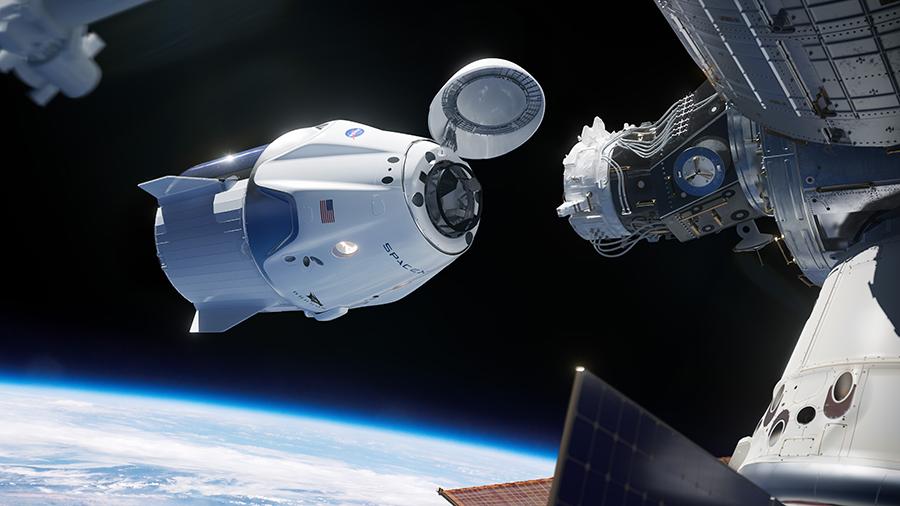
Elon Musk showcased another technological success of SpaceX: the Dragon spacecraft successfully docked with the International Space Station. To an outside observer, it may look like a familiar news image – a neat module approaching the station and gently docking. But in reality, every such operation remains one of the most complex maneuvers in modern spaceflight.

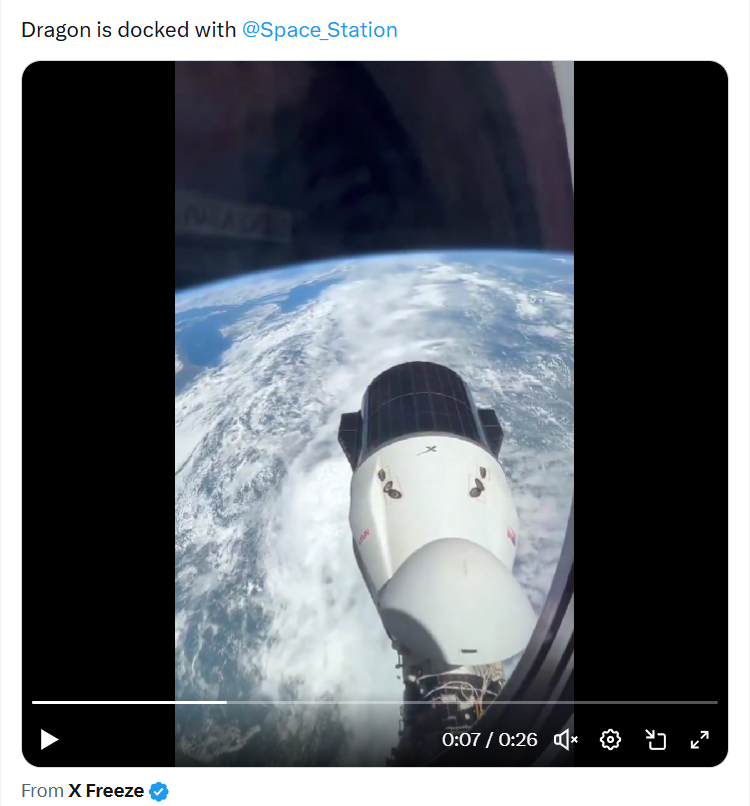
Dragon’s docking with the ISS became another important milestone within the long-term cooperation between SpaceX and NASA. For several years now, the company has been carrying out regular missions, providing the station with cargo and crew transportation. This partnership has become an example of how private business is gradually taking on key functions that were once exclusively the responsibility of government agencies.
The current mission is part of SpaceX’s commitments to support the operation of the International Space Station. Dragon delivers supplies, equipment, and materials for scientific experiments into orbit. For the ISS crew, such deliveries are vital: the station is in constant dependence on regular cargo flights, because in space it is impossible to simply “reorder” missing resources.
Scientific cargo plays a special role. On board Dragon there are usually instruments and experimental setups used for research in microgravity conditions. These may include developments in medicine, biology, materials science, and technologies that may eventually be applied on Earth as well.
It is important to understand that docking is not just a technical ritual, but a demonstration of the reliability of the entire system. Dragon must synchronize its speed, trajectory, and position with the enormous orbital station moving at a speed of about 28,000 kilometers per hour. Any mistake is unacceptable, which is why every maneuver is monitored by automated systems and specialists on Earth.
For SpaceX, such missions also have strategic significance. They strengthen the company’s reputation as NASA’s main partner in the field of crewed and cargo flights. And for Musk, it is another step toward a much larger goal – building an infrastructure that will allow humanity to move further, beyond low Earth orbit.
Dragon’s docking with the ISS reminds us that spaceflights are gradually becoming not one-time feats, but regular work. And the more often such missions are successfully completed, the closer we get to a future in which space will no longer be only a zone of experimentation, but part of everyday technological reality.
A video clip of Dragon docking with the ISS can be watched on our Telegram channel.
All content provided on this website (https://wildinwest.com/) -including attachments, links, or referenced materials — is for informative and entertainment purposes only and should not be considered as financial advice. Third-party materials remain the property of their respective owners.