

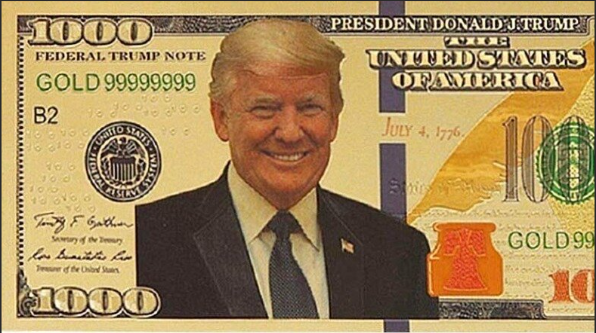
The history of American money, which usually changes slowly and conservatively, like a diligent bank clerk, has suddenly decided to add a bit of show. The U.S. Department of the Treasury announced a move that can, without exaggeration, be called historic: for the first time, the signature of a sitting president — Donald Trump — will appear on U.S. dollar banknotes. The agency reported this, according to Reuters.
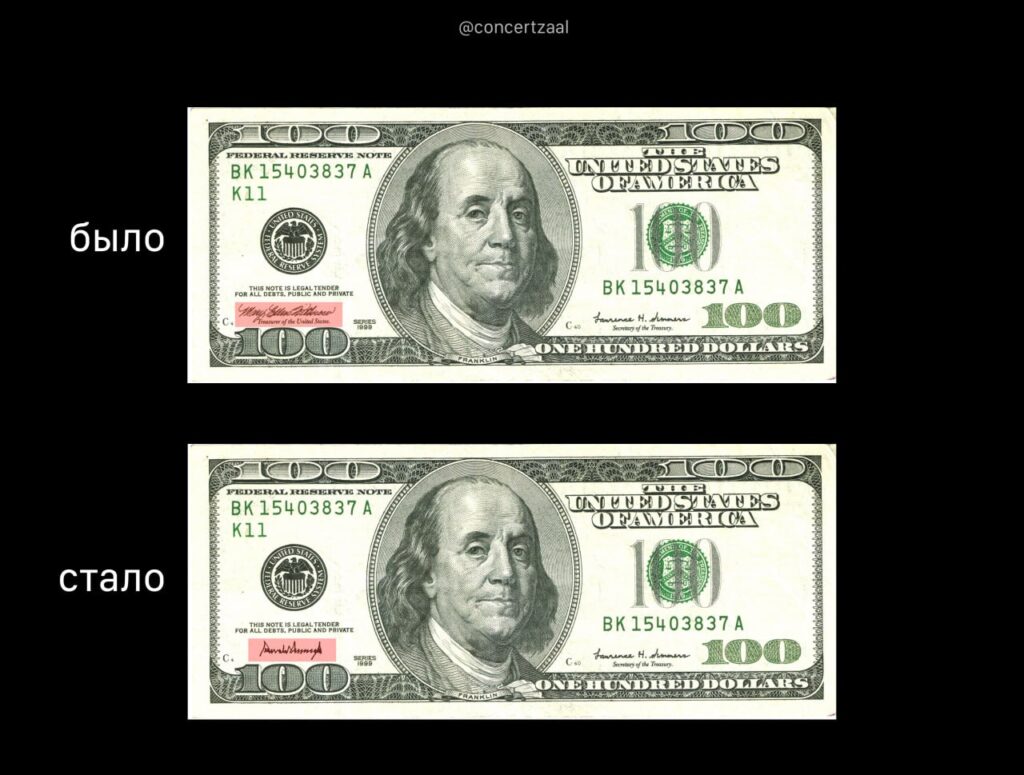
This is not about a symbolic gesture on a commemorative medal or a юбilee coin. The president’s signature will appear directly on paper money — the same bills people use in stores, save “for a rainy day,” and forget in the pockets of old jackets. It will start with the most popular denomination — the $100 bill. Printing of the updated banknotes will begin in June, after which the change will gradually extend to other denominations.
The reason is not only the desire to leave a mark in history, although that is part of it. The formal повод is far more ceremonial: the 250th anniversary of U.S. independence. The jubilee, known in the country as the Semiquincentennial, will become one of the largest national events of the decade. And, as the Treasury decided, the best way to mark it is to literally “sign” history.
However, behind this elegant gesture lies a much more serious change to a tradition that has existed for more than a century and a half. Since the 1860s, U.S. banknotes have always carried two signatures — that of the Secretary of the Treasury and the U.S. Treasurer. This was not just a formality, but a symbol of the financial system and its institutional stability. Now, the Treasurer’s signature will be removed for the first time in 165 years.
In practice, this means revising one of the most conservative elements of dollar design. At the same time, the overall appearance of the banknotes will remain almost unchanged: portraits, security features, and general layout will stay the same. Only the signature changes — but it is precisely this detail that turns an ordinary banknote into an object of political and historical symbolism.
Treasury Secretary Scott Bessent stated directly that this step reflects a course toward “unprecedented economic growth” and the strengthening of the dollar’s global dominance. According to him, there is no more visible way to highlight the achievements of the country and its leader than to place the president’s name on the national currency.
For his part, U.S. Treasurer Brandon Beach added even more emphasis, calling the move “well deserved” and linking it to the so-called “golden age of economic revival.” Translated from official language, this conveys a simple idea: money is not only about economics, but also about politics, symbolism, and influence.
Notably, no sitting U.S. president has ever placed their signature on banknotes before. Even during periods of war, crises, and major reforms, such changes were not considered. The American financial system has traditionally tried to stay away from personalizing power — especially in matters as sensitive as currency. Now, that boundary is slightly shifting. Formally — for the anniversary. In reality — a step toward a more personalized symbol of the state. This raises a logical question: will this remain a one-time action, or become a new tradition?
From a practical standpoint, nothing will change for ordinary people. A dollar will remain a dollar, regardless of the signature. It will continue to serve its main function — as a means of payment and a store of value. But in terms of perception, this is already a different story. Because money is not just numbers — it is also trust. And trust is always, to some extent, tied to whose name stands at the bottom.
In the end, the United States is taking a rare step for itself — adding an element of political individuality to one of the most stable systems. And if the dollar used to be an impersonal symbol of economic strength, it now receives a very specific signature. You could say it is just an autograph. But as history shows, sometimes a single stroke of a pen is worth far more than it seems at first glance.
All content provided on this website (https://wildinwest.com/) -including attachments, links, or referenced materials — is for informative and entertainment purposes only and should not be considered as financial advice. Third-party materials remain the property of their respective owners.