


Most people who buy cryptocurrency actually have a rather vague idea of what exactly they are buying. This is not criticism or reproach – rather a pattern. The crypto market is developing very quickly, new terms appear constantly, and the industry itself combines technology, finance, and cryptography. As a result, many people begin interacting with digital assets before they understand their nature.
To understand what is happening, it is important to realize one simple thing: today the word “cryptocurrency” hides several completely different types of digital money. They differ not only in technology, but also in principles of governance, level of control, and legal status.
What cryptocurrency actually is
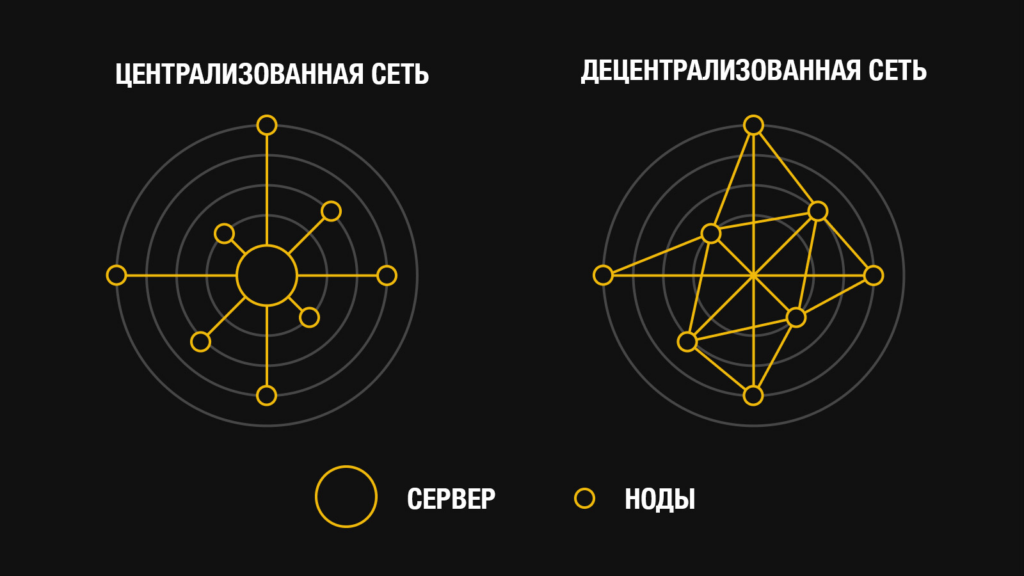
A classic cryptocurrency is digital money that does not exist on a bank server and not in the database of any company. It operates in a distributed network of computers scattered around the world. Such a system is called a blockchain. It is a public ledger in which all transactions are recorded. The information is stored simultaneously on thousands of network nodes, therefore deleting or changing it retroactively is practically impossible.
The main difference between cryptocurrency and ordinary electronic money is the absence of a central governing authority. There is no company or state that controls the system. The operating rules are defined by program code and are the same for all participants in the network.
The most famous example is Bitcoin.
Bitcoin was created in 2009 as a decentralized payment system. Its key features:
- issuance is strictly limited – maximum 21 million coins
- all transactions are recorded in a public blockchain
- no one can change the network rules unilaterally
- transfers can be sent directly without banks
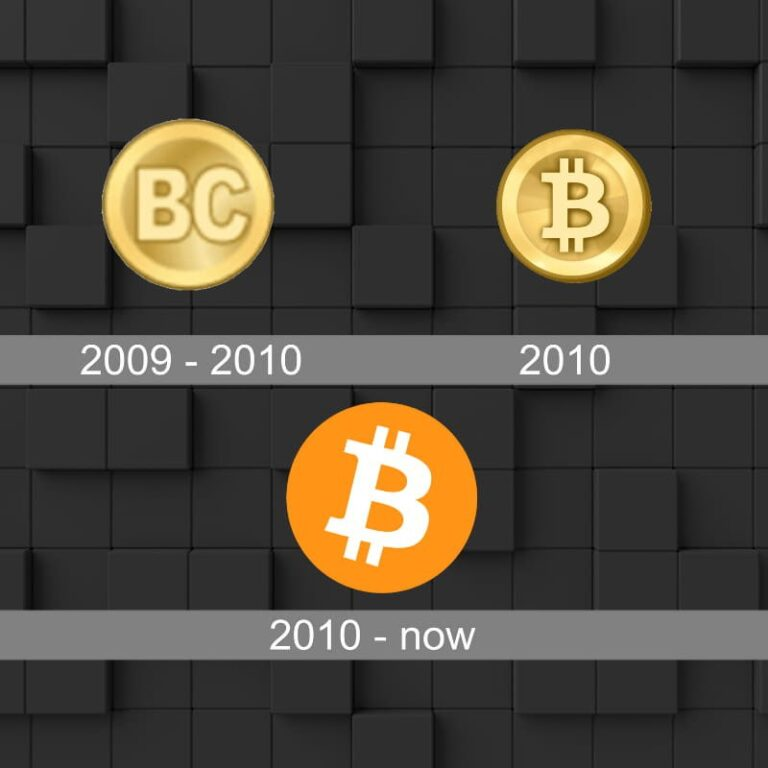
Anyone can verify the transaction history and make sure the system works according to predefined rules. This transparency and independence made Bitcoin a symbol of the crypto industry. However, even within the world of cryptocurrencies there are projects with different philosophies and functions.
How Bitcoin differs from Zcash
For example, the cryptocurrency Zcash was created with a completely different goal. If Bitcoin can be compared to a glass wallet where all transactions are visible in the blockchain, then Zcash is more like an envelope with a lock. The system allows transaction details to be hidden using complex cryptographic proofs.
The technology underlying Zcash is called zk-SNARKs. It allows confirmation of the fact of a transaction without revealing its contents. This means that when using shielded addresses it is possible to hide the sender, the receiver, and the transfer amount.
Such currencies are often called “privacy coins”. In addition to Zcash, this category includes, for example, Monero and Dash.
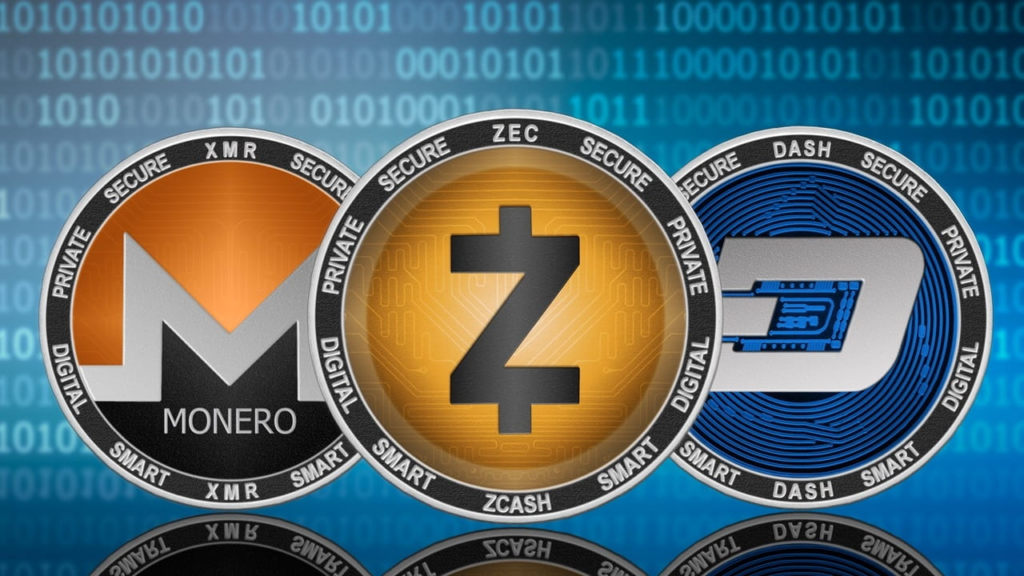
The main idea of such projects is maximum financial confidentiality. However, precisely for this reason they attract increased attention from regulators. In many countries crypto exchanges limit trading of such assets because transaction anonymity complicates control over financial flows.
What CBDC is and what the state has to do with it
Another type of digital money that is often confused with cryptocurrencies is CBDC. It stands for Central Bank Digital Currency. That is, a digital currency of a central bank. These are state electronic money of a new generation.
Examples of such projects:
Digital Yuan – China’s digital yuan Digital Euro – a project being discussed by the European Union Digital Ruble – the digital ruble
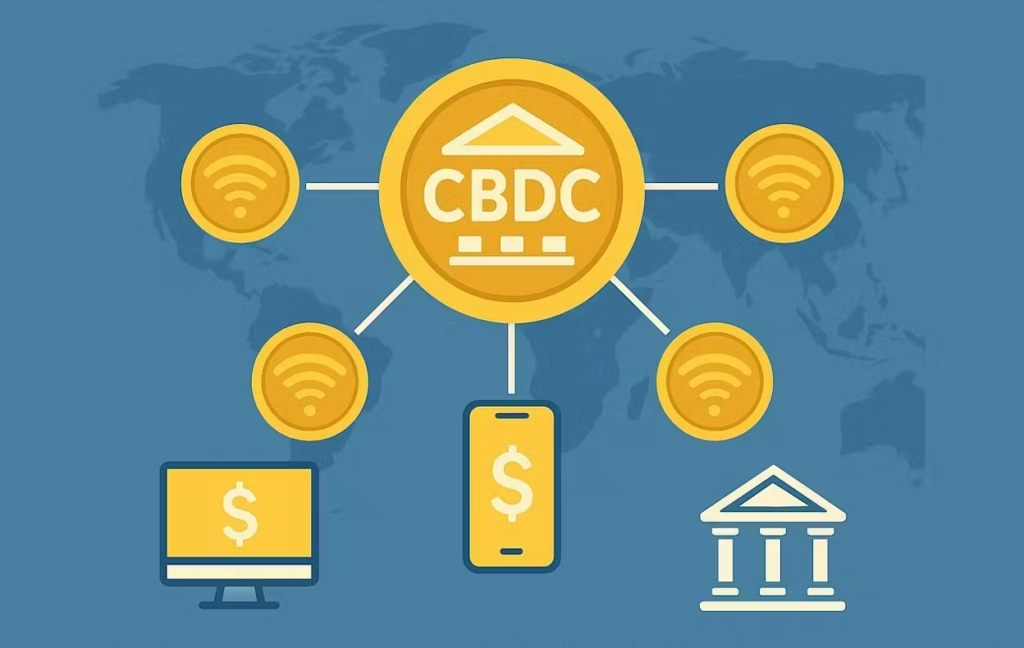
At first glance, CBDC may resemble cryptocurrency: these are also digital money that can be transferred through electronic wallets. But the fundamental difference lies in the level of control. Simplifying, CBDC is the complete opposite of Bitcoin.
Main characteristics of central bank digital currencies:
- they are issued by the state through the central bank
- all operations are fully controlled by financial regulators
- issuance can be increased by decision of the authorities
- accounts can be frozen or restricted
In other words, CBDC are digital money with the maximum degree of state control. They are not decentralized and do not provide anonymity. For the state this is a convenient tool for managing the monetary system. For users it is rather a new form of familiar cashless money.
Stablecoins: private “pseudo-dollars”
Between cryptocurrencies and state digital money there is another important class of assets – stablecoins. A stablecoin is a crypto asset whose price is tied to the value of a real asset. Most often to the US dollar. The most famous example is Tether (USDT).

The idea is simple: one token should cost approximately one dollar. To maintain this rate, the issuing company claims that it holds corresponding assets in reserves – dollars, bonds, or other financial instruments.
From a technical point of view stablecoins exist in a blockchain and can be freely transferred between users. But from an economic point of view they differ significantly from decentralized cryptocurrencies.
Main features of stablecoins:
- they are issued by a private company
- the issuer controls the system
- addresses can be blocked
- the issuance volume is regulated by the company
Thus a stablecoin is not an independent digital currency but rather a digital IOU for the dollar obligations of the issuer.
Why trading USDT resembles banking activity
When users actively buy, sell, and transfer USDT, they are effectively working with a digital analogue of the dollar issued by a private company. From an economic point of view this resembles a settlement system inside a private financial platform.
Therefore, in some jurisdictions mass exchange of stablecoins between individuals or organizations without a license may be considered financial or payment activity. The reason is simple: this is not an independent cryptocurrency like Bitcoin but a transfer of obligations of a private issuer tied to the dollar.
This is the key difference.
Bitcoin – is a decentralized asset without an issuer.
Tether – is a digital token issued by a specific company.
Digital Ruble – is state money under full control of the central bank.
From a technical point of view they all look like “digital coins”. But from an economic, legal, and political point of view these are three completely different systems. And most market participants truly realize this difference only after they begin to understand the structure of the crypto industry more deeply.
All content provided on this website (https://wildinwest.com/) -including attachments, links, or referenced materials — is for informative and entertainment purposes only and should not be considered as financial advice. Third-party materials remain the property of their respective owners.