

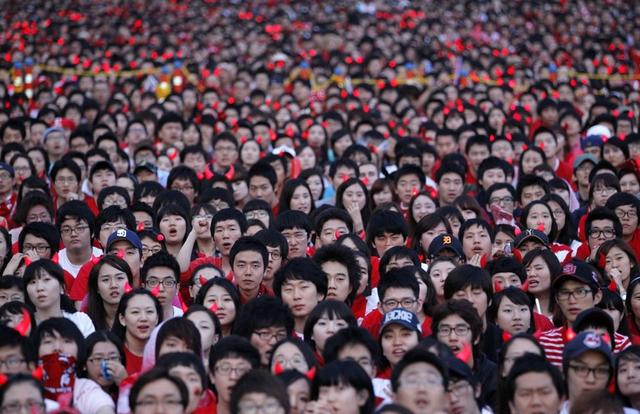
In early 2026, Nvidia CEO Jensen Huang gave an exclusive interview to TIME magazine in which he highlighted one of the most important yet underdiscussed challenges facing the modern artificial intelligence industry: the global AI sector’s dependence on Chinese scientists. According to Huang, roughly half of the world’s leading AI researchers received their foundational education in China, creating serious strategic and economic risks for global technological competition.
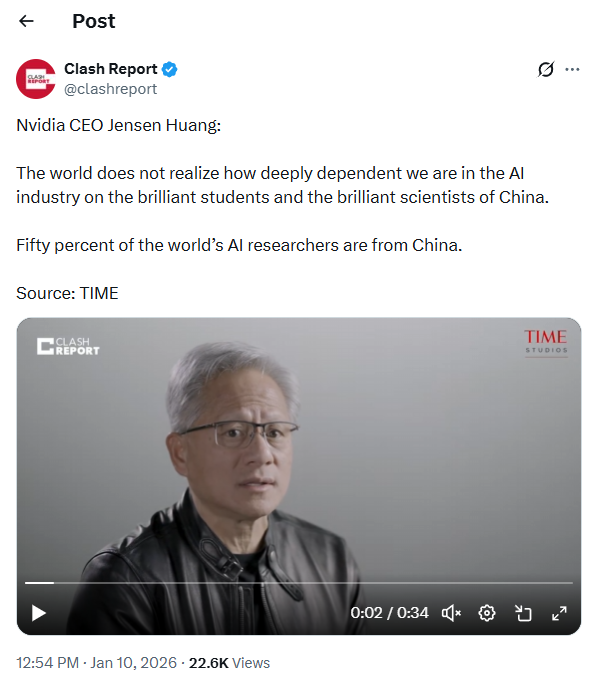
“The world does not realize how deeply dependent we are in AI on talented students and outstanding scientists from China. Fifty percent of the world’s AI researchers come from China,” Huang said in his TIME interview, in the context of AI being named “Person of the Year.” Video clips from the conversation circulated widely in early January 2026 and triggered strong reactions within the professional community.
By “leading researchers,” Huang refers to authors whose work is accepted at top-tier conferences such as NeurIPS and ICML – roughly the top 20-25% of papers by acceptance ranking. Chinese origin in this context means these researchers received their foundational education at Chinese universities, regardless of whether they currently work in the United States, Europe, or elsewhere.
China Trains Talent, the US Attracts It
According to the Stanford AI Index 2025, approximately 30% of leading AI researchers are of Chinese origin. At the same time, China’s share of global AI publications rose to 40% in 2024-2025. However, around 68% of these researchers migrate to the United States in search of career opportunities and positions at leading technology companies.
This creates a unique paradox: Chinese universities train world-class talent, yet a large share of that talent leaves to work abroad. Today, roughly 40% of top AI researchers in the United States are of Chinese origin, giving American companies a significant competitive advantage in the global AI race.
At the same time, the situation is gradually changing. According to Digital Science 2025, China now employs around 30,000 active AI researchers – nearly three times as many as the United States. The share of Chinese researchers remaining in the country increased by 13% between 2022 and 2025. This indicates a gradual shift in balance: China is not only producing talent, but also retaining part of it, building its own competitive AI ecosystem.
From Education to Innovation
Huang emphasized that China possesses enormous intellectual capital. Nature Index 2025 data shows that nine out of ten leading universities in science and technology are located in China. Moreover, the country leads with around 70% of global AI patents, enabling rapid conversion of research into commercial products.
Companies such as Huawei and DeepSeek are actively developing technologies that compete with Western solutions and exporting them to BRICS countries. China is gradually moving from the role of a talent supplier to that of an independent technological hub.

Sanctions as a Catalyst for Independence
US export restrictions on advanced chips, updated in 2025, have placed notable pressure on Nvidia, a point Huang also acknowledged. At the same time, these restrictions are pushing China to develop its own technological ecosystem and reduce reliance on Western technologies.
“The idea that the United States can simply sever ties with China is wrong. Our interdependence is significant and far deeper than people realize,” Huang stressed.
In his view, without Chinese talent, the US and Europe risk falling behind in the AI race. Meanwhile, tighter visa and trade restrictions are forcing China to invest aggressively in its own AI infrastructure.
AI Will Transform Every Profession
Huang also warned that artificial intelligence will fundamentally reshape the labor market:
“Every job will change because of AI. Some jobs will disappear. Everyone will need to use AI, because if you don’t, you will lose your job to someone who does.”
According to Huang’s projections, AI could automate up to 80% of routine tasks while simultaneously creating new professions. Robots and AI systems will act as “immigrants” in the workforce, compensating for labor shortages driven by aging populations. The economic impact could be enormous – up to $100 trillion in growth and a transition toward a four-day workweek.
Hopes for a New Administration
Huang spoke positively about Donald Trump, highlighting his work ethic and willingness to listen:
“He is an incredibly hardworking person. His work ethic – he starts as early as anyone else, and often we discuss matters late into the night.”
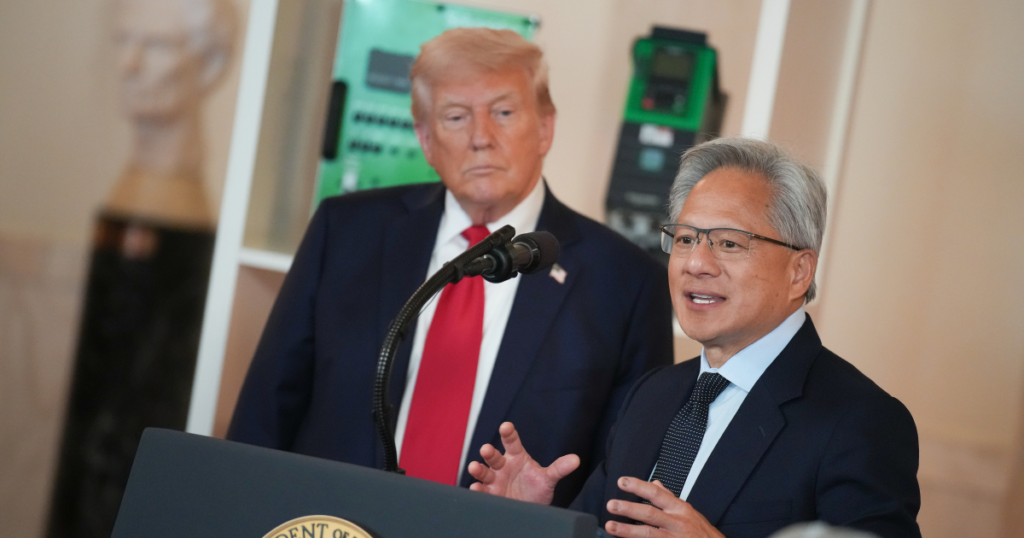
This may signal hopes for softer trade restrictions, allowing the US to maintain access to Chinese markets and talent while focusing on the development of energy infrastructure for AI data centers.
The Global Dilemma: Politics vs Talent
Huang effectively acknowledged a strategic dilemma: a complete severing of ties with China would deprive the United States of a key source of talent, while current policies are pushing China to build an independent ecosystem. The question of who will become the global AI leader depends not only on technology, but also on the ability to attract and retain talent.
The historical parallel recalls the “brain drain” from Europe to the United States in the 1930s-40s, when American universities gained an advantage by absorbing European scientists. Today’s largest AI companies operate under a similar logic: in hiring, nationality is secondary – productivity and the ability to advance technology are what matter.
India, incidentally, often remains “invisible” in such discussions, despite supplying around 20% of global talent in programming and AI. It is possible that the real competition will not be between the US and China, but between ecosystems capable of attracting global talent despite geopolitical constraints.
Conclusion
Jensen Huang’s TIME interview highlighted two key trends: China is emerging as a powerful technological center with its own intellectual capital, and the global AI industry is heavily dependent on Chinese researchers. This creates strategic risks while simultaneously opening new opportunities for companies, countries, and researchers themselves. The AI race is not only a contest of technologies, but a global struggle for talent, where borders and passports play an increasingly minor role.
All content provided on this website (https://wildinwest.com/) -including attachments, links, or referenced materials — is for informative and entertainment purposes only and should not be considered as financial advice. Third-party materials remain the property of their respective owners.