

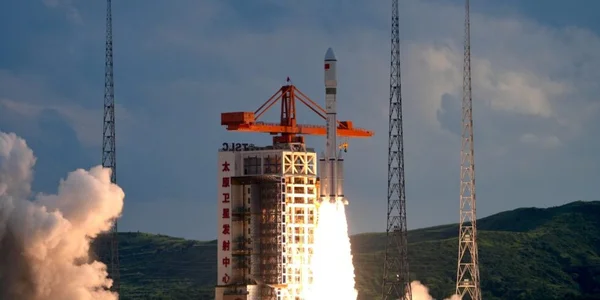
Chinese companies have filed applications to deploy more than 200,000 internet satellites — potentially one of the largest satellite constellations in human history. The relevant documents were submitted to the International Telecommunication Union (ITU) shortly after Beijing publicly expressed concerns about orbital congestion caused by the rapid deployment of Elon Musk’s Starlink network.
This is not a single project, but an entire series of applications. At the end of last month, the ITU received more than a dozen separate proposals from Chinese satellite operators. The largest among them are the CTC-1 and CTC-2 initiatives, each of which предусматривает the deployment of 96,714 satellites in low Earth orbit. Taken together, these two projects alone exceed 190,000 spacecraft — more than all existing and planned satellite systems in the world combined.
The fight for orbit is intensifying
Low Earth orbit is rapidly becoming one of the most scarce and politically sensitive resources of the global economy. Internet satellites are no longer seen as exotic or auxiliary infrastructure — they are becoming the backbone of future communications, navigation, military connectivity, and digital sovereignty.

Today, the race is effectively unfolding between two centers of power — the United States and China. For now, the decisive advantage remains with the United States thanks to SpaceX’s Starlink. This network already accounts for the vast majority of active satellites in low Earth orbit and is de facto shaping new standards of access to space.
The problem is that radio frequency spectrum and orbital positions are limited. International law operates on a “first come, first served” principle. Those who manage to register a system and begin deployment gain long-term priority over these resources. That is why formally filing applications with the ITU has become no less important than actually launching rockets.
Against this backdrop, the US Federal Communications Commission recently approved SpaceX’s launch of an additional 7,500 second-generation Starlink satellites, further strengthening Musk’s position in the orbital race.
China expands the front
At the same time, China is actively ramping up its own satellite ambitions. China Mobile has presented the L1 project with 2,520 satellites. Shanghai Spacecom has filed an application for 1,296 satellites under the Qianfan constellation. The state-backed Guowang network plans around 13,000 spacecraft, while Qianfan officially targets more than 15,000 satellites by 2030.
However, applications for 200,000 satellites push this strategy to an entirely different level. This is no longer simple competition, but an attempt to reshape the very architecture of orbital resource allocation.
42,000 satellites versus everyone else
Beijing has repeatedly expressed concern about the Starlink system, pointing to orbital congestion and rising collision risks. SpaceX’s plan to deploy up to 42,000 satellites looks aggressive even by the standards of the space industry.
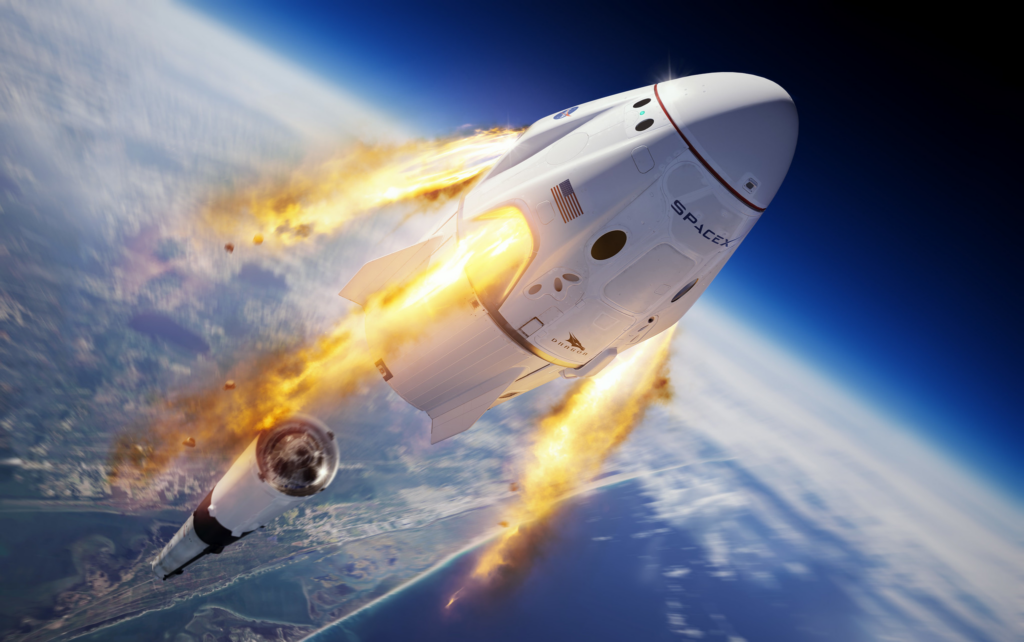
Incidents only fuel the debate. In December, one Starlink satellite malfunctioned and began an uncontrolled descent. Formally, each spacecraft is designed for a service life of about five years, after which it is deliberately deorbited to burn up in the atmosphere. Earlier this month, SpaceX also announced the lowering of the orbits of around 4,400 satellites from 342 to 298 miles — a step intended to reduce collision risks and accelerate natural orbital decay.
Nevertheless, the total number of objects in low Earth orbit continues to grow exponentially. This refers to the zone roughly between 250 and 1,240 miles above Earth’s surface — a space that just a decade ago was considered almost empty.
Seven years to deliver — and this is the key point
Under ITU rules updated in 2019, filing an application is only the beginning. The operator must launch at least one satellite within seven years, otherwise the rights to frequencies and orbital positions are revoked. Moreover, a strict deployment schedule applies:
- 10% of the constellation must be deployed within two years,
- 50% within five years,
- 100% no later than seven years from registration.
For projects on the scale of 100,000+ satellites, this implies enormous requirements for manufacturing, logistics, launches, management, and financing. Even SpaceX, with its own rocket program and vertical integration, is moving toward its goals gradually and with significant technical costs.
China’s application as a strategic move
Applications for 200,000 satellites mark a new stage in the space race. The stake here is not the sheer amount of hardware in orbit, but control over future global communications and the rules of the game. Formally, Beijing declares concern about orbital congestion, but in practice it follows the same logic: occupy space before someone else does.

AI perspective
From a machine-based analytical perspective, what is happening increasingly resembles a strategy of “application bluffing,” familiar from the Cold War era. The history of major infrastructure projects shows that there is a vast gap between ambitious figures on paper and their real-world implementation, shaped by technological, organizational, and financial constraints.
Managing hundreds of thousands of objects in orbit will require fundamentally new coordination and collision-avoidance systems based on advanced artificial intelligence. Even SpaceX, with approximately 5,000 active satellites, has not fully solved this challenge yet.
The paradox is that an excessive number of applications could paralyze the very mechanism of international regulation. The ITU is physically unprepared to administer hundreds of thousands of orbital slots, creating a risk of legal chaos and interstate conflict.
It is quite possible that Beijing’s true objective is not mass satellite deployment, but the creation of legal and political leverage. Locking in applications today may become an argument in future negotiations over the redistribution of orbital space and the revision of access rules to outer space.
In other words, the struggle is not so much about satellites as it is about the right to define who owns the sky above Earth in the 21st century.
All content provided on this website (https://wildinwest.com/) -including attachments, links, or referenced materials — is for informative and entertainment purposes only and should not be considered as financial advice. Third-party materials remain the property of their respective owners.