


Canada is making a noticeable and in many ways symbolic shift in trade policy by opening its market to Chinese electric vehicles. The decision to cut import tariffs from a de facto prohibitive 100% to 6.1% changes the balance of power in the North American EV market and clearly signals that Ottawa is betting not on protectionism, but on affordable technologies and an inflow of investment.
Formally, this is about quota-based access for Chinese electric vehicles. At the first stage, the Canadian market is ready to accept up to 49,000 vehicles per year, with the ceiling potentially rising to 70,000 later on. For Canada, this is a meaningful volume, especially in the mass-market and budget segments, where supply has traditionally been limited and prices remain high even after government subsidies.
The core logic behind the decision is simple and pragmatic. The transition to electric vehicles is constrained not by ideology or environmental declarations, but by price. Most consumers are not willing to pay a premium for “green” status if the cost difference is too large. Over recent years, Chinese manufacturers have proven that they can produce EVs at price points that make mass adoption real rather than merely declarative. For Canada, this is a way to accelerate fleet electrification without endlessly expanding budget-funded subsidies.
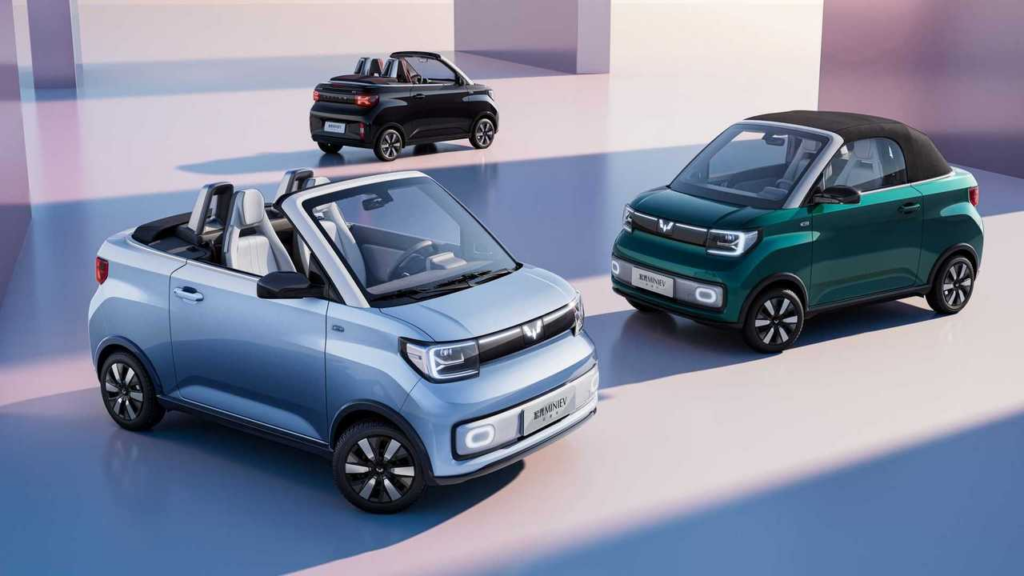
Another key objective is technology and investment. Today, China’s EV sector is not just about vehicle assembly, but also batteries, power electronics, software, supply chains and logistics. Allowing Chinese companies into the market creates incentives for production localization, factory construction and the integration of Canada into global value chains, rather than simply turning the country into a sales market.
The main beneficiary of this shift appears to be BYD. The company is already the world’s largest electric vehicle manufacturer by sales volume and possesses what many competitors lack: vertical integration. BYD controls battery production, platforms and power modules, and operates its own logistics and a global network of factories. This enables it to keep prices at levels unattainable for most Western manufacturers. BYD models in China start at around $8,000, and even after accounting for logistics, certification and margins, they remain significantly cheaper than most counterparts in the North American market.
For Tesla, the situation is more ambiguous. In the short term, the company may even benefit from growing overall interest in electric vehicles and market expansion. However, in the affordable segment, Tesla objectively loses to Chinese manufacturers in terms of cost structure and flexibility. Its strengths lie in brand, ecosystem and higher-margin models, not in the ultra-budget mass market that is now becoming the key growth driver.
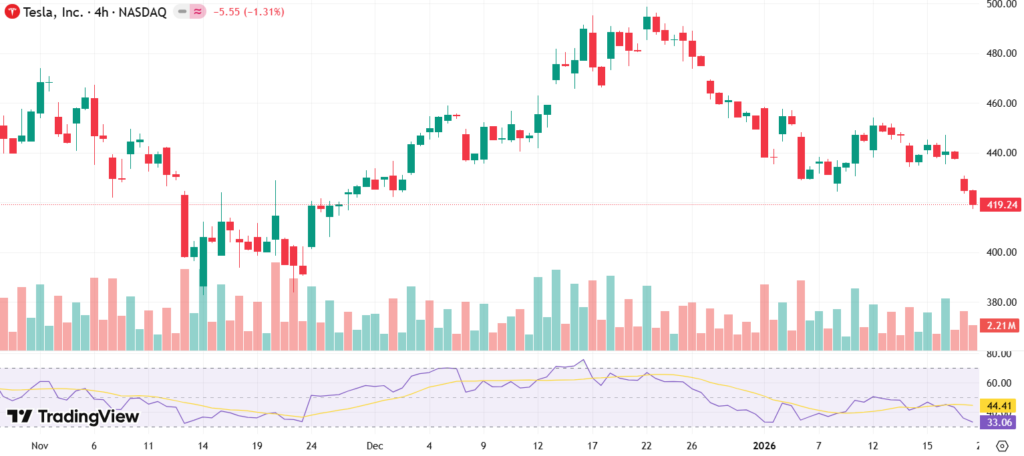
Tesla share price dynamics (November 2025 – January 2025). Source: TradingView
In a broader context, Canada’s decision fits into a global trend of gradually acknowledging China’s leadership in the EV sector. While the US and the EU are trying to shield their producers with tariffs and regulatory barriers, some countries are beginning to look for a compromise between industrial policy and real economic needs. Canada appears to have decided that affordable electric vehicles and technological investment matter more than rigid trade confrontation.
For investors, the signal is fairly straightforward. The trend is shifting in favor of the Chinese EV sector as a whole, with BYD remaining its key symbol and beneficiary. At the same time, market volatility and political risks have not disappeared. This is not a “buy here and now” story, but rather one of watching a trend reversal and waiting for a more comfortable entry point. As often happens, the market initially resists such shifts, but eventually is forced to accept them.
All content provided on this website (https://wildinwest.com/) -including attachments, links, or referenced materials — is for informative and entertainment purposes only and should not be considered as financial advice. Third-party materials remain the property of their respective owners.