

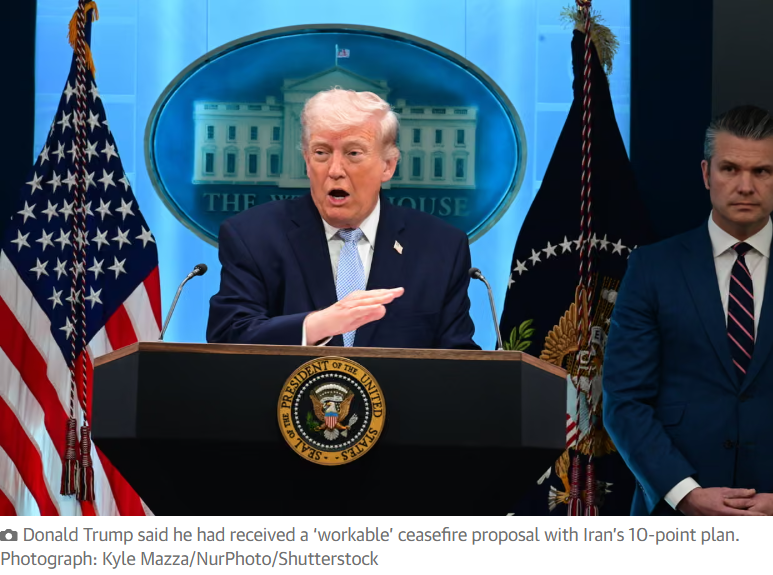
The statement by the U.S. president about a two-week pause in military actions against Iran instantly became the main driver for global markets. Formally, the reason looks very specific — the condition for the ceasefire is the full and safe opening of the Strait of Hormuz. But if you dig deeper, it becomes clear: this is not only about a military pause, but about an attempt to quickly move the conflict into a controlled negotiation framework, where the key role is played not by strikes, but by the terms of a deal.
The announcement itself was made on the Truth Social platform and was presented as the result of diplomatic efforts in which Pakistan played an important role. According to the head of the White House, the parties are already one step away from a final agreement, and the current pause is an opportunity to lock in the achieved results. At the same time, emphasis was placed on the fact that the main military objectives have already been accomplished, which means further escalation loses practical meaning.
Ten points and hard diplomacy
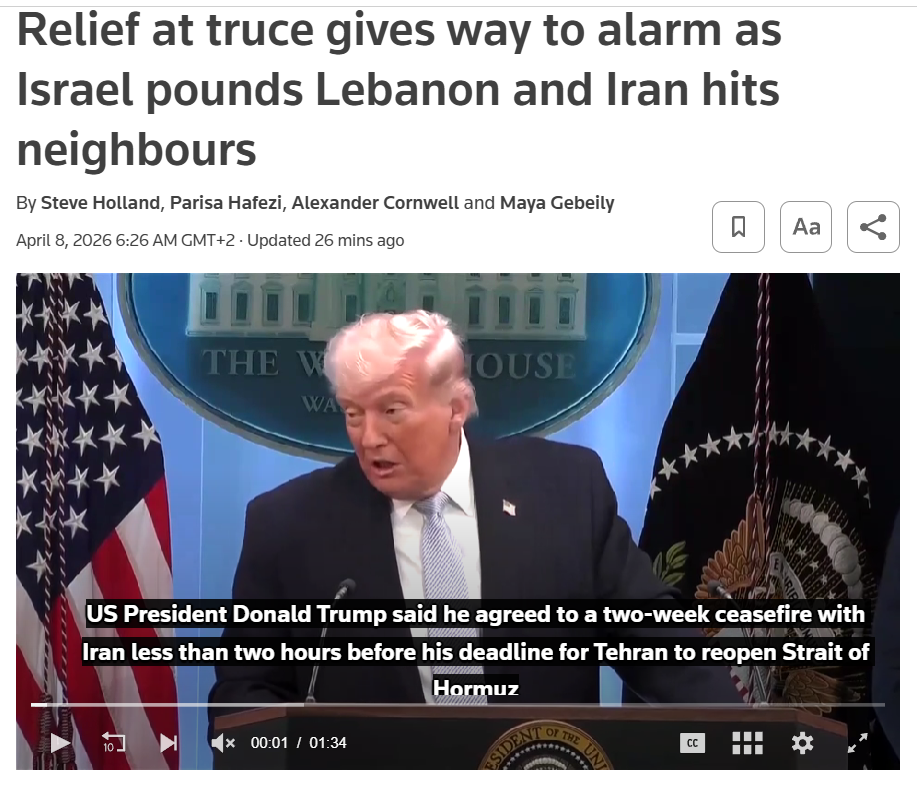
Iran reacted quickly and without unnecessary pauses. The Supreme National Security Council approved a temporary ceasefire while confirming the participation of China and Pakistan in the negotiation process. In Tehran, it was stated that their proposed ten-point plan had been accepted as the basis for dialogue, which in itself looks like a diplomatic victory for the Iranian side.
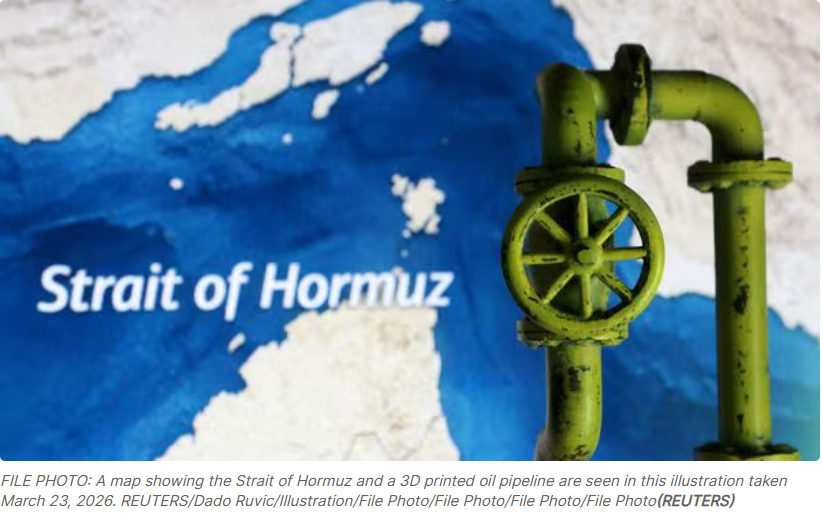
The essence of the proposals fits into a classic regional framework: cessation of attacks, withdrawal of U.S. forces, lifting of sanctions, and recognition of the right to a nuclear program with a formal commitment not to develop weapons. At the same time, the key element — control over the Strait of Hormuz — remains with Iran, making this point central not only in the military but also in the economic logic of the conflict.
The rhetoric, however, remains far from peaceful. Iranian officials openly state that readiness for a forceful response remains, and the pause is not capitulation but a temporary window. The new Supreme Leader, Mojtaba Khamenei, personally authorized participation in the negotiations, which underscores the seriousness of intentions but does not reduce tensions.
The essence of the proposals fits into a classic regional framework: cessation of attacks, withdrawal of U.S. forces, lifting of sanctions, and recognition of the right to a nuclear program with a formal commitment not to develop weapons. At the same time, the key element — control over the Strait of Hormuz — remains with Iran, making this point central not only in the military but also in the economic logic of the conflict.
The rhetoric, however, remains far from peaceful. Iranian officials openly state that readiness for a forceful response remains, and the pause is not capitulation but a temporary window. The new Supreme Leader, Mojtaba Khamenei, personally authorized participation in the negotiations, which underscores the seriousness of intentions but does not reduce tensions.
Markets react faster than diplomats
Financial markets reacted instantly and without much hesitation. Brent crude dropped sharply by about 14%, falling below a key psychological level, reflecting a reduction in the geopolitical risk premium. Investors quickly rotated from safe assets into risk, pushing U.S. indices higher — S&P 500 futures gained more than two percent, while Nasdaq and Dow Jones moved in the same direction.
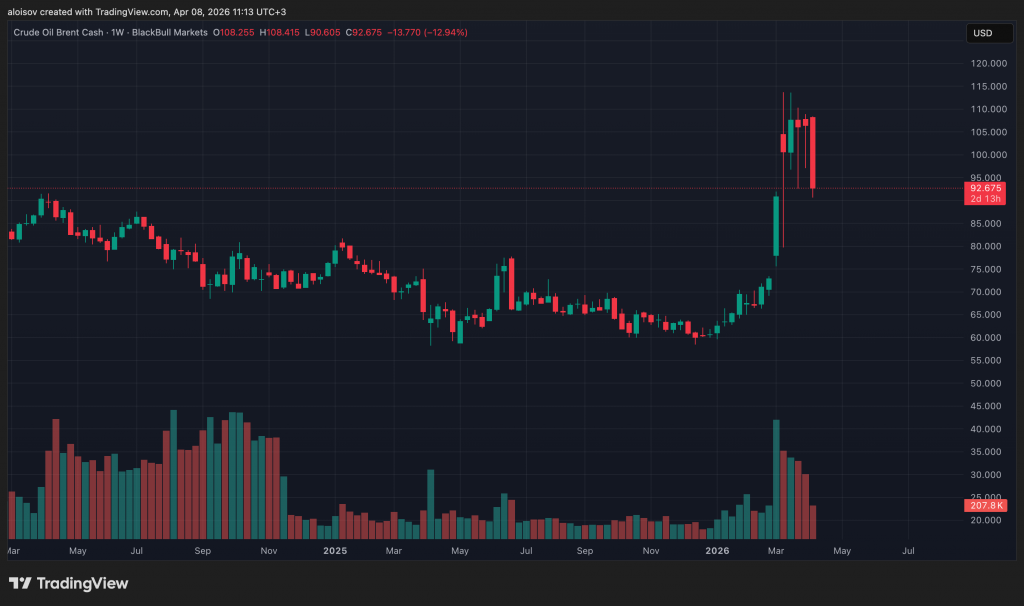
1-week chart of Brent/USD
At the same time, gold did not fall sharply and held at elevated levels, indicating continued caution. The market seems to say: “We believe in the pause, but we are not sure about its durability.”
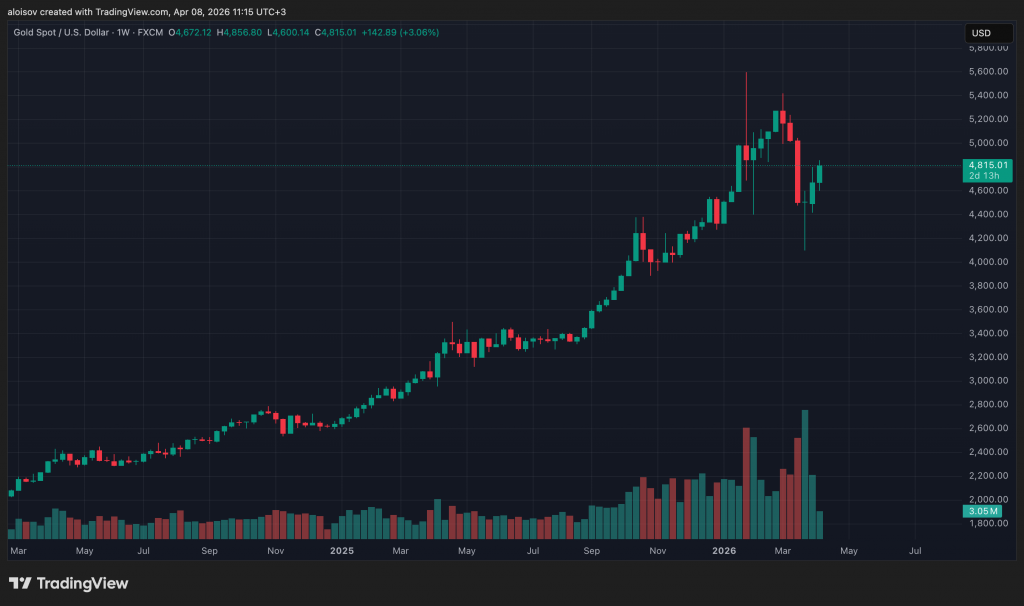
1-week chart of XAU/USD
Bitcoin, in this context, moved higher and held above 72,000, following a classic pattern — reduced tension leads to increased risk appetite.
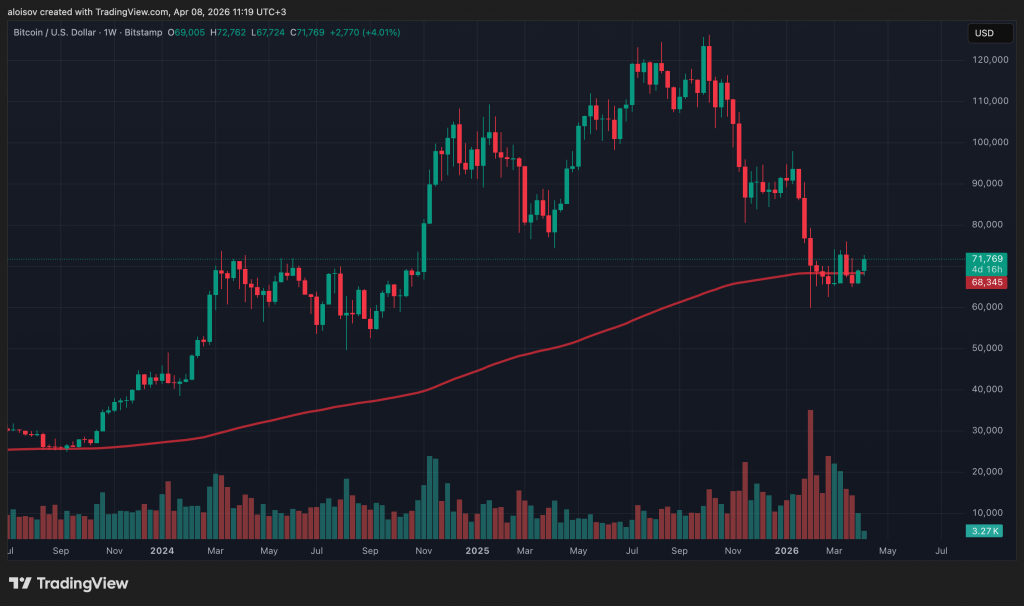
1-week chart of BTC/USD and the 200 EMA. Source: Bitstamp
This move is important not so much by itself, but as an illustration of current market logic. The reaction is driven not by facts, but by changes in expectations. Yesterday, escalation was priced in; today, negotiations are. And that alone is enough for capital to change direction.
Politics of victories and the reality of compromises
Official comments from both sides predictably sound like declarations of victory. Washington emphasizes the effectiveness of pressure and the speed of achieving results. The White House press secretary notes that the operation lasted only 38 days, significantly less than initially expected.
On the other hand, Iran stresses that the U.S. has effectively agreed to discuss its proposed plan, which is perceived as recognition of its position. This dual interpretation is typical for such conflicts, where the political outcome is no less important than the factual one.
Another factor is Israel’s position, which has explicitly stated that the ceasefire does not apply to Lebanon. This creates an additional point of tension and serves as a reminder that even with formal de-escalation, the region remains highly unstable.
A market that trades not events, but scenarios
From a broader analytical perspective, what is happening fits into a familiar cycle. First comes a hard ultimatum with deadlines and threats of strikes. Then — a sharp softening of rhetoric and a shift toward negotiations. This scenario is not new, and the market is gradually learning to recognize it.
The key point is that investors react not so much to actions themselves as to the probability of those actions. A shift in probability from “conflict escalating” to “conflict freezing” is already enough to move prices. That is why delaying the ultimatum previously led to a rise in the crypto market by tens of billions of dollars.
An interesting question arises: do market participants still believe the statements, or are they already trading the recurring pattern itself? For now, judging by the reaction, the answer leans toward the former — rhetoric still acts as a liquidity trigger.
What comes next
The next key date is the upcoming round of negotiations scheduled for April 10 in Pakistan. It is there that it will become clear whether the current pause will turn into a lasting agreement or remain a temporary break before a new round of tensions.
For markets, this means one thing: volatility is not going anywhere. Its source is simply shifting from the battlefield to the negotiation table. And as practice shows, sometimes words can move prices just as much as real events.
All content provided on this website (https://wildinwest.com/) -including attachments, links, or referenced materials — is for informative and entertainment purposes only and should not be considered as financial advice. Third-party materials remain the property of their respective owners.