

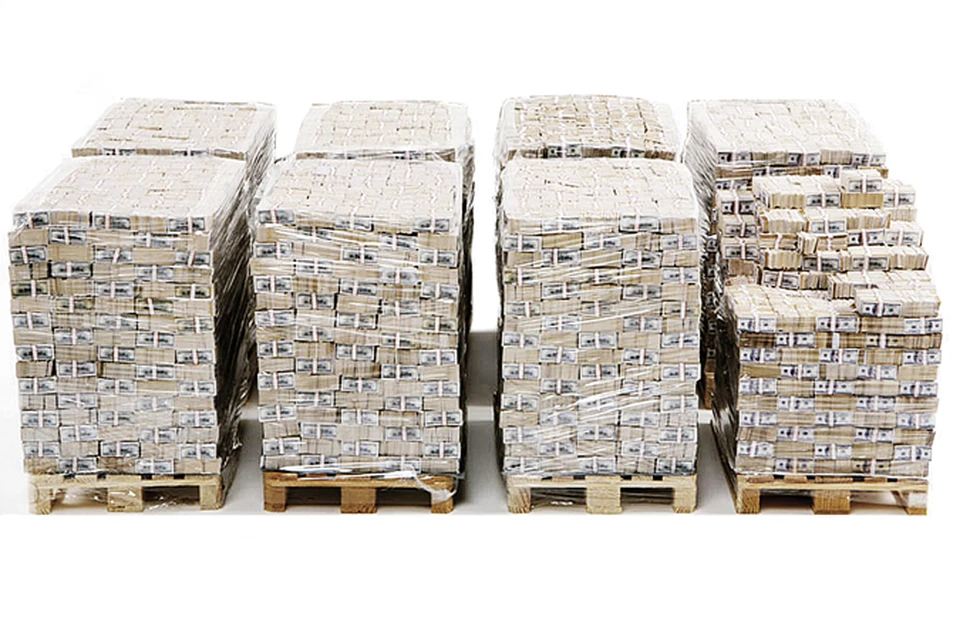
What these papers are and where they came from
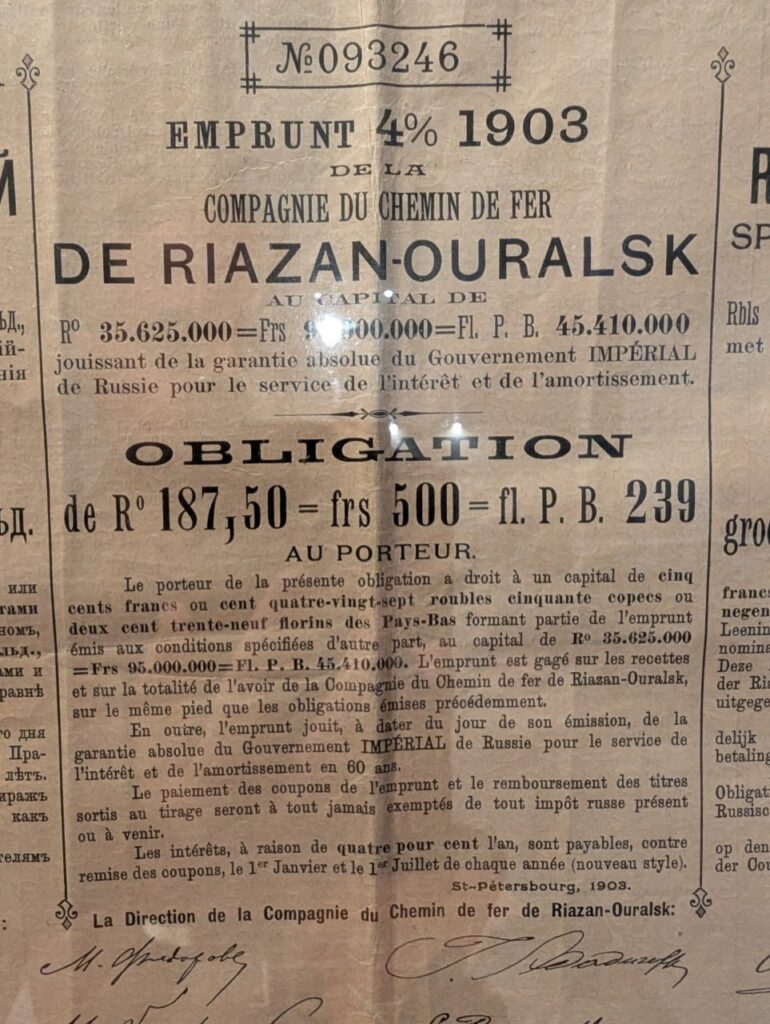
These are bonds issued in 1903 by a railway company of the Russian Empire — “Compagnie du chemin de fer de Riazan-Ouralsk.” It was a classic loan with a 4% annual yield and a state guarantee. Such securities were actively sold across Europe, especially in France and Switzerland. For investors of that time, this looked like a reliable instrument with fixed income and minimal risk.

Why the amount “inflates” into millions
The logic seems simple: if the bond was not redeemed, the debt still exists, and interest continues to accrue. Over more than 100 years, the amount can indeed grow into millions. This is how figures like millions in francs of interest and hundreds of millions in rubles appear. On paper, everything looks convincing.
Where this logic breaks
The problem is that the real world does not follow the formula of “interest grows forever.” In 1917, a revolution took place, after which the new state refused to recognize the debts of the Russian Empire. In effect, this was a full default. From that moment, payments stopped, and the bonds lost their status as valid financial instruments.
Who “owes” on these bonds today
This is one of the most complex questions. Over time, states, economic systems, and legal frameworks have changed. There is no direct legal mechanism today that would allow claims on such securities. Formally, the debt was broken more than a century ago.
Why interest no longer accrues
A bond is not a perpetual deposit. Interest accrual depends on the existence of an obligation. If the obligation is terminated due to default or political decisions, interest stops accumulating. That is why these astronomical sums have no legal force in practice.
Were there attempts to recover the money
Yes, in the 1990s there were discussions about pre-revolutionary debts, especially with European investors. Some agreements were reached, but they did not mean automatic recognition of all old bonds. These were selective political decisions, not mass compensation.
What these papers are actually worth today
Today, such bonds are primarily collectible items. They are valued for historical significance, rarity, and appearance. They may be worth money, but nowhere near the amounts written on them. This is the antiques market, not financial obligations.
Why these stories keep appearing
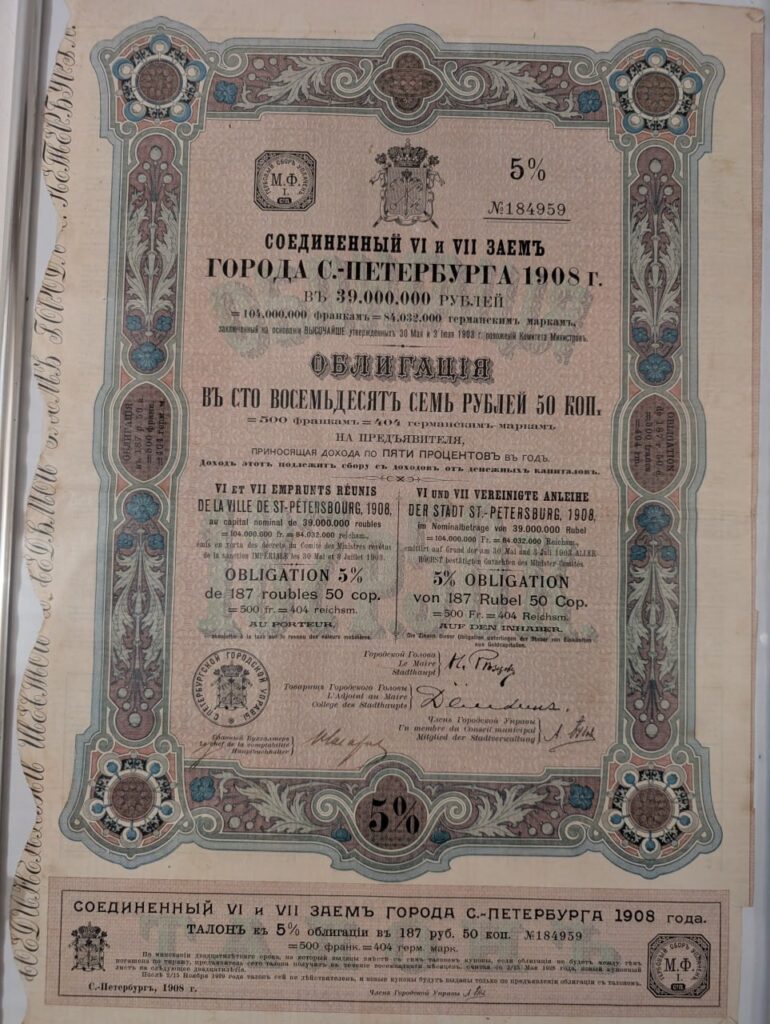
Because the documents themselves look very convincing. Elegant seals, signatures, numbers, interest rates — all of this creates the impression of “real money.” And each time, there is hope that somewhere there is a forgotten debt that can be reclaimed.
Main takeaway
Early 20th-century bonds are not forgotten millions, but a reminder of how strongly investments depend on history and politics. Even the most reliable guarantee works only as long as the entity that issued it still exists.
All content provided on this website (https://wildinwest.com/) -including attachments, links, or referenced materials — is for informative and entertainment purposes only and should not be considered as financial advice. Third-party materials remain the property of their respective owners.